
Commodities & cryptoOil, gold, dollar & digital assets
Grayscale CEO Peter Mintzberg pitches AI-linked tokenization and ETF expansion as bitcoin slides and the firm's IPO stays shelved
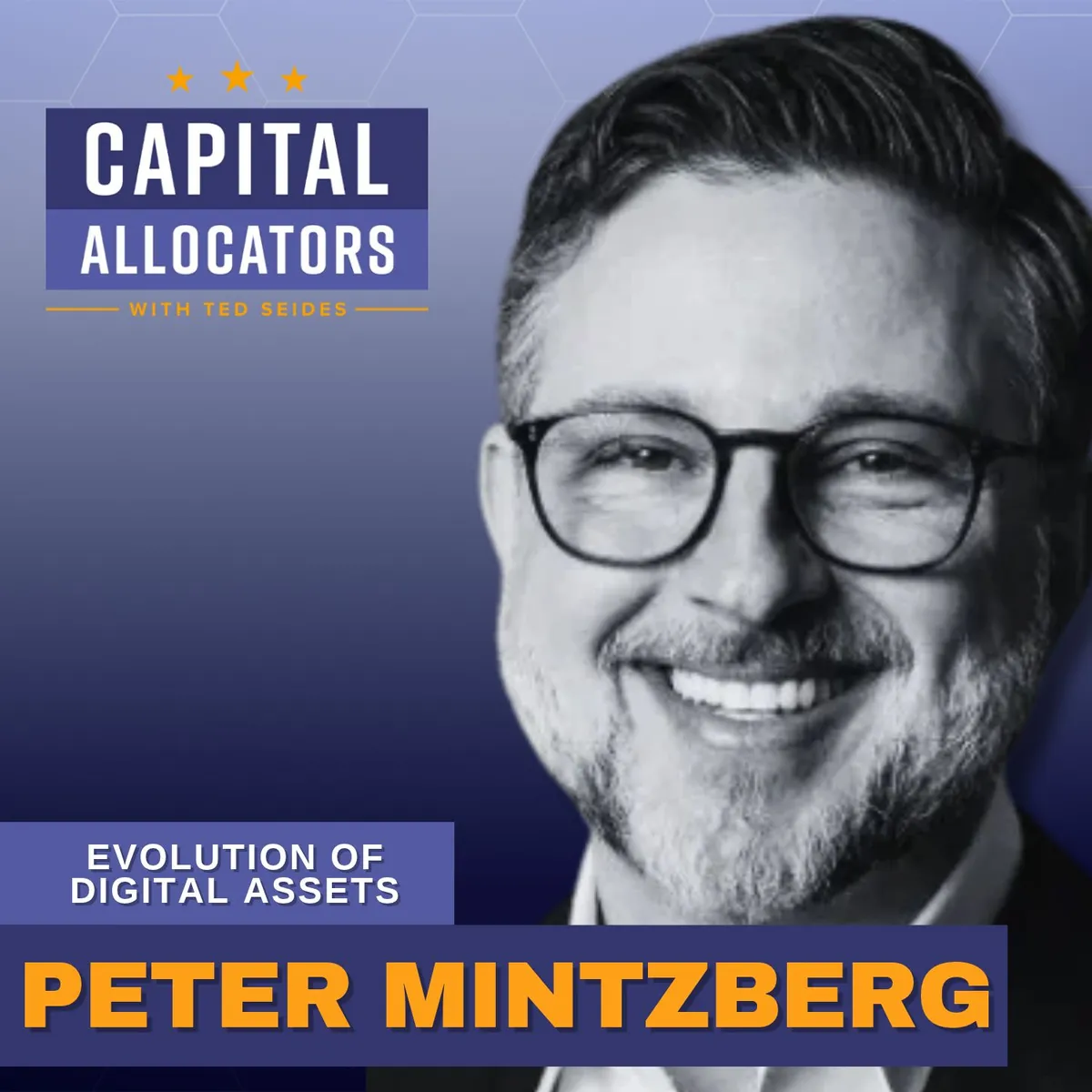
In a podcast episode published 19 November 2026, Grayscale CEO Peter Mintzberg described the firm's move from trusts to ETFs, multi-asset and active products, and AI-linked tokenization. Bitcoin had fallen nearly 21% over 30 days, and the firm's NYSE listing remained postponed.
From the Capital Allocators podcast episode of November 19, 2026 and cited sources: Regulatory changes are the main driver of Grayscale's product expansion. [6] [7] [8]
SOURCES[6] Goodwin: Crypto ETPs poised to boom after generic listing… goodwinlaw.com[7] The Block: SEC approves Grayscale multi-crypto fund theblock.co[8] The Block: Grayscale enables staking for spot Ethereum ETFs theblock.co
 AT Pulse research deskPublished · Updated · 5 min read · AI-assisted analysis
AI-assisted, not human-edited. Methodology Corrections Who owns this site
- Original source
- Capital Allocators podcast episode, independent perspective
- Brief by
- AT Pulse research desk AI-assisted; publisher and contact on the desk page
- When
- November 19, 2026 podcast episode published
- Covered
- Nov 19 edition
- Evidence
- 12 sources across 8 sites; no transcript
- 1Episode page: Evolution of Digital Assets at Grayscale…tedseides.libsyn.com
- 2The Block: Grayscale "compelling entry points" as bitcoin…theblock.co
- 3Crypto Briefing: Grayscale delays public listingcryptobriefing.com
- 4Grayscale: Welcoming Grayscale's New CEOgrayscale.com
- 5Benzinga: Grayscale appoints Peter Mintzbergbenzinga.com
- 6Goodwin: Crypto ETPs poised to boom after generic listing…goodwinlaw.com
Reach: not measured yet
Regulatory changes are the main driver of Grayscale's product expansion. In September 2025 the SEC adopted generic listing standards, which replaced case-by-case rule filings, and cleared Grayscale's five-asset GDLC fund. In October 2025, ETHE and the Ethereum Mini Trust became the first US-listed spot crypto funds to offer staking rewards. Investors can now get both through an ordinary brokerage account. [6] [7] [8]
The episode description refers to a convergence of AI and tokenization and to personalized portfolios for individual investors. None of the reviewed sources documents a product, architecture, dataset or evaluation behind either idea, so for now they read as strategy rather than shipped capability. [1]
The episode came out during a sharp downturn. Bitcoin fell to about $63,120 on 17 November, and Grayscale's own research named weakness in AI stocks as one cause. That link is the firm's interpretation, not an independent finding. Grayscale's own funds were also losing money: GBTC had $17.74M in outflows on 18 November, and the Zcash ETF fell about 12% with more than $15M in November outflows, despite a $1M pledge to Zcash projects. [2] [10] [12]
Grayscale's November 2025 IPO filing reported $35B in assets under management and nine-month 2025 revenue of $318.7M, down 20%. In May 2026 the firm postponed the NYSE listing, citing weaker investor demand and lower trading volumes. Other crypto firms planning listings delayed theirs too. [9] [11] [3]
Evidence shows crypto exposure now reaches investors through standard ETF wrappers, including staking and multi-asset funds. For AI-for-tokenization builders, the implication is that demand may follow both crypto and AI equity cycles.
Read the full assessment
The AI strategy itself remains undocumented.
Executive brief
Grayscale's CEO, Peter Mintzberg, is promoting AI-driven tokenization and portfolios built for individual investors. The episode page went up on 19 November 2026. Two days earlier, bitcoin had dropped to about $63,120, down 20.8% over 30 days. Grayscale's own research named weakness in AI stocks as one of the causes (The Block). Grayscale filed to list on the NYSE as GRAY, then shelved the IPO in May 2026 (Crypto Briefing). In the episode, Mintzberg talks about Grayscale's move from trusts to ETFs, assets beyond Bitcoin and Ethereum, active management, and markets where the line between liquid and illiquid assets fades.
What changed and event timeline
Mintzberg becomes CEO
He replaced Michael Sonnenshein. He came from strategy roles at Goldman Sachs and BlackRock, where he was COO and head of strategy (;).
SEC adopts generic listing standards
Crypto ETPs that meet set conditions no longer need their own Rule 19b-4 approval. The same day, the SEC cleared Grayscale's five-asset Digital Large Cap Fund (GDLC) (;).
Staking turned on in ETFs
ETHE and the Ethereum Mini Trust became the first US-listed spot crypto funds to stake ().
Public S-1 for NYSE: GRAY
Grayscale reported $35B in assets under management as of 30 September 2025 and an Up-C, dual-class structure that leaves voting control with Digital Currency Group (DCG) ().
IPO postponed
Reported reasons were weaker investor demand and lower trading volumes. A restart was not expected before Q4 2026 ().
17–19 Nov 2026: Selloff, then the podcast
Bitcoin fell about 13% in a week. Grayscale's head of research, Zach Pandl, described current prices as "compelling entry points" for medium- to long-term investors. The episode was published on 19 November (;).
Capabilities and access
No AI model or product version is involved.
Read the full section
No AI model or product version is involved. The "capabilities" here are investment vehicles:
- GDLC: one ETP holding BTC, ETH, XRP, SOL and ADA. It had over $915M in assets when approved (The Block).
- Staking ETFs: investors earn staking rewards through an ordinary brokerage account (The Block).
- Single-asset trusts converted to ETFs: for example, the Zcash fund ZCSH moved from a 2017 private placement to an NYSE Arca listing in August 2026 (The Block).
Technical analysis for researchers and developers
- Listing mechanics: generic standards replace case-by-case SEC rule filings with eligibility conditions.
- Staking inside a fund: the fund has to handle validator operations and pass rewards through, all inside a regulated wrapper (The Block).
- AI and tokenization: the episode description names "convergence of AI and tokenization" and personalized portfolios.
Read the full section
- Listing mechanics: generic standards replace case-by-case SEC rule filings with eligibility conditions. That moves the bottleneck from regulatory approval to product engineering: custody, pricing and creation/redemption processes (Goodwin).
- Staking inside a fund: the fund has to handle validator operations and pass rewards through, all inside a regulated wrapper (The Block).
- AI and tokenization: the episode description names "convergence of AI and tokenization" and personalized portfolios. None of the reviewed sources documents an architecture, dataset or evaluation for either idea, so there is no technical basis to assess.
Claims and evidence
- $35B in assets under management, nine-month 2025 revenue of $318.7M (down 20%): these come from Grayscale's own filing, as reported by The Block and Yahoo Finance.
- AI stock losses helped drive the November selloff: this is Grayscale's own research interpretation (The Block), not an independent finding.
- "Over 100 crypto ETFs within 12 months": a forecast by Bloomberg ETF analyst Eric Balchunas (The Block).
Read the full section
- $35B in assets under management, nine-month 2025 revenue of $318.7M (down 20%): these come from Grayscale's own filing, as reported by The Block and Yahoo Finance. They have not been independently audited in public.
- AI stock losses helped drive the November selloff: this is Grayscale's own research interpretation (The Block), not an independent finding.
- "Over 100 crypto ETFs within 12 months": a forecast by Bloomberg ETF analyst Eric Balchunas (The Block).
- The episode's own claims: no source independently corroborates them.
Context and prior work
Grayscale was founded in 2013 and built its business on closed-end trusts before converting them to ETFs (episode page). Its IPO filing was part of a wider wave of crypto listings that included Circle and Gemini. BitGo, Consensys and Kraken were also pursuing listings (The Block). Kraken's parent Payward, Consensys and Ledger later delayed their plans too (Crypto Briefing).
Limitations, safety and contested findings
- Product flows are mixed. The Ethereum Staking Mini ETF took in $337M in Q1 2026 (Crypto Briefing).
- Grayscale's marketing hasn't stopped outflows.
- Governance: DCG keeps majority voting control, so Grayscale would be a "controlled company" after the IPO (The Block).
Read the full section
- Product flows are mixed. The Ethereum Staking Mini ETF took in $337M in Q1 2026 (Crypto Briefing). But GBTC lost $17.74M on 18 November 2026, leaving it at $7.82B (TipRanks).
- Grayscale's marketing hasn't stopped outflows. It pledged $1M to Zcash projects, yet ZCSH fell about 12% to $27.25 and had more than $15M in November outflows (The Block).
- Governance: DCG keeps majority voting control, so Grayscale would be a "controlled company" after the IPO (The Block).
Business and practitioner implications
- Distribution, not new technology, is the edge. Staking and multi-asset ETPs show which features regulators currently accept.
- Crypto and AI are linked through markets and infrastructure. Teams building AI-for-tokenization products should expect demand to move with both cycles.
- Treat the vision as strategy. "AI plus tokenization" and personalized portfolios are executive framing in the reviewed sources, with no documented product behind them.
Read the full section
- Distribution, not new technology, is the edge. Crypto exposure now ships through standard brokerage plumbing. Staking and multi-asset ETPs show which features regulators currently accept.
- Crypto and AI are linked through markets and infrastructure. Grayscale's research ties AI equity weakness to crypto drawdowns and notes that bitcoin miners supply computing power to AI firms (The Block). Teams building AI-for-tokenization products should expect demand to move with both cycles.
- Treat the vision as strategy. "AI plus tokenization" and personalized portfolios are executive framing in the reviewed sources, with no documented product behind them.