
Venture fundsFund closes, LPs & managers
Toyota's Woven Capital head Ro Gupta lays out robotics, energy and aerospace bets for its $1.6 billion in growth funds
Ro Gupta, who runs Toyota's growth-stage venture arm Woven Capital, says its two $800 million funds target robotics, physical AI, energy, aerospace and manufacturing. He pitches founders on Toyota's factories, customer access and distribution, and argues today's startup valuations may be defensible.
From the TechCrunch · Venture article of November 18, 2026 and cited sources: Toyota now invests in startups from early stage to late stage through separate vehicles. [2] [3]
SOURCES[2] TechCrunch: Toyota adds another $1.5B to its bet on startups techcrunch.com[3] Woven Capital: Ro Gupta named Managing Director woven.vc
 AT Pulse research deskPublished · Updated · 5 min read · AI-assisted analysis
AI-assisted, not human-edited. Methodology Corrections Who owns this site
- What happened
- Toyota now invests in startups from early stage to late stage through separate vehicles. [2] [3]
- Original source
- TechCrunch · Venture article, independent perspective
- Brief by
- AT Pulse research desk AI-assisted; publisher and contact on the desk page
- When
- November 18, 2026 article published
- Covered
- Nov 21 edition
- Evidence
- 8 sources across 6 sites
- 1TechCrunch Equity: How Toyota is betting on a future…techcrunch.com
- 2TechCrunch: Toyota adds another $1.5B to its bet on startupstechcrunch.com
- 3Woven Capital: Ro Gupta named Managing Directorwoven.vc
- 4Woven by Toyota: Woven Capital formation (2020)woven.toyota
- 5Woven Capital: Machina Labs raises $124Mwoven.vc
- 6The Robot Report: Machina Labs raises $124Mtherobotreport.com
Reach: not measured yet
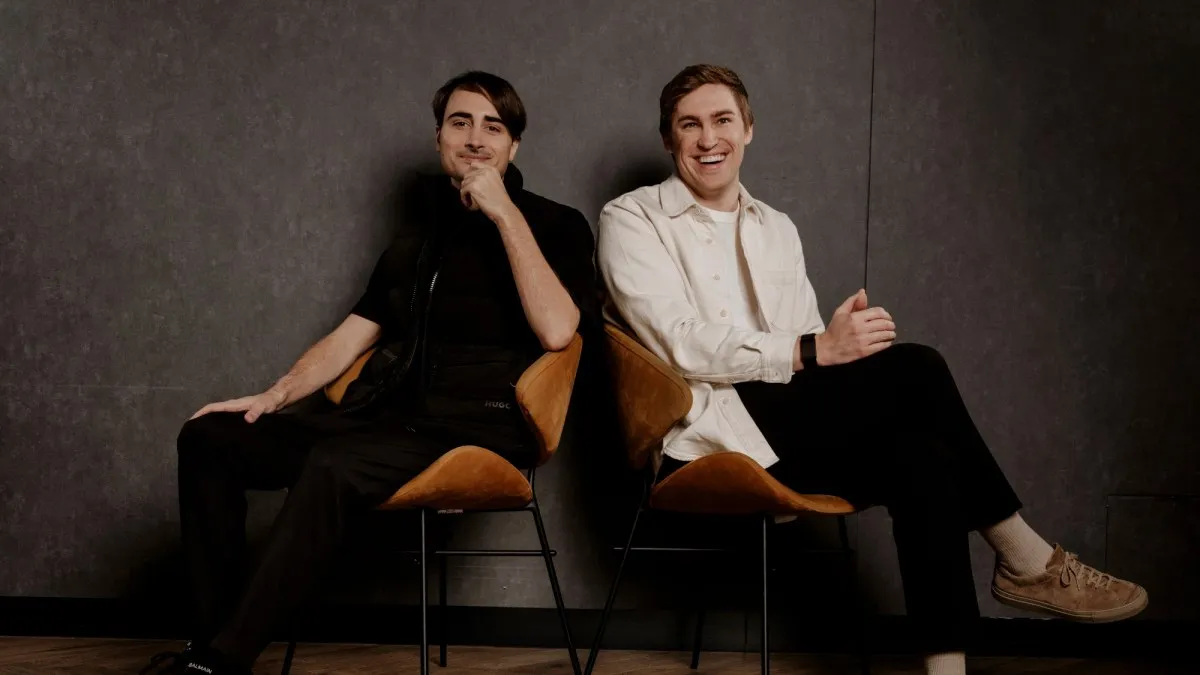
Toyota now invests in startups from early stage to late stage through separate vehicles. Woven Capital Fund II, launched in September 2025, adds $800 million for 20 to 25 deals from Series B onward. A new Japan-focused early-stage arm, Toyota Invention Partners, has about $670 million. Toyota's commitments across its three investment arms now total more than $3 billion. [2] [3]
Gupta groups the thesis into four pillars: Build (manufacturing), Move (mobility), Power (energy) and Connect (communications and data). In robotics he applies Toyota's jidoka principle, which favors automation that supports human workers rather than replacing them. The pitch to founders is strategic: Toyota as a customer, its manufacturing know-how and its global distribution. Woven Capital's own figure is that more than 80% of its portfolio companies partner with Toyota Group entities. [1] [7] [3]
Machina Labs shows the thesis in practice. The robotic metal-forming company raised a $124 million Series C to build a 200,000 sq ft factory with up to 50 RoboCraftsman cells, and it is working with Toyota on automotive panels. No valuation was disclosed, and the sources disagree on whether Woven Capital was a lead investor. [5] [6] [7]
Gupta argues that high startup valuations may be easier to justify than they look. He compares the 2017–18 autonomous-vehicle boom with today's AI frenzy. For autonomous vehicles, he points to fleet infrastructure and operations, not the core driving software, as where the next large investments may go. [1]
Fund sizes and deal terms are documented. Gupta's views on valuations and on where autonomous-vehicle money goes next are an investor's opinions.
Read the full assessment
The implication is that strategic industrial capital is competing for robotics and energy deals by offering factories and customers, not just money.
Executive brief
Toyota is spending real money on bets outside carmaking. Woven Capital, its growth-stage venture arm, now runs two $800 million funds, about $1.6 billion in total, after Fund II launched in September 2025 (TechCrunch). On TechCrunch's Equity podcast, Woven Capital head Ro Gupta laid out where that money is going: robotics, physical AI, energy, aerospace and manufacturing. He also argued that today's high startup valuations may be easier to justify than they look (TechCrunch Equity). Gupta came to Toyota when it bought Carmera, the autonomous-vehicle mapping startup he co-founded. Woven Capital reports that more than 80% of its portfolio companies actively partner with Toyota Group entities (Woven Capital).
What changed and event timeline
Woven Capital formed
Toyota set up an $800 million global investment fund under its Woven Planet/TRI-AD unit. It started investing in 2021 (;).
$1.5B in new startup capital
Woven Capital Fund II ($800M) targets 20–25 investments from Series B to late stage. A new early-stage vehicle, Toyota Invention Partners, gets about $670M, and Woven Capital becomes a wholly owned Toyota subsidiary ().
Gupta named managing director
He replaces George Kellerman, who moves to advise Toyota's CFO. Gupta was previously a Woven by Toyota vice president ().
Machina Labs Series C
Machina Labs, a robotic metal-forming company, raised $124M. Woven Capital, Lockheed Martin Ventures, Balerion Space Ventures and the Strategic Development Fund invested. No valuation was disclosed (;).
Four-pillar thesis described
Global Venturing reports that Gupta organizes Woven Capital's investments around four pillars: Build (manufacturing), Move (mobility), Power (energy) and Connect (communications and data). The piece also mentions a space link to JAXA's lunar rover program ().
Equity episode
Gupta discusses valuations, how fast hype cycles now move, corporate venture capital's pull for founders, and the infrastructure behind autonomous-vehicle fleets ().
Capabilities and access
- Woven Capital Fund I: $800M, growth stage, launched 2021.
- Woven Capital Fund II: $800M, Series B to late stage, 20–25 planned deals (TechCrunch).
- Toyota Invention Partners: about $670M, early stage, focused on Japan.
Read the full section
- Woven Capital Fund I: $800M, growth stage, launched 2021.
- Woven Capital Fund II: $800M, Series B to late stage, 20–25 planned deals (TechCrunch).
- Toyota Invention Partners: about $670M, early stage, focused on Japan.
- Toyota's cumulative commitments across its three investment arms exceed $3B (TechCrunch).
- What founders get beyond money: access to Toyota as a customer, manufacturing capability and global distribution (TechCrunch Equity).
Technical analysis for researchers and developers
The clearest technical example is Machina Labs. The new round funds a 200,000 sq ft factory with up to 50 RoboCraftsman cells (The Robot Report). Machina is also working with Toyota on production-quality automotive panels.
Read the full section
The clearest technical example is Machina Labs. Its RoboCraftsman platform combines robotics, machine learning and its RoboForming process to make metal parts in a software-defined way. The new round funds a 200,000 sq ft factory with up to 50 RoboCraftsman cells (The Robot Report). Machina is also working with Toyota on production-quality automotive panels. Gupta frames his robotics thesis around jidoka, Toyota's "automation with a human touch," meaning technology that adds to human work rather than replacing it (Global Venturing). None of the reviewed sources include benchmarks or performance evaluations.
Claims and evidence
- Fund sizes ($800M each, $1.6B total): announced by the company and repeated by independent outlets (TechCrunch; Global Venturing).
- More than 20 portfolio companies, over 80% partnering with Toyota: self-reported, with no independent corroboration (Woven Capital).
- Machina Labs' $124M round: announced by the company and reported by The Robot Report.
Read the full section
- Fund sizes ($800M each, $1.6B total): announced by the company and repeated by independent outlets (TechCrunch; Global Venturing).
- More than 20 portfolio companies, over 80% partnering with Toyota: self-reported, with no independent corroboration (Woven Capital).
- Machina Labs' $124M round: announced by the company and reported by The Robot Report.
- Woven Capital's own release lists four investors without stating a lead. The Robot Report calls all four lead investors.
- Valuation: not disclosed.
- Gupta's views on valuations and on corporate venture capital's appeal to founders: opinions from an investor about his own market, not findings (TechCrunch Equity).
Context and prior work
- Under Kellerman, Fund II was described as "bookending" Toyota's other investment arms, so that together they cover companies from the earliest stage through growth (TechCrunch).
- Fund I backed autonomy and robotics companies, including Nuro, Foretellix and Machina Labs.
- Gupta describes Toyota as a "super tanker" that needs "speedboats" to find markets the parent company hasn't spotted yet.
Read the full section
- Toyota's earlier investment layers. Under Kellerman, Fund II was described as "bookending" Toyota's other investment arms, so that together they cover companies from the earliest stage through growth (TechCrunch).
- Earlier portfolio. Fund I backed autonomy and robotics companies, including Nuro, Foretellix and Machina Labs.
- Speedboats and outside-in innovation. Gupta describes Toyota as a "super tanker" that needs "speedboats" to find markets the parent company hasn't spotted yet. He calls this "outside-in" innovation (Metis Strategy; Global Venturing).
- Hype-cycle comparison. The episode compares the 2017–18 autonomous-vehicle boom with today's AI frenzy (TechCrunch Equity).
Limitations, safety and contested findings
- The episode page gives only a list of topics.
- No returns, exits or valuations for the portfolio are disclosed.
- Sources disagree on whether Woven Capital led the Machina round.
Read the full section
- The episode page gives only a list of topics. Gupta's specific arguments, such as why valuations might be justified, can't be checked against any figures in the reviewed sources.
- No returns, exits or valuations for the portfolio are disclosed.
- Sources disagree on whether Woven Capital led the Machina round.
- The partnership rate comes only from Woven Capital.
Business and practitioner implications
- For founders in manufacturing, supply chain and energy: Toyota can offer factory know-how, a ready customer and distribution.
- For autonomous-vehicle startups: Gupta points to fleet infrastructure and operations, rather than the core driving stack, as where the next large investments may go (TechCrunch Equity).
- For incumbents: Toyota's mix of a dedicated growth fund plus a separate early-stage arm is a template other industrial companies can compare against.
Read the full section
- For founders in manufacturing, supply chain and energy: Toyota can offer factory know-how, a ready customer and distribution. The trade-off is closer alignment with one large strategic investor.
- For autonomous-vehicle startups: Gupta points to fleet infrastructure and operations, rather than the core driving stack, as where the next large investments may go (TechCrunch Equity).
- For incumbents: Toyota's mix of a dedicated growth fund plus a separate early-stage arm is a template other industrial companies can compare against.