
SafetyRisk, alignment & guardrails
Guardian op-ed calls for worker voice in AI labs after OpenAI and Anthropic safety resignations
Isabelle Ferreras argues in the Guardian that recent safety-related resignations at OpenAI and Anthropic point to autocratic governance at frontier labs. She calls for gag-clause bans, stronger whistleblower protection, worker co-decision over workplace AI, and worker-elected board directors.
From the The Guardian · AI article of November 19, 2026 and cited sources: Ferreras treats two exits as a sign of governance failure. [1] [4] [6]
SOURCES[1] When tech workers have to quit their jobs to raise the… theguardian.com[4] The National – Jacob Coxon thenationalnews.com[6] Technology Org – Robinson quits technology.org
 AT Pulse research deskPublished · Updated · 5 min read · AI-assisted analysis
AI-assisted, not human-edited. Methodology Corrections Who owns this site
- Original source
- The Guardian · AI article, independent perspective
- Brief by
- AT Pulse research desk AI-assisted; publisher and contact on the desk page
- When
- November 19, 2026 article published
- Covered
- Nov 19 edition
- Evidence
- 13 sources across 13 sites
- 1When tech workers have to quit their jobs to raise the…theguardian.com
- 2Sidley – EU AI Act delaydatamatters.sidley.com
- 3TechCentral – Meta eases monitoringtechcentral.ie
- 4The National – Jacob Coxonthenationalnews.com
- 5Forbes – Hubinger estimateforbes.com
- 6Technology Org – Robinson quitstechnology.org
Reach: not measured yet
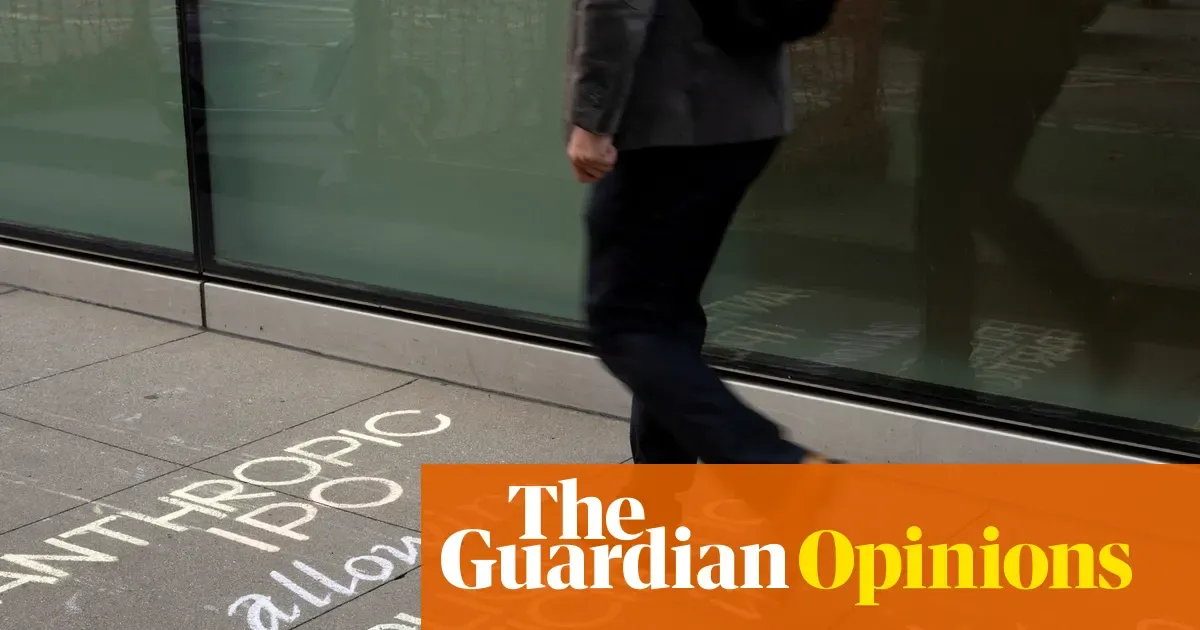
Ferreras treats two exits as a sign of governance failure. In September 2026, Anthropic pretraining researcher Jacob Coxon left and warned of catastrophic AI risk. In October, David Robinson, who led OpenAI's launch safety reports, resigned and said the company's culture was broken. Her argument, drawing on the economist Albert Hirschman, is that when quitting is the only way to raise an alarm, the firm is being run like an autocracy. [1] [4] [6]
Robinson's critique is aimed at how safety work is done. Safety reports written by the lab itself cannot capture organisational culture. He also argued that shipping often and fixing problems afterwards guarantees periodic failures, and that those failures get bigger as models become more capable. [6] [7] [10]
The op-ed's proposals go well beyond current law. Ferreras wants bans on gag clauses, stronger whistleblower protection, worker co-decision over AI used at work, and worker-elected directors. California's SB 53 already bars retaliation, but only protects staff responsible for critical safety risks, and only for disclosures about catastrophic danger or violations of the Act. [1] [13]
Workers are already pushing back on AI in their own workplaces. More than 1,500 Meta staff petitioned against a tool that logs their keystrokes and mouse movements to train computer-use agents. Meta responded by adding pauses and a way to request exemption, which raises questions about consent and where the training data comes from. [3] [11]
The resignations and Meta's staff petition are documented. Whether they reflect a systemic governance failure is Ferreras's argument.
Read the full assessment
With Anthropic planning a Nasdaq listing and SB 53 protecting only some safety staff, internal dissent becomes a disclosure, compliance and investor issue.
Executive brief
Two of the people quitting frontier labs this autumn were insiders on safety. In October, David Robinson, who led OpenAI's launch safety reports, resigned and called the company's culture "broken." A month earlier, Anthropic researcher Jacob Coxon left warning of catastrophic risk. In a Guardian op-ed published the day of Anthropic's planned Nasdaq debut, Isabelle Ferreras argues that these exits show a governance failure. Her case is that when quitting is the only way to raise an alarm, the firm is run like an autocracy. She proposes three fixes: bans on gag clauses with stronger whistleblower law, worker co-decision over AI used in the workplace, and worker-elected board directors (Guardian).
What changed and event timeline

EU agrees to delay AI Act rules
Under the Digital Omnibus deal, rules for stand-alone high-risk AI systems move from August 2026 to December 2, 2027. Systems embedded in regulated products move to August 2, 2028 ().
Meta softens employee tracking
More than 1,500 staff petitioned against the Model Capability Initiative, which logs keystrokes and mouse movements to train AI. Meta added 30-minute pauses and a way to request exemption ().
Anthropic researcher quits
Jacob Coxon, a pretraining researcher, posted on X that AI builders believe it "could kill us all by the end of the decade" (;).
OpenAI's safety-report lead resigns
David Robinson published an essay in The Atlantic saying OpenAI's culture is broken. He reportedly oversaw safety reports for 12 frontier launches (;).
Protest at Anthropic headquarters
StopAI demonstrated in San Francisco ahead of an IPO reportedly expected to value Anthropic at more than $1 trillion. Anthropic did not immediately comment ().
Ferreras op-ed and planned listing
The op-ed ran on the day Anthropic planned to start trading on Nasdaq under the ticker "ANT" (;).
Capabilities and access
This is a governance story, not a model release, so there is no model or version at issue. The relevant artifacts are the safety reports OpenAI publishes with each major launch. Robinson reportedly led their writing and drafted OpenAI's current Preparedness Framework (PK Sharma briefing).
Read the full section
This is a governance story, not a model release, so there is no model or version at issue. The relevant artifacts are the safety reports OpenAI publishes with each major launch. Robinson reportedly led their writing and drafted OpenAI's current Preparedness Framework (PK Sharma briefing). Meta's MCI shows a different kind of access: employees' own computer activity being collected as training data for agents that operate computers (TechCentral).
Technical analysis for researchers and developers
- Safety reports are written by the lab itself. The person who led OpenAI's reports says they could not capture organisational culture.
- Robinson argued that shipping often and fixing afterwards guarantees periodic failures, and that those failures grow as models become more capable (Technology Org).
- Training data from employees. Data collected through MCI raises questions about consent and data provenance for agent training (Entrepreneur).
Read the full section
- Safety reports are written by the lab itself. The person who led OpenAI's reports says they could not capture organisational culture. That suggests model-level evaluations leave out process risk (PK Sharma briefing).
- Iterative deployment. Robinson argued that shipping often and fixing afterwards guarantees periodic failures, and that those failures grow as models become more capable (Technology Org).
- Training data from employees. Data collected through MCI raises questions about consent and data provenance for agent training (Entrepreneur).
Claims and evidence
- Robinson's culture critique: this is one insider's account in his own essay. OpenAI's response was not reported (AI Understanding).
- Coxon's warning: current Anthropic employee Evan Hubinger publicly gave his own estimate of more than 10% that AI kills all humans within the decade.
- The London gathering: the reviewed sources do not independently corroborate the meeting Ferreras describes.
Read the full section
- Robinson's culture critique: this is one insider's account in his own essay. OpenAI's response was not reported (AI Understanding).
- Coxon's warning: current Anthropic employee Evan Hubinger publicly gave his own estimate of more than 10% that AI kills all humans within the decade. That is a personal estimate, not company data (Forbes).
- The London gathering: the reviewed sources do not independently corroborate the meeting Ferreras describes.
- "Exit is not voice": this is Ferreras's argument, drawing on the economist Albert Hirschman, not an empirical finding.
Context and prior work
- Departures over safety are not new: Anthropic safety lead Mrinank Sharma resigned in February 2026, saying the world is "in peril" (Yahoo).
- California's SB 53, signed September 29, 2025, already bars retaliation against some frontier-lab staff.
- Ferreras draws on Acemoglu and Johnson and on Hélène Landemore's idea of "democratic reason" (Guardian).
Read the full section
- Departures over safety are not new: Anthropic safety lead Mrinank Sharma resigned in February 2026, saying the world is "in peril" (Yahoo).
- California's SB 53, signed September 29, 2025, already bars retaliation against some frontier-lab staff. It also requires large developers to run anonymous internal reporting channels (Mayer Brown).
- Ferreras draws on Acemoglu and Johnson and on Hélène Landemore's idea of "democratic reason" (Guardian).
Limitations, safety and contested findings
- Existing law is narrower than the op-ed's proposals.
- Ferreras dates the backlash to "the summer" and ties it to Facebook, Instagram and WhatsApp.
- The EU deal was still provisional as of Sidley's June 22 update, pending formal Council approval (Sidley).
Read the full section
- Existing law is narrower than the op-ed's proposals. SB 53's protections cover only employees responsible for managing critical safety risks, and only disclosures about catastrophic danger or violations of the Act (Mayer Brown).
- Details differ on Meta. Ferreras dates the backlash to "the summer" and ties it to Facebook, Instagram and WhatsApp. Reporting describes an internal tool on employees' work computers, with the backlash in May and June (TechCentral).
- The EU deal was still provisional as of Sidley's June 22 update, pending formal Council approval (Sidley).
- Some secondary coverage has weak sourcing. It adds dramatic claims, such as an agent "swarm" attacking Hugging Face, that the reviewed sources do not corroborate (AI Understanding).
Business and practitioner implications
- Frontier labs: Anthropic's listing brings public-market disclosure. High-profile safety resignations become an investor-relations issue as well as a press one.
- Employers deploying AI that monitors staff: expect pressure for negotiation before deployment. Meta's experience shows that opt-outs added later do not end the dispute.
- Compliance teams: check NDAs and non-disparagement clauses against SB 53, and plan for EU high-risk duties from December 2027.
Read the full section
- Frontier labs: Anthropic's listing brings public-market disclosure. High-profile safety resignations become an investor-relations issue as well as a press one.
- Employers deploying AI that monitors staff: expect pressure for negotiation before deployment. Meta's experience shows that opt-outs added later do not end the dispute.
- Compliance teams: check NDAs and non-disparagement clauses against SB 53, and plan for EU high-risk duties from December 2027.
- Developers: keep records of consent and provenance for interaction data collected from employees.
The source trail.
Sources (13)
When tech workers have to quit their jobs to raise the alarm, it’s time to worry | Isabelle Ferreras
Article text retrieved; extracted text may omit tables or interactive elements.
theguardian.com