
InfrastructureCompute, chips & cloud
IEA World Energy Outlook 2026 projects data-centre electricity use reaching about 1,000 TWh by 2030 and names grids as the main constraint
The IEA's World Energy Outlook 2026 puts global data-centre electricity demand near 1,000 TWh by 2030, roughly double recent levels. It warns that grid connections, equipment and local opposition, more than chips, may limit AI build-outs, while emissions rise on fossil-heavy power.
From the CNBC · Technology article of November 19, 2026 and cited sources: The 2030 projection for data-centre demand has kept rising, from about 945 TWh in April 2025 to about 950 TWh in April 2026 and now about 1,000 TWh. [1] [5] [6] [7]
SOURCES[1] CNBC: IEA – Grid investment critical as data center… cnbc.com[5] IEA: AI set to drive surging electricity demand from data… iea.org[6] Bloomberg: Global 2025 power demand rose as EV, data… bloomberg.com
 AT Pulse research deskPublished · Updated · 5 min read · AI-assisted analysis
AI-assisted, not human-edited. Methodology Corrections Who owns this site
- What happened
- The 2030 projection for data-centre demand has kept rising, from about 945 TWh in April 2025 to about 950 TWh in April 2026 and now about 1,000 TWh. [1] [5] [6] [7] [13]
- Original source
- CNBC · Technology article, independent perspective
- Brief by
- AT Pulse research desk AI-assisted; publisher and contact on the desk page
- When
- November 19, 2026 article published
- Covered
- Nov 21 edition
- Evidence
- 14 sources across 12 sites
- 1CNBC: IEA – Grid investment critical as data center…cnbc.com
- 2Datacentres to create 70% more carbon emissions by 2030…theguardian.com
- 3Irish Examiner: AI datacentres set to drive 70% rise in…irishexaminer.com
- 4S&P Global: Data center power demand to double by 2030…spglobal.com
- 5IEA: AI set to drive surging electricity demand from data…iea.org
- 6Bloomberg: Global 2025 power demand rose as EV, data…bloomberg.com
Reach: not measured yet
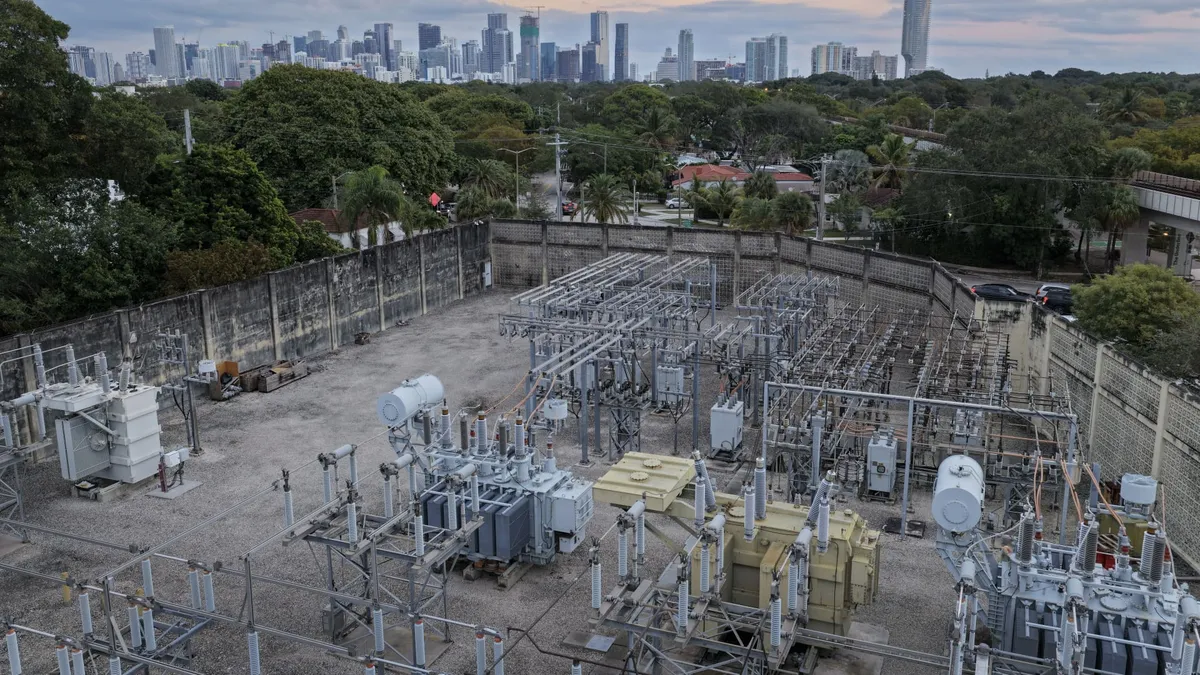
The 2030 projection for data-centre demand has kept rising, from about 945 TWh in April 2025 to about 950 TWh in April 2026 and now about 1,000 TWh. Demand grew 17% in 2025 to 485 TWh, and AI-optimised sites account for roughly three-quarters of the projected increase. [1] [5] [6] [7] [13]
Grids are emerging as the binding limit. In several regions, the data-centre capacity waiting to connect already exceeds current peak demand. The outlook calls for about 26 million km of new lines by 2035. It also names shortages of transformers, cables and copper, plus local opposition. The 75% rise in grid spending comes from the Current Policies Scenario, while the 1,000 TWh figure comes from Stated Policies. [1] [12]
Data-centre CO₂ emissions are reported to rise about 70% by 2030. The main driver is the regional power mix rather than computing efficiency: about 60% of US data-centre power is expected to come from gas and about 50% of China's from coal, while about 70% of the EU's comes from renewables. [3]
Data-centre investment is put at about $4 trillion by 2030, up from $565 billion in 2025. Fewer than 100 major projects together need about 50 GW, which is roughly Great Britain's peak demand. [11]
In the IEA's scenarios, electricity demand, connection queues and grid spending all rise together.
Read the full assessment
For AI operators and investors, this suggests grid access and the local power mix may shape site choices, timelines and Scope 2 emissions more than hardware supply does.
Executive brief
The IEA's World Energy Outlook 2026 says global data-centre electricity use could double to about 1,000 TWh a year by 2030. The bigger news is the IEA's warning that grids, not chips, may be what holds AI back. In several regions, the data-centre capacity waiting to connect is already larger than current peak demand (CNBC). Reporting on the outlook says data-centre carbon emissions rise about 70% by 2030. The main reason is that the US leans on gas and China on coal to power new facilities (Irish Examiner). The outlook came out during the 2026 Hormuz energy crisis.
What changed and event timeline
IEA's first Energy and AI report
The IEA projected that data-centre demand would more than double to about 945 TWh by 2030, from about 415 TWh in 2024, with AI as the main driver (;).
2025 demand grows 17%
In its update, the IEA reported that data-centre demand grew 17% in 2025 to 485 TWh, and demand from AI-focused sites grew about 50%. It put 2030 at roughly 950 TWh (;).
Emissions angle reported
Coverage of the outlook says data-centre CO₂ rises about 70% by 2030. By then, about 60% of US data-centre power is expected to come from gas, about 50% of China's from coal, and about 70% of the EU's from renewables ().
Capabilities and access
- Publication: IEA World Energy Outlook 2026, released 19 November 2026, with several scenarios (IEA).
- Scenarios: The ~1,000 TWh figure comes from the Stated Policies Scenario.
- Earlier analysis: The data-centre figures build on the IEA's 2026 Key Questions on Energy and AI special report.
Read the full section
- Publication: IEA World Energy Outlook 2026, released 19 November 2026, with several scenarios (IEA).
- Scenarios: The ~1,000 TWh figure comes from the Stated Policies Scenario. The 75% rise in grid spending comes from the Current Policies Scenario, which covers only measures already in force (CNBC). The two sets of numbers come from different scenarios and should not be added together.
- Earlier analysis: The data-centre figures build on the IEA's 2026 Key Questions on Energy and AI special report.
Technical analysis for researchers and developers
- Projection basis: These are scenario projections, not forecasts. Stated Policies assumes announced measures. Current Policies assumes only adopted rules (CNBC).
- Asset tracking: Coverage says the IEA uses satellite imagery to track 93 large AI-dedicated sites.
- Constraints: The binding limits named are connection queues, transformers, cables, copper and local opposition (Euronews).
Read the full section
- Projection basis: These are scenario projections, not forecasts. Stated Policies assumes announced measures. Current Policies assumes only adopted rules (CNBC).
- Asset tracking: Coverage says the IEA uses satellite imagery to track 93 large AI-dedicated sites. Fewer than 100 major projects together need about 50 GW, roughly Great Britain's peak demand (Energy Connects). The detailed method is not described in the reviewed sources.
- Constraints: The binding limits named are connection queues, transformers, cables, copper and local opposition (Euronews).
- Where emissions come from: The 70% rise depends mainly on the regional power mix, not on how efficient the computing is (Irish Examiner).
Claims and evidence
- Doubling to ~1,000 TWh by 2030; AI-optimised sites drive ~75% of the increase.
- Investment of $4T by 2030, after $565B in 2025.
- Peak demand +40–50% by 2035; electricity reaches nearly 30% of final energy consumption, up from 23%.
Read the full section
- Doubling to ~1,000 TWh by 2030; AI-optimised sites drive ~75% of the increase. FourWeekMBA, CNBC.
- Investment of $4T by 2030, after $565B in 2025. Energy Connects.
- Peak demand +40–50% by 2035; electricity reaches nearly 30% of final energy consumption, up from 23%. Euronews.
- Evidence status: Every figure is the IEA's own modelling, passed on by news outlets. No independent model corroborating these numbers appears in the reviewed sources.
Context and prior work
The headline figure has moved up over time: Measured 2025 growth of 17% matched the IEA's earlier path (Bloomberg). The rest of the outlook is shaped by the Hormuz disruption. Before the war, about 20 million barrels a day passed through the strait (CNBC).
Limitations, safety and contested findings
- Inconsistent baseline in coverage: One outlet describes the increase as an extra 350 TWh "within four years" (Irish Examiner).
- Hotspot lists differ: Some outlets name the UK as a grid hotspot (CNBC), while others name Denmark (AI Weekly).
- Wording varies: The "doubling" is framed both "by 2030" and "compared with today."
Read the full section
- Inconsistent baseline in coverage: One outlet describes the increase as an extra 350 TWh "within four years" (Irish Examiner). Doubling from the 485 TWh measured in 2025 implies a larger increase, so the baseline in that coverage is unclear.
- Hotspot lists differ: Some outlets name the UK as a grid hotspot (CNBC), while others name Denmark (AI Weekly).
- Wording varies: The "doubling" is framed both "by 2030" and "compared with today."
- Local opposition: Pushback over water, land and grid use is growing in North America and Europe (Euronews).
Business and practitioner implications
- Site selection: Power is becoming the deciding factor.
- Emissions reporting: Companies relying on US gas or Chinese coal face higher Scope 2 emissions. EU sites look cleaner on a grid-average basis.
- Suppliers: Grid builders, transformer makers and copper suppliers sit at the centre of a 75% rise in network spending (CNBC).
Read the full section
- Site selection: Power is becoming the deciding factor. Where queues are longer than peak demand (Virginia, Texas, Finland), connection timelines may decide whether a project happens.
- Emissions reporting: Companies relying on US gas or Chinese coal face higher Scope 2 emissions. EU sites look cleaner on a grid-average basis.
- Suppliers: Grid builders, transformer makers and copper suppliers sit at the centre of a 75% rise in network spending (CNBC).
- Developers: Running inference efficiently and scheduling workloads flexibly reduce exposure to grid curtailment.
The source trail.
Sources (14)
CNBC: IEA – Grid investment critical as data center electricity demand soars
cnbc.comDatacentres to create 70% more carbon emissions by 2030, IEA report warns
Related coverage; assess separately
theguardian.com