
Venture fundsFund closes, LPs & managers
Dylan Patel says permits are pushing AI data center capacity into 2028 as SemiAnalysis adds a $500M fund and Citrini Research
Dylan Patel says permitting, not chips, labor or equipment, is now delaying AI data centers, pushing multiple gigawatts from 2027 into 2028. He spoke as SemiAnalysis adds a fully sold $500M venture fund and Citrini Research to its research business.
From the Sourcery video of November 17, 2026 and cited sources: Patel says SemiAnalysis has moved multiple gigawatts of tracked data center capacity from 2027 into 2028. [1] [6] [9]
SOURCES[1] Dylan Patel, SemiAnalysis youtube.com[6] BigGo Finance: Permits are now the real bottleneck finance.biggo.com[9] Scuttlebutt: 49% of people near a 100MW data center daily.scuttlebutt.co
 AT Pulse research deskPublished · Updated · 4 min read · AI-assisted analysis
AI-assisted, not human-edited. Methodology Corrections Who owns this site
- What happened
- Patel says SemiAnalysis has moved multiple gigawatts of tracked data center capacity from 2027 into 2028. [1] [6] [9]
- Original source
- Sourcery video, independent perspective
- Brief by
- AT Pulse research desk AI-assisted; publisher and contact on the desk page
- When
- November 17, 2026 video published
- Covered
- Nov 18 edition
- Evidence
- 10 sources across 9 sites; transcript sourced
- 1Dylan Patel, SemiAnalysisyoutube.com
- 2FormDs: SemiAnalysis Capital Fund I, LPformds.com
- 3Citrini: A Note to Readers on Citrini's New Ownershipcitrini.com
- 4Crypto Briefing: SemiAnalysis acquires Citrini Researchcryptobriefing.com
- 5StorageNewsletter: Positron AI raises $875Mstoragenewsletter.com
- 6BigGo Finance: Permits are now the real bottleneckfinance.biggo.com
RisingHow it’s measured
YouTube video · 13.1K views · 139 likes
Reach blends public engagement (views, likes, comments, shares, stars) from the platforms where the story or its original source lives: YouTube, Hacker News, GitHub, Substack and similar. A video and the article written from its transcript share one score, taken from the video. Platforms with no data are left out rather than counted as zero, and the age of a story never lowers its score.
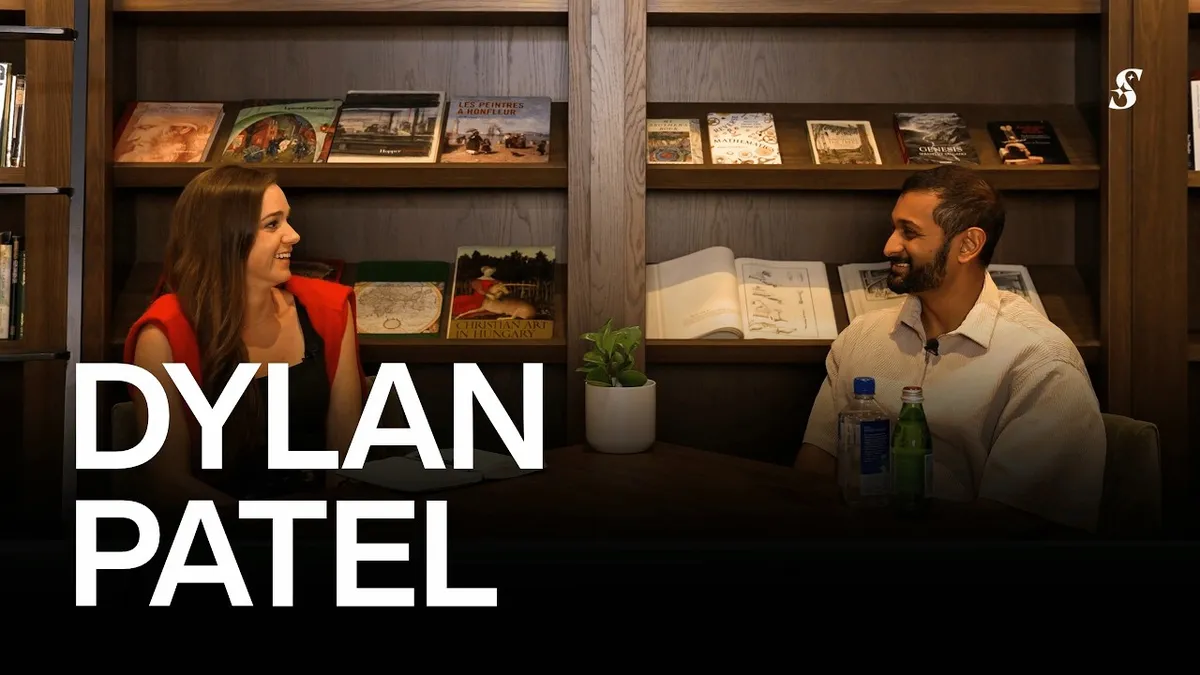
Patel says SemiAnalysis has moved multiple gigawatts of tracked data center capacity from 2027 into 2028. He blames water, stormwater and air permits, not equipment or labor shortages. He adds that an air permit alone can stop an off-grid site that uses little water. A poll SemiAnalysis ran with David Shor found that 49% of residents in counties with a 100MW+ data center did not know one was there. [1] [6] [9]
SemiAnalysis Capital Fund I, a solo-GP fund focused on seed and Series A infrastructure deals, has sold $500M to 120 investors, according to amended Form D filings. Earlier reports put the target at $400M. Its first disclosed deal was co-leading the $375M first tranche of Positron AI's Series C, and Patel joined Positron's board. [1] [2] [5] [7]
SemiAnalysis acquired Citrini Research without disclosing terms. A figure of about $100M is openly speculative. Citrini is bearish on AI while Patel remains bullish, and he says Citrini's research director keeps control over what it publishes. [1] [3] [4] [8]
Patel now runs research, consulting and venture investing side by side. He also holds a large stake in what appears to be Fluidstack. He says the fund is walled off from the research and points to SemiAnalysis publicly calling Fluidstack's data centers delayed. Outside readers cannot check that separation. [1] [5]
Filings confirm the fund's size and investor count. The permit delays, the county poll and the conflict firewalls rest on Patel's account.
Read the full assessment
If accurate, siting risk is shifting from hardware to local regulators, and readers should weigh SemiAnalysis hardware calls against the fund's portfolio.
Executive brief
SemiAnalysis founder Dylan Patel says permits, not chips, labor or equipment, are now what delays AI data centers. His firm has moved "multiple gigawatts" of planned capacity from 2027 into 2028 for that reason (Sourcery, 6:04). He also cites a poll SemiAnalysis ran with David Shor: 49% of residents in counties with a 100MW+ data center didn't know one was there (6:46). The interview runs alongside a fast expansion of his business. SEC filings confirm a $500M venture fund, and SemiAnalysis has bought Citrini Research. That puts one person's research, consulting and investing roles closer together.
What changed and event timeline
Fund filing opens
SemiAnalysis Capital Fund I filed its first Form D, for a $500M offering with nothing yet sold. Dylan Patel is listed as a director ().
Citrini acquisition
Citrini said it now has new owners and that its brand, team and subscriptions will stay the same. It gave no terms (;).
First disclosed lead deal
SemiAnalysis Capital co-led the $375M first tranche of Positron AI's Series C, and Patel joined Positron's board ().
Fund fully sold
An amended Form D reports $500M sold to 120 investors, with the first sale on August 4 ().
Sourcery interview
Patel talked about permitting risk, the county poll, his firm's AI spending, the fund and Citrini (;).
Capabilities and access
This is not a model release.
Read the full section
This is not a model release. The product claims come from Patel's view as a customer:
- 45% of SemiAnalysis's roughly $15M a year in AI spending now goes to persistent agents, mostly through Perplexity Computer, which runs on Claude and OpenAI models underneath (15:57).
- He says Meta's Muse and a product the captions render as "Instinct" are better products than OpenAI's "Dots," even though their models are weaker. He blames an OpenAI safety layer called "Guardian" for overblocking (14:42).
- The product names come from automatic captions. No other reviewed source confirms them.
Technical analysis for researchers and developers
- SemiAnalysis says it tests models with an eval called "GDPX" and on bio, cyber and chip-design tasks (27:18; 32:59).
- Patel says Perplexity is "just a better harness" over the same frontier models. For developers, the orchestration layer can decide which vendor gets paid.
- Patel compares embedded, supply-chain water use and says all of xAI's data centers use about as much as three In-N-Out restaurants (9:38).
Read the full section
- Evals. SemiAnalysis says it tests models with an eval called "GDPX" and on bio, cyber and chip-design tasks (27:18; 32:59). No method or results were found in the reviewed sources.
- Harness over model. Patel says Perplexity is "just a better harness" over the same frontier models. For developers, the orchestration layer can decide which vendor gets paid.
- Water accounting. Patel compares embedded, supply-chain water use and says all of xAI's data centers use about as much as three In-N-Out restaurants (9:38). The calculation hasn't been published.
Claims and evidence
Read the full section
- $500M fund, 120 investors. This is confirmed by the filing (FormDs). Earlier reports said the target was $400M (KuCoin). As a solo-GP fund, it has no round valuation or lead investor. LP names are not public.
- Citrini price. No terms were disclosed. A figure of about $100M is openly speculative (KuCoin).
- 49% poll and gigawatt pushouts. These rest only on what Patel says. The reviewed coverage gives no sample size or method (Scuttlebutt), so there is no independent corroboration.
- $15M AI spend and 45% agent share. Self-reported.
Context and prior work
Shor has separately said that opposition to local data centers turns to support once a benefit such as lower taxes is added to the question (Oscar Sykes on X). Patel says most local bans are in places with no data centers anyway (6:29). He also argues that a bestselling book overstated data center water use about 1,000-fold (11:46).
Read the full section
Shor has separately said that opposition to local data centers turns to support once a benefit such as lower taxes is added to the question (Oscar Sykes on X). Patel says most local bans are in places with no data centers anyway (6:29). He also argues that a bestselling book overstated data center water use about 1,000-fold (11:46). He expects space-based compute to be meaningful around 2030, not in the next three to four years (3:00).
Limitations, safety and contested findings
- Patel is GP of the fund, sits on Positron's board, and says he has a "large investment" in a company the captions render as "food stack," likely Fluidstack.
- Citrini is bearish on AI while Patel stays bullish. He says Citrini's research director keeps editorial control (30:43).
- Patel says he would accept the risk of an agent mis-sending a text or mis-booking an appointment in exchange for less restrictive guardrails.
Read the full section
- Conflicts of interest. Patel is GP of the fund, sits on Positron's board, and says he has a "large investment" in a company the captions render as "food stack," likely Fluidstack. He adds that SemiAnalysis has still said publicly that its data centers are delayed (38:53). He says the fund is firewalled from the research (24:17). Readers can't check that from outside.
- Opposing house views. Citrini is bearish on AI while Patel stays bullish. He says Citrini's research director keeps editorial control (30:43).
- Safety trade-off. Patel says he would accept the risk of an agent mis-sending a text or mis-booking an appointment in exchange for less restrictive guardrails. The host pushed back.
Business and practitioner implications
- Water, stormwater and air permits are the main schedule risk Patel names. Permits can stop even off-grid sites that use little water (4:57).
- Agent harnesses can move spending away from model vendors' own apps. Patel doubts Perplexity earns much margin on that spending (22:14).
- SemiAnalysis's data now sits next to a venture fund and a bearish sister publication.
Read the full section
- Siting. Water, stormwater and air permits are the main schedule risk Patel names. Permits can stop even off-grid sites that use little water (4:57).
- Vendor lock-in. Agent harnesses can move spending away from model vendors' own apps. Patel doubts Perplexity earns much margin on that spending (22:14).
- Reading research. SemiAnalysis's data now sits next to a venture fund and a bearish sister publication. Check its calls on hardware startups against the fund's disclosed positions.
The source trail.
Sources (10)
Dylan Patel, SemiAnalysis
Transcript retrieved via youtube_auto_captions; language en. Timestamped text, not direct audiovisual review. Source: https://www.youtube.com/watch?v=cBArIbI6gVA. Automatic captions/transcription may contain errors.
www.youtube.com