
FundingRounds, leads & terms
each::labs raises $7M seed round co-led by Revo Capital and the EBRD
Generative media startup each::labs has raised a $7M seed round co-led by Revo Capital and the EBRD. It sells one API that routes requests to hundreds of third-party image, video and audio models, and says monthly revenue recently grew about fivefold.
From the Tech.eu article of November 18, 2026 and cited sources: The $7M seed was announced on November 18, 2026. [1] [2] [4]
SOURCES[1] each::labs bags $7M to make generative media production… tech.eu[2] TNW: Generative media startup each::labs raises $7M seed… thenextweb.com[4] EIN Presswire (company release) einpresswire.com
 AT Pulse research deskPublished · Updated · 5 min read · AI-assisted analysis
AI-assisted, not human-edited. Methodology Corrections Who owns this site
- Original source
- Tech.eu article, independent perspective
- Brief by
- AT Pulse research desk AI-assisted; publisher and contact on the desk page
- When
- November 18, 2026 article published
- Covered
- Nov 18 edition
- Evidence
- 11 sources across 7 sites
- 1each::labs bags $7M to make generative media production…tech.eu
- 2TNW: Generative media startup each::labs raises $7M seed…thenextweb.com
- 3Tech Funding News: EBRD and Revo Capital co-lead $7M for…techfundingnews.com
- 4EIN Presswire (company release)einpresswire.com
- 5egirişim: each::labs, Revo Capital ve EBRD liderliğinde 7…egirisim.com
- 6each::labs blog: Lockstep: cast anyone, keep every moveeachlabs.ai
Reach: not measured yet
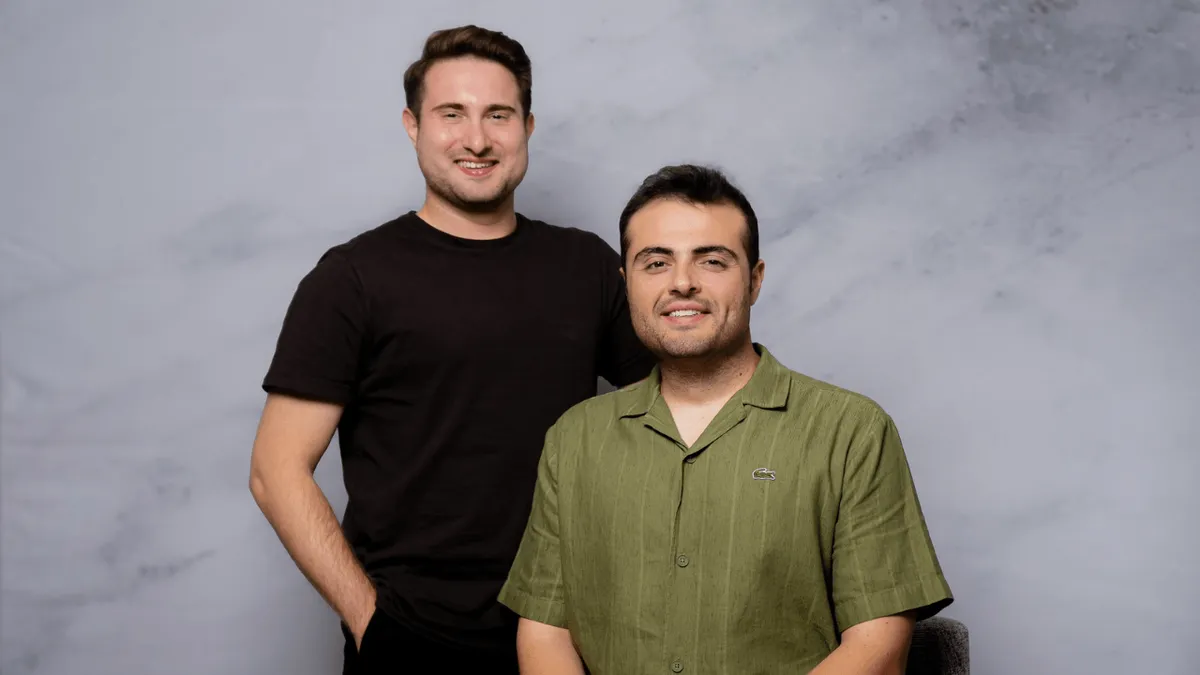
The $7M seed was announced on November 18, 2026. Revo Capital and the EBRD co-led it, and Teknasyon, xCapital, Deepix, YZF and Eksim Ventures also took part. The valuation was not disclosed. Before this round, the company had raised less than $2M. [1] [2] [4]
Company-reported figures put October 2026 monthly revenue at about $2M. That is roughly five times August's level and implies a run rate above $20M. Because the run rate rests on a single month after a sharp jump, it may not hold. [2] [3] [4]
The main product is one API key that reaches more than 600 external models, though the company's docs say 500+. Automatic fallback switches to another model when a generation fails. Spending alerts and reusable workflows aim to make production more reliable and cheaper to manage. [1] [2] [7]
The company is also adding its own models, but the 'proprietary' label is open to question. Its product page describes Flint Image as a Gemini-powered workflow. Lockstep, a video character-swap model priced at $0.09 per second at 720p, has no published training details or reproducible benchmarks. [2] [6] [8] [9]
several outlets report a $7M round, and the company publishes per-call prices. Implication: buyers mostly pay for routing reliability and cost control, not better models.
Read the full assessment
That means the 56%-to-100% success-rate claim should be tested against each buyer's own quality standards.
Executive brief
Each::labs says its monthly revenue grew about fivefold between August and October 2026, to roughly $2M a month, or a run rate above $20M. It reached that with less than $2M raised before this round. These figures are self-reported (TNW; TFN). The company has now raised a $7M seed round co-led by Revo Capital and the EBRD (Tech.eu). Its main product is one API that routes customer requests to more than 600 third-party image, video and audio models. It is also building its own models. The open question is whether "proprietary" is the right word for them.
What changed and event timeline
Company founded
Turkish engineers founded each::labs, with headquarters in San Francisco and engineering in Istanbul. Co-founders are CEO Eftal Yurtseven and CTO Canberk Sinangil (;).
Pre-seed
Right Side Capital led the pre-seed, joined by ENA Venture Capital, Treeo VC and angel investors. Total funding before the seed was under $2M ().
Revo invests first
Revo Capital made its first investment more than a year before co-leading the seed ().
Platform rebuilt
The company says the rebuild added automatic fallback to other models when a generation fails. It reports success rates rising from 56% to 100% and core requests running up to 25x faster ().
Each::studio and Lockstep
Each::studio soft-launched on October 9 (). TNW dates Lockstep's launch to October 28, but the company's blog post is dated November 2 (;).
$7M seed announced
Revo Capital and the EBRD co-led the round. Teknasyon, xCapital, Deepix, YZF and Eksim Ventures also took part ().
Capabilities and access
- API: one API key gives access to more than 600 external models (Tech.eu). The company's own docs say "500+" (docs).
- Flint Image: returns four images per call for $0.20. There are 4K and Edit variants, and Edit takes 1–10 reference images (Flint page).
- Lockstep: recasts characters in a video while keeping the original motion, lip sync and camera. It costs $0.09 per second at 720p (TNW).
Read the full section
- API: one API key gives access to more than 600 external models (Tech.eu). The company's own docs say "500+" (docs). Features include fallbacks, spending alerts, reusable workflows, and each::sense, an agent with an OpenAI-compatible interface that picks a model for each request.
- Flint Image: returns four images per call for $0.20. There are 4K and Edit variants, and Edit takes 1–10 reference images (Flint page).
- Lockstep: recasts characters in a video while keeping the original motion, lip sync and camera. It takes 1–8 reference images and outputs 480p, 720p or 1080p (Lockstep). It costs $0.09 per second at 720p (TNW).
- each::studio: a no-code workspace for film, visual effects and marketing teams.
Technical analysis for researchers and developers
- Flint's "proprietary" label: the Flint product page describes it as a private "BlackBox" workflow powered by Gemini (Flint page).
- Lockstep: described as a proprietary video-to-video model, with no base model or training details published (blog).
- Evaluation: the only evaluation is a side-by-side test on four trend videos against an unnamed competitor.
Read the full section
- Flint's "proprietary" label: the Flint product page describes it as a private "BlackBox" workflow powered by Gemini (Flint page). That makes it look like orchestration around Google's model, not a model trained from scratch.
- Lockstep: described as a proprietary video-to-video model, with no base model or training details published (blog).
- Evaluation: the only evaluation is a side-by-side test on four trend videos against an unnamed competitor. The 56%→100% success figure was measured on replayed customer traffic. No benchmark, dataset or code has been released, so none of these results can be reproduced.
- Reliability claim: a 100% success rate with fallbacks most likely means "some output was returned," not that a specific model produced acceptable quality.
Claims and evidence
- $7M round, co-leads Revo and EBRD: announced by the company and repeated by Tech.eu, TNW and egirişim. None of these cites a filing.
- $20M+ run rate, 5x growth, about 1M runs a day: all self-reported (EIN Presswire release).
- Customer count conflicts: most outlets say 750+ paying organisations. TFN says 230 B2B clients.
Read the full section
- $7M round, co-leads Revo and EBRD: announced by the company and repeated by Tech.eu, TNW and egirişim. None of these cites a filing. Valuation was not disclosed.
- $20M+ run rate, 5x growth, about 1M runs a day: all self-reported (EIN Presswire release). A run rate built from one month of revenue after a fivefold jump may not hold.
- Customer count conflicts: most outlets say 750+ paying organisations. TFN says 230 B2B clients. The difference may come from how customers are counted, but the reviewed sources don't say.
- Lockstep "about 75% cheaper": a vendor comparison against a competitor's price (blog).
- Investor comment: Revo founding partner Cenk Bayrakdar, speaking about his own portfolio company, said customers moving from testing the platform to using it in their products shaped the decision (egirişim).
Context and prior work
Each::labs competes in the market for aggregators and routers that put many models behind one API. The catalogue it resells includes Alibaba's Wan 2.2 Animate-Replace, Pruna's P-Video Replace and PixVerse Swap (Wan listing; P-Video). The EBRD is also a backer of Revo itself: it supported Revo's second fund, which closed at €40M in March 2020 (egirişim).
Read the full section
Each::labs competes in the market for aggregators and routers that put many models behind one API. The catalogue it resells includes Alibaba's Wan 2.2 Animate-Replace, Pruna's P-Video Replace and PixVerse Swap (Wan listing; P-Video). Lockstep therefore competes with models sold on the same platform. The EBRD is also a backer of Revo itself: it supported Revo's second fund, which closed at €40M in March 2020 (egirişim).
Limitations, safety and contested findings
- The 56%→100% reliability and 25x speed figures are internal, and no method has been published for them.
- Lockstep's launch date differs between sources (October 28 vs November 2), and so does the customer count (750+ vs 230).
- Lockstep swaps real people's likenesses in existing footage. The reviewed sources say nothing about consent checks, watermarking or misuse safeguards.
Read the full section
- The 56%→100% reliability and 25x speed figures are internal, and no method has been published for them.
- Lockstep's launch date differs between sources (October 28 vs November 2), and so does the customer count (750+ vs 230).
- Lockstep swaps real people's likenesses in existing footage. The reviewed sources say nothing about consent checks, watermarking or misuse safeguards.
- An aggregator depends on its upstream providers. Flint, for example, runs on Gemini.
Business and practitioner implications
- For teams buying generative media, each::labs is mainly selling reliability and cost control (fallbacks, spending alerts), not access to better models.
- The comparisons on offer are per-call prices: $0.20 for four Flint images and $0.09 per second for Lockstep at 720p.
- For investors, a $20M+ run rate at the seed stage would be unusual.
Read the full section
- For teams buying generative media, each::labs is mainly selling reliability and cost control (fallbacks, spending alerts), not access to better models. Check the fallback behaviour against your own quality standards before relying on the success-rate claim.
- The comparisons on offer are per-call prices: $0.20 for four Flint images and $0.09 per second for Lockstep at 720p. Test these on your own workloads.
- For investors, a $20M+ run rate at the seed stage would be unusual. It rests on one month's self-reported revenue, and no valuation was disclosed.
- If a Lockstep-type model is used on paid ads, legal teams need to review likeness rights.
The source trail.
Sources (11)
each::labs bags $7M to make generative media production faster and cheaper
Article text retrieved; extracted text may omit tables or interactive elements.
tech.eu