
RoboticsMachines in the physical world
India's Humyn Labs raises $47M Series A to sell first-person task video to U.S. robotics developers
Bengaluru-based Humyn Labs raised $26 million in Accel-led equity and $21 million in venture debt to expand paid, first-person recording of everyday tasks in more than 20 countries. It labels the footage and sells it as training data to U.S. AI labs and robotics companies.
From the TechCrunch AI article of November 18, 2026 and cited sources: The $47 million round has two parts: $26 million in equity led by Accel and $21 million in venture debt led by Lighthouse Canton. [1] [6]
SOURCES[1] TechCrunch: India's Humyn Labs raises $47M (Nov 18, 2026) techcrunch.com[6] Bloomberg: Physical AI Startup Humyn Raises $47 Million… bloomberg.com
 AT Pulse research deskPublished · Updated · 5 min read · AI-assisted analysis
AI-assisted, not human-edited. Methodology Corrections Who owns this site
- What happened
- The $47 million round has two parts: $26 million in equity led by Accel and $21 million in venture debt led by Lighthouse Canton. [1] [6]
- Original source
- TechCrunch AI article, independent perspective
- Brief by
- AT Pulse research desk AI-assisted; publisher and contact on the desk page
- When
- November 18, 2026 article published
- Covered
- Nov 18 edition
- Evidence
- 9 sources across 6 sites
- 1TechCrunch: India's Humyn Labs raises $47M (Nov 18, 2026)techcrunch.com
- 2Business Standard: Humyn Labs Series Abusiness-standard.com
- 3TechCrunch: Human Archive taps India's services startups…techcrunch.com
- 4Ego4D: Around the World in 3,000 Hours of Egocentric Video…arxiv.org
- 5EgoMimic: Scaling Imitation Learning via Egocentric Video…arxiv.org
- 6Bloomberg: Physical AI Startup Humyn Raises $47 Million…bloomberg.com
Reach: not measured yet
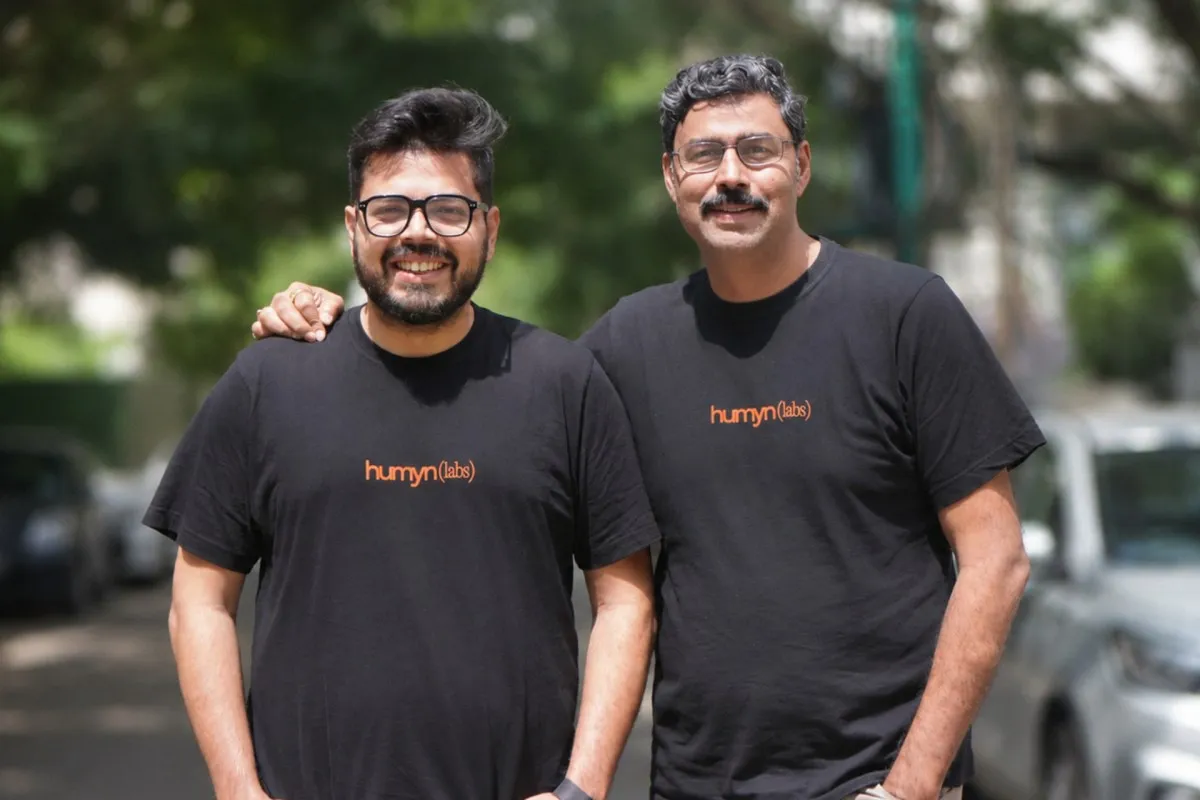
The $47 million round has two parts: $26 million in equity led by Accel and $21 million in venture debt led by Lighthouse Canton. The debt covers a timing gap. Humyn pays its collectors daily or weekly, but customers pay 30 to 60 days later. [1] [6]
The founders say the company, started in February 2026, earned $10 million in revenue from April to October. They also cite 12 unnamed customers and about 90% of revenue from the U.S. These figures come from interviews and have not been independently checked. [1]
Research suggests first-person human video with hand tracking can partly replace costly robot teleoperation data. In one study it improved robot task performance by 34–228%. Humyn has not released sample data or benchmarks, and has not said whether it captures depth or force data, as rival Human Archive says it does. [5] [7] [1] [3]
Research shows first-person human video can improve robot learning when it is aligned with robot data. That points to a growing outsourced data supply chain for physical AI.
Read the full assessment
Buyers still cannot judge Humyn's data quality without public samples or benchmarks.
Executive brief
Humyn Labs, founded in Bengaluru in February 2026, says it booked $10 million in revenue between April and October 2026, its first months of operation. It has now raised a $47 million Series A, and 45% of that is debt (TechCrunch). The company films people doing everyday tasks in more than 20 countries. It then labels the footage and sells it to U.S. AI labs and robotics companies. It works in the same field as rivals such as Human Archive, which is drawing questions about consent and pay, and India's IT ministry is reviewing how this kind of data is collected (TechCrunch).
What changed and event timeline
2022: Ego4D sets the benchmark
Meta and 13 universities released 3,670 hours of first-person ("egocentric") video from 931 participants, collected with consent and de-identification procedures, and presented it at CVPR 2022 ().
EgoMimic links human video to robot skill
Georgia Tech researchers reported that egocentric human video with 3D hand tracking improved robot task performance by 34–228% compared with robot data alone ().
Humyn Labs founded
Manish Agarwal, formerly CEO of Nazara Technologies, and Ishank Gupta, formerly at AB InBev, started the company. The two earlier co-founded KGeN, whose network of contributors in emerging markets helps Humyn record inside homes ().
Rival funded; regulator reviewing
Human Archive raised $8.2 million and has more than 1,000 headsets in use in India. India's IT ministry (MeitY) is looking into how egocentric-data startups obtain consent ().
$47M Series A
The round is $26 million in equity led by Accel, plus $21 million in venture debt led by Lighthouse Canton (;).
Capabilities and access
- No model release. The product is a data service.
- Hardware: a two-camera recording rig the company built itself.
- Software: labels footage, tracks hand movements and object interactions, and turns raw recordings into training data (TechCrunch).
Read the full section
- No model release. The product is a data service.
- Hardware: a two-camera recording rig the company built itself.
- Software: labels footage, tracks hand movements and object interactions, and turns raw recordings into training data (TechCrunch).
- Where it collects: more than 20 countries in Latin America and Asia, with Brazil, India and South Korea as the main hubs.
- What is not public: dataset size, sensor details, file formats, licensing terms and pricing. None appear in the reviewed sources.
- Access: commercial contracts only.
Technical analysis for researchers and developers
- Why this data has value. Published research shows egocentric human video can partly replace robot teleoperation data, which is costly to collect.
- What Humyn's gap is. Humyn records two camera views and tracks hands. Humyn has not said whether it captures depth or force.
- Recording real chores rather than staged tasks gives more variety but less control over what each clip shows.
Read the full section
- Why this data has value. Published research shows egocentric human video can partly replace robot teleoperation data, which is costly to collect. That only works if the human and robot data are aligned for differences in body, motion and appearance (EgoMimic).
- What Humyn's gap is. Humyn records two camera views and tracks hands. Human Archive says it also captures depth, touch and motion data across seven hardware products (TechCrunch). Humyn has not said whether it captures depth or force.
- Unscripted footage. Recording real chores rather than staged tasks gives more variety but less control over what each clip shows. Buyers should check label accuracy and how evenly tasks are covered.
- No public benchmarks or sample data, so independent assessment is not possible yet.
Claims and evidence
All figures below come from the founders in interviews and have no independent corroboration (TechCrunch): The investor list matches across Bloomberg's headline and secondary write-ups. Coverage attributed to Business Standard adds a plan for real-world robot testing infrastructure. TechCrunch does not mention that plan.
Read the full section
All figures below come from the founders in interviews and have no independent corroboration (TechCrunch):
- 12 paying customers, including frontier AI labs and developers of world models. None are named.
- About 90% of revenue comes from the U.S.
- $10 million in revenue from April to October, $20 million more in signed contracts and another $20 million not yet finalized.
- 51 full-time employees.
The investor list matches across Bloomberg's headline and secondary write-ups. Coverage attributed to Business Standard adds a plan for real-world robot testing infrastructure. TechCrunch does not mention that plan.
Context and prior work
- Ego4D showed that consented, de-identified egocentric video could be collected in many countries (Ego4D).
- Competitors: Mecka AI, XDOF, MicroAGI, Human Archive and BuildAI (TechCrunch).
- Other Indian players: Inc42 also names Awign, Objectways, Egolab.AI and Neo Cambrian.
Read the full section
- Academic datasets came first. Ego4D showed that consented, de-identified egocentric video could be collected in many countries (Ego4D).
- Competitors: Mecka AI, XDOF, MicroAGI, Human Archive and BuildAI (TechCrunch).
- Other Indian players: Inc42 also names Awign, Objectways, Egolab.AI and Neo Cambrian. It reports that Awign captures up to 1,000 hours of 4K footage a day (Inc42).
Limitations, safety and contested findings
- Filming inside homes raises privacy and consent questions (TechCrunch). Humyn says local partners monitor and supervise the paid workers who record.
- Lawyers quoted by Inc42 say body cameras may stretch the employment exemptions in India's Digital Personal Data Protection (DPDP) Act.
- Human Archive pays about $1 an hour (TechCrunch). Humyn's wage rates are not disclosed.
Read the full section
- Recording in homes. Filming inside homes raises privacy and consent questions (TechCrunch). Humyn says local partners monitor and supervise the paid workers who record.
- Bystanders and the law. Lawyers quoted by Inc42 say body cameras may stretch the employment exemptions in India's Digital Personal Data Protection (DPDP) Act. Recording third parties without notices could break the rules (Inc42).
- Pay. Human Archive pays about $1 an hour (TechCrunch). Global labs reportedly pay $15–50 per hour of finished data (Inc42). Humyn's wage rates are not disclosed.
Business and practitioner implications
- Humyn pays collectors daily or weekly but waits 30–60 days for customers to pay. That cash gap explains the $21 million in debt (TechCrunch).
- Prices are falling. Collection rates dropped 30% between January and June 2026 as competition grew, and synthetic data could reduce demand further (Inc42).
- For buyers: before signing, ask for proof that consent was obtained (including from bystanders), that collection complies with the DPDP Act, and that labels have been checked for quality.
Read the full section
- Why the debt. Humyn pays collectors daily or weekly but waits 30–60 days for customers to pay. That cash gap explains the $21 million in debt (TechCrunch).
- Prices are falling. Collection rates dropped 30% between January and June 2026 as competition grew, and synthetic data could reduce demand further (Inc42).
- For buyers: before signing, ask for proof that consent was obtained (including from bystanders), that collection complies with the DPDP Act, and that labels have been checked for quality. MeitY's review could change compliance costs.