
Bonds & creditYields, spreads & debt
Robin Wigglesworth discusses his bond-market history 'A Fabulous Debt' on Macro Musings as hedge funds' Treasury holdings hit a record $2 trillion
FT Alphaville editor Robin Wigglesworth, discussing his book A Fabulous Debt on Macro Musings, traces bonds from medieval Venice to today's Treasury market, where official data show hedge funds hold a record $2.0 trillion and a large leveraged basis-trade position.
From the Macro Musings podcast episode of November 16, 2026 and cited sources: A Fabulous Debt follows bond finance from 12th-century Venice through the Netherlands, Britain, the Rothschilds and Michael Milken to Jerome Powell. [1] [4] [7]
SOURCES[1] Macro Musings: Robin Wigglesworth on A Fabulous Debt macromusings.libsyn.com[4] Penguin Random House: A Fabulous Debt penguinrandomhouse.com[7] Bond Vigilantes: Wigglesworth the Wait? bondvigilantes.com
 AT Pulse research deskPublished · Updated · 4 min read · AI-assisted analysis
AI-assisted, not human-edited. Methodology Corrections Who owns this site
- What happened
- A Fabulous Debt follows bond finance from 12th-century Venice through the Netherlands, Britain, the Rothschilds and Michael Milken to Jerome Powell. [1] [4] [7]
- Original source
- Macro Musings podcast episode, independent perspective
- Brief by
- AT Pulse research desk AI-assisted; publisher and contact on the desk page
- When
- November 16, 2026 podcast episode published
- Covered
- Nov 16 edition
- Evidence
- 9 sources across 9 sites; no transcript
- 1Macro Musings: Robin Wigglesworth on A Fabulous Debtmacromusings.libsyn.com
- 2OFR: Hedge Funds' Cash Treasury Holdings Reach $2 Trillionfinancialresearch.gov
- 3Federal Reserve FEDS Notes: Decomposing Hedge Funds' U.S.…federalreserve.gov
- 4Penguin Random House: A Fabulous Debtpenguinrandomhouse.com
- 5Reuters via Yahoo Finance: Basis trade retreat spurs shift…finance.yahoo.com
- 6Penguin UK: A Fabulous Debtpenguin.co.uk
QuietHow it’s measured
YouTube video · 140 views · 7 likes
Reach blends public engagement (views, likes, comments, shares, stars) from the platforms where the story or its original source lives: YouTube, Hacker News, GitHub, Substack and similar. A video and the article written from its transcript share one score, taken from the video. Platforms with no data are left out rather than counted as zero, and the age of a story never lowers its score.
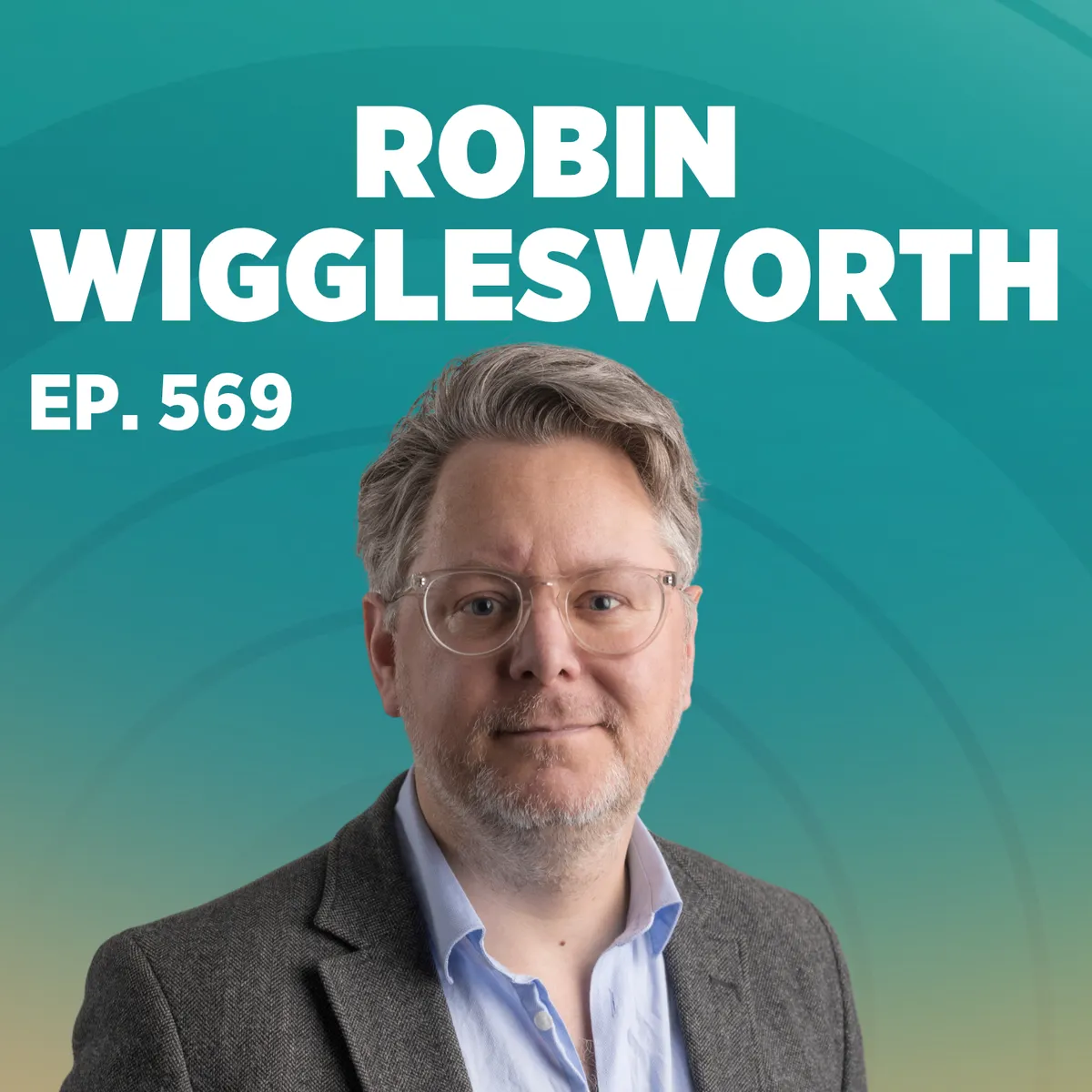
A Fabulous Debt follows bond finance from 12th-century Venice through the Netherlands, Britain, the Rothschilds and Michael Milken to Jerome Powell. It links bonds to funding wars, railways and now AI data centres. The publisher presents the book as arguing that bond markets are now bigger than the stock market. [1] [4] [7]
Hedge funds held about $2.0 trillion of cash Treasuries in Q4 2025, or 7% of marketable debt. That is a record share and roughly three times the end-2020 level. A Fed staff note separately estimates their cash-futures basis positions at about $830bn, or 3.5% of privately held Treasuries, compared with a 2.5% peak in early 2020. [2] [3]
Fed and OFR data show leveraged hedge funds own a record share of Treasuries. Implication: repo financing costs and bank balance-sheet rules increasingly shape Treasury liquidity, and a shift into swap spreads changes where an unwind could hit.
Executive brief
Hedge funds now hold about $2.0 trillion of cash US Treasuries, or 7% of marketable Treasury debt. That is a record share and roughly three times the end-2020 level, according to the OFR. This is the backdrop to Macro Musings host David Beckworth's interview with Robin Wigglesworth, the FT Alphaville editor, about his book A Fabulous Debt. The book follows bonds from medieval Venice to today's Treasury market. The episode ends on liquidity demand and "hedge fund bogeymen." The reviewed sources cover only the episode's show notes, so its specific arguments cannot be confirmed here.
What changed and event timeline
Fed sizes the basis trade
A Fed staff note estimates hedge funds' cash-futures basis positions at about $830bn as of September 2025, 35% of their long Treasury exposure. That is roughly double the early-2020 peak.
OFR reports record holdings
Hedge funds' cash Treasury holdings reached $2.0tn in Q4 2025, 7% of marketable debt. Over the same period, total marketable debt grew 29% to $28.9tn.
Book published in the US
Portfolio published A Fabulous Debt as a 416-page hardcover. It argues that bonds are now bigger than the stock market.
Episode recorded
Beckworth and Wigglesworth discuss Venice, the Netherlands, Britain, the rise of Treasuries and hedge-fund risk.
Basis trade plateaus
Reuters reports that higher financing costs and rule changes letting banks hold more Treasuries have reduced basis-trade opportunities, and that capital is moving into swap-spread trades.
Capabilities and access
- Book: A Fabulous Debt: The Epic Story of How Bonds Built the Modern World. The UK edition is published by Penguin Business (Penguin UK).
- Episode: About 65 minutes, with timestamped segments. Topics include the Venetian Doge (00:12:24), the Netherlands (00:25:01), the rise of the Treasury market (00:43:21) and hedge funds (00:53:39) (show notes).
Read the full section
- Book: A Fabulous Debt: The Epic Story of How Bonds Built the Modern World. The US edition is published by Portfolio (ISBN 9780593719183); the audiobook runs 13h43m (PRH). The UK edition is published by Penguin Business (Penguin UK).
- Episode: About 65 minutes, with timestamped segments. Topics include the Venetian Doge (00:12:24), the Netherlands (00:25:01), the rise of the Treasury market (00:43:21) and hedge funds (00:53:39) (show notes).
Technical analysis for researchers and developers
- The Fed note breaks $2.4tn of hedge-fund long Treasury positions into seven strategies using SEC Form PF data through September 2025.
- The author describes the figures as approximations because no trade-level positioning data exists.
- The OFR combines its Hedge Fund Monitor with Form PF and CFTC Traders in Financial Futures data (OFR).
Read the full section
- The Fed note breaks $2.4tn of hedge-fund long Treasury positions into seven strategies using SEC Form PF data through September 2025. The basis trade accounts for $830bn, swap-spread arbitrage $305bn, maturity-matched trades $395bn and steepener-like trades $375bn (Fed).
- The author describes the figures as approximations because no trade-level positioning data exists.
- The OFR combines its Hedge Fund Monitor with Form PF and CFTC Traders in Financial Futures data (OFR).
- The two agencies use different scopes and dates, so their totals ($2.0tn and $2.4tn) should not be treated as one series.
Claims and evidence
- Claim (publisher): bonds are now bigger than the stock market and rival the banking system in influence (PRH).
- Supported: the hedge-fund share of Treasuries is at a record (OFR), and the basis trade is at 3.5% of privately held Treasuries versus a 2.5% peak in early 2020 (Fed).
- Reviews: a fund manager calls the book "meticulously researched" (Bond Vigilantes). A Substack reviewer gives it 5 stars (Have You Not Read).
Read the full section
- Claim (publisher): bonds are now bigger than the stock market and rival the banking system in influence (PRH). This is the book's framing; the reviewed sources do not test it independently.
- Supported: the hedge-fund share of Treasuries is at a record (OFR), and the basis trade is at 3.5% of privately held Treasuries versus a 2.5% peak in early 2020 (Fed).
- Reviews: a fund manager calls the book "meticulously researched" (Bond Vigilantes). A Substack reviewer gives it 5 stars (Have You Not Read).
Context and prior work
- Wigglesworth's previous book, Trillions, covered passive investing (Penguin UK).
- A Fabulous Debt runs from 12th-century Venice through the Rothschilds, Michael Milken and Lewis Ranieri to Jerome Powell (Bond Vigilantes).
- It ties bond finance to funding wars, railways and now AI data centres (PRH).
Read the full section
- Wigglesworth's previous book, Trillions, covered passive investing (Penguin UK).
- A Fabulous Debt runs from 12th-century Venice through the Rothschilds, Michael Milken and Lewis Ranieri to Jerome Powell (Bond Vigilantes).
- It ties bond finance to funding wars, railways and now AI data centres (PRH).
- The episode's segment "The Least Dirty Shirt" suggests the common market idea that Treasuries are the least-bad safe asset. That reading comes only from the title.
Limitations, safety and contested findings
- Basis-trade size is uncertain. Published estimates range from $350bn to $1.5tn, depending on method (Treasury TBAC materials). The Fed's own estimate is approximate.
- The data is old. The figures run to late 2025, and the trade may have shrunk since (Reuters).
- Analysts disagree on whether the pressure is gone. Monachil's Ali Meli expects the same pressures to return as government borrowing grows (same source).
Read the full section
- Basis-trade size is uncertain. Published estimates range from $350bn to $1.5tn, depending on method (Treasury TBAC materials). The Fed's own estimate is approximate.
- The data is old. The figures run to late 2025, and the trade may have shrunk since (Reuters).
- Analysts disagree on whether the pressure is gone. Monachil's Ali Meli expects the same pressures to return as government borrowing grows (same source).
- The reviews don't criticise the book. The Substack reviewer instead worries about rising foreign-official and Fed holdings of US debt (Have You Not Read).
Business and practitioner implications
- Hedge funds that borrow heavily through repo now hold a larger share of the Treasury market than at any point in the OFR's records (OFR).
- Moves from the basis trade into swap spreads change where an unwind could hit (Reuters).
- For non-specialists, the book offers an accessible history of the market that funds AI infrastructure (PRH).
Read the full section
- Hedge funds that borrow heavily through repo now hold a larger share of the Treasury market than at any point in the OFR's records (OFR). That makes the cost of repo financing and banks' balance-sheet rules important for Treasury liquidity.
- Moves from the basis trade into swap spreads change where an unwind could hit (Reuters).
- For non-specialists, the book offers an accessible history of the market that funds AI infrastructure (PRH).