
ResearchPapers, evidence & method
Apple and OpenEvidence launch a U.S. study app on how people use AI for health questions
Apple and OpenEvidence opened a U.S. study app that lets up to 200,000 adults put health questions to an AI that answers from clinical literature. Over more than a year, it will measure trust, answer quality and behaviour change.
From the TechCrunch AI article of November 16, 2026 and cited sources: The Apple Health AI Study app is open to U.S. adults aged 21 and over who have an iPhone 15 or later with Apple Intelligence turned on. [1] [2] [10]
SOURCES[1] TechCrunch: Apple launches new app to study how people use… techcrunch.com[2] Healthcare Dive: Apple, OpenEvidence launch conversational… healthcaredive.com[10] App Store: Apple Health AI Study App apps.apple.com
 AT Pulse research deskPublished · Updated · 5 min read · AI-assisted analysis
AI-assisted, not human-edited. Methodology Corrections Who owns this site
- What happened
- The Apple Health AI Study app is open to U.S. adults aged 21 and over who have an iPhone 15 or later with Apple Intelligence turned on. [1] [2] [10]
- Original source
- TechCrunch AI article, independent perspective
- Brief by
- AT Pulse research desk AI-assisted; publisher and contact on the desk page
- When
- November 16, 2026 article published
- Covered
- Nov 16 edition
- Evidence
- 12 sources across 11 sites
- 1TechCrunch: Apple launches new app to study how people use…techcrunch.com
- 2Healthcare Dive: Apple, OpenEvidence launch conversational…healthcaredive.com
- 3Fortune: OpenAI launches ChatGPT Healthfortune.com
- 4Storyboard18: ChatGPT Health, 230 million weekly usersstoryboard18.com
- 5HLTH: OpenEvidence doubles valuation to $12bnhlth.com
- 6Bloomberg: Apple is scaling back plans for AI-based health…bloomberg.com
Reach: not measured yet
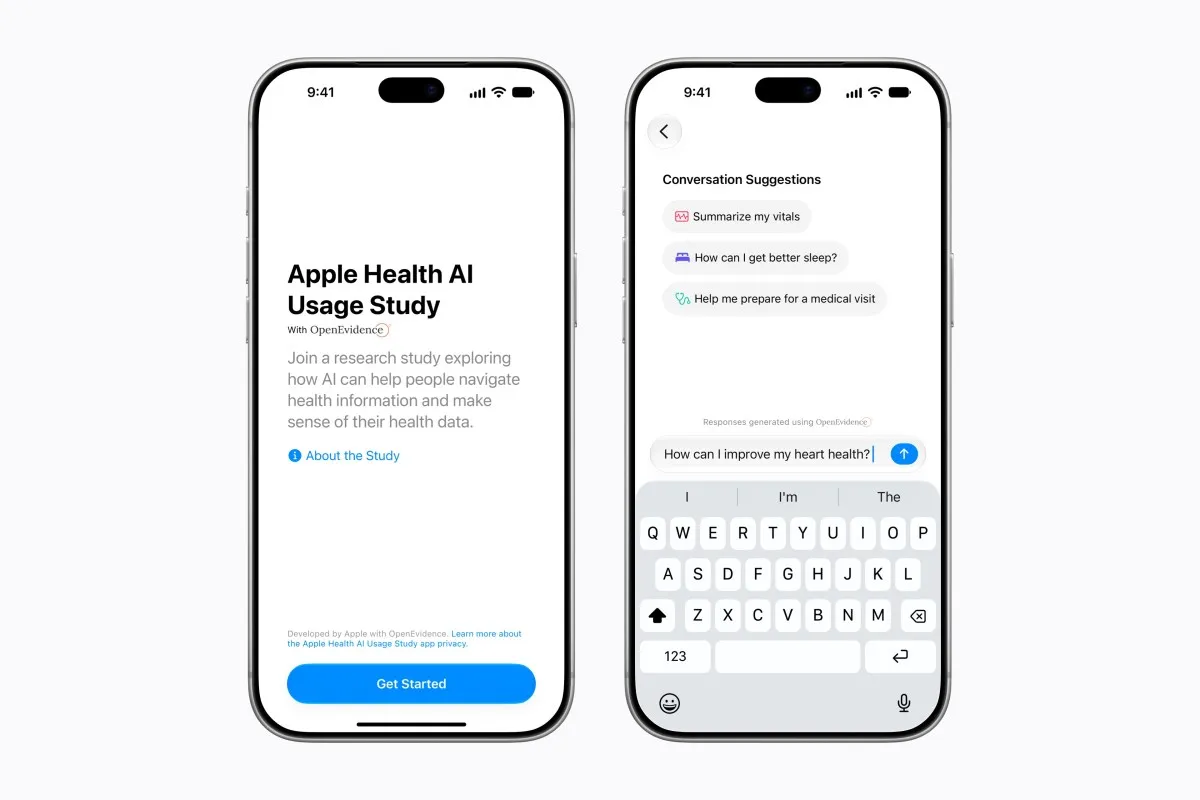
The Apple Health AI Study app is open to U.S. adults aged 21 and over who have an iPhone 15 or later with Apple Intelligence turned on. Apple designed the study and OpenEvidence, whose tool was built for doctors, supplies the AI. Participants rate answers, complete monthly surveys and can choose to share HealthKit data such as sleep, activity and lab results. Neither company has named the underlying model. [1] [2] [10]
Apple is studying conversational health AI before shipping it, while OpenAI released ChatGPT Health straight to consumers in January. Apple reportedly scaled back its own AI health coach in February, and its September Health app redesign had no conversational assistant. [1] [3] [6] [9]
The study targets a known gap between model scores and real use. In a randomised Oxford trial of 1,298 people, LLMs alone identified the relevant condition in 94.9% of cases. Participants using the same models identified it in under 34.5% of cases, no better than a control group using their usual resources. [8]
in an Oxford randomised trial, people using LLMs did no better than controls despite strong model-only scores.
Read the full assessment
Implication: Apple's user-level data could shape whether conversational health features reach its Health app or Siri, and how others evaluate health AI.
Executive brief
Apple has not shipped a health chatbot of its own. It has launched a research study instead: the Apple Health AI Study app, which lets up to 200,000 U.S. adults ask health questions of an AI built by OpenEvidence, a company whose product was made for doctors (TechCrunch). OpenAI, by contrast, released ChatGPT Health directly to consumers.
Read the full section
Apple has not shipped a health chatbot of its own. It has launched a research study instead: the Apple Health AI Study app, which lets up to 200,000 U.S. adults ask health questions of an AI built by OpenEvidence, a company whose product was made for doctors (TechCrunch). The study is meant to run for more than 12 months. It will look at what makes people trust health AI, how good the answers are, and whether the answers change behaviour (Healthcare Dive). OpenAI, by contrast, released ChatGPT Health directly to consumers. Apple is treating conversational health AI as a research question for now, nearly a year after it reportedly scaled back its own AI health coach.
What changed and event timeline
OpenAI launches ChatGPT Health
A separate health space inside ChatGPT that can connect to patient portals and Apple Health. OpenAI says more than 230 million people ask ChatGPT health questions each week (;).
OpenEvidence doubles its valuation to $12B
It raised a $250M Series D led by Thrive Capital and DST. The company reports that more than 40% of U.S. physicians use it and that annualised revenue topped $100M in 2025 ().
Apple reportedly scales back "Mulberry."
Bloomberg reported that Apple wound down its AI health coach, known internally as Health+, after a leadership shakeup. A separate wellness chatbot was said to still be in development (;).
Oxford trial finds LLMs don't help the public decide better
In a randomised study of 1,298 people, those using LLMs did no better than a control group using their usual resources, such as internet search ().
Apple unveils a redesigned Health app built on Apple Intelligence
It adds Insights and Longevity tabs and lab testing through Quest. There is no conversational assistant ().
Apple and OpenEvidence launch the study app at HLTH
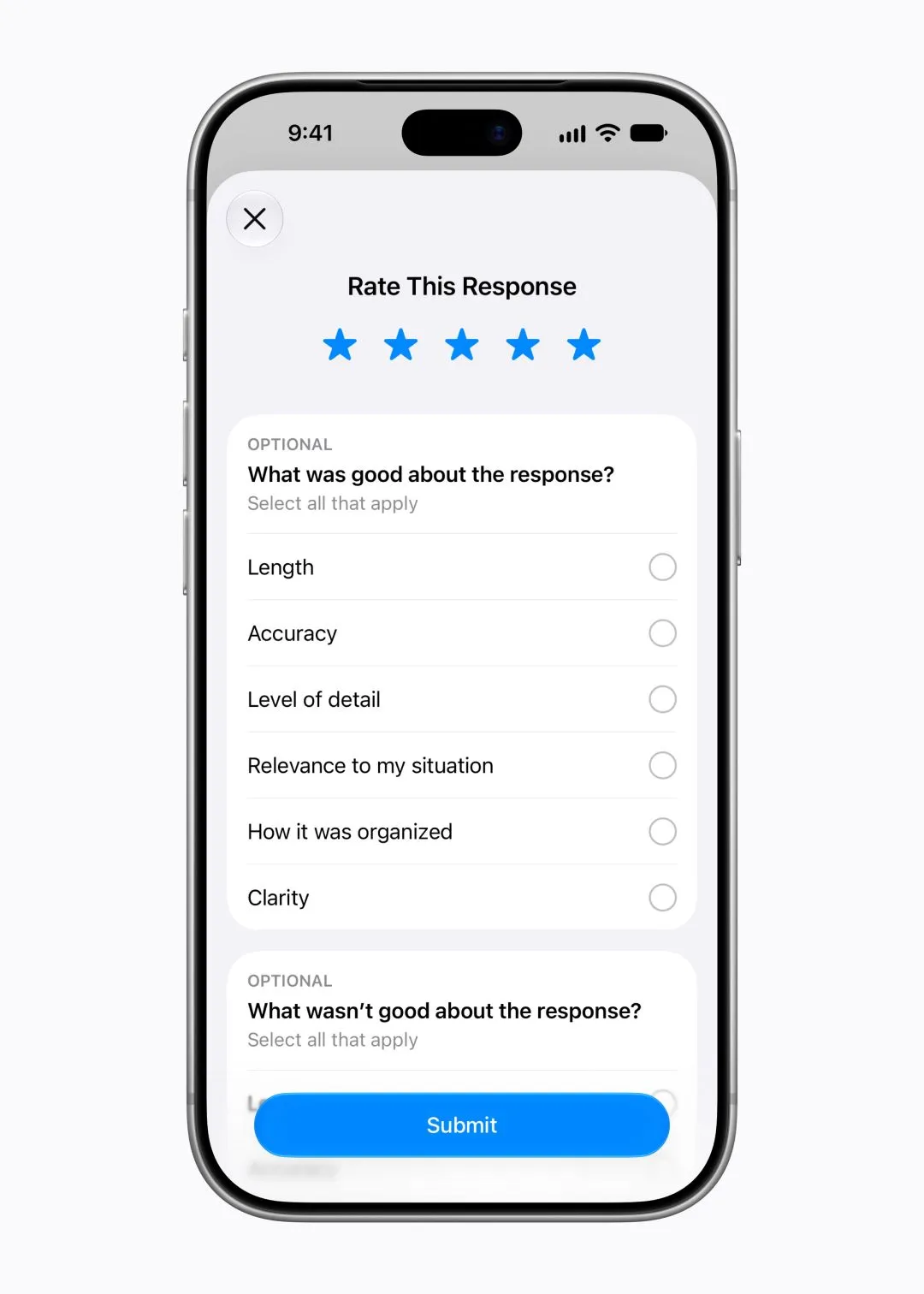
U.S. enrolment opened the same day. The app answers questions from clinical literature and asks participants for ratings and monthly surveys (;).
Capabilities and access
- App: "Apple Health AI Study App," published by Apple Inc. It needs iOS 26 or later and is iPhone-only (App Store).
- Who can join: U.S. residents aged 21+ with an iPhone 15 or later and Apple Intelligence turned on (TechCrunch).
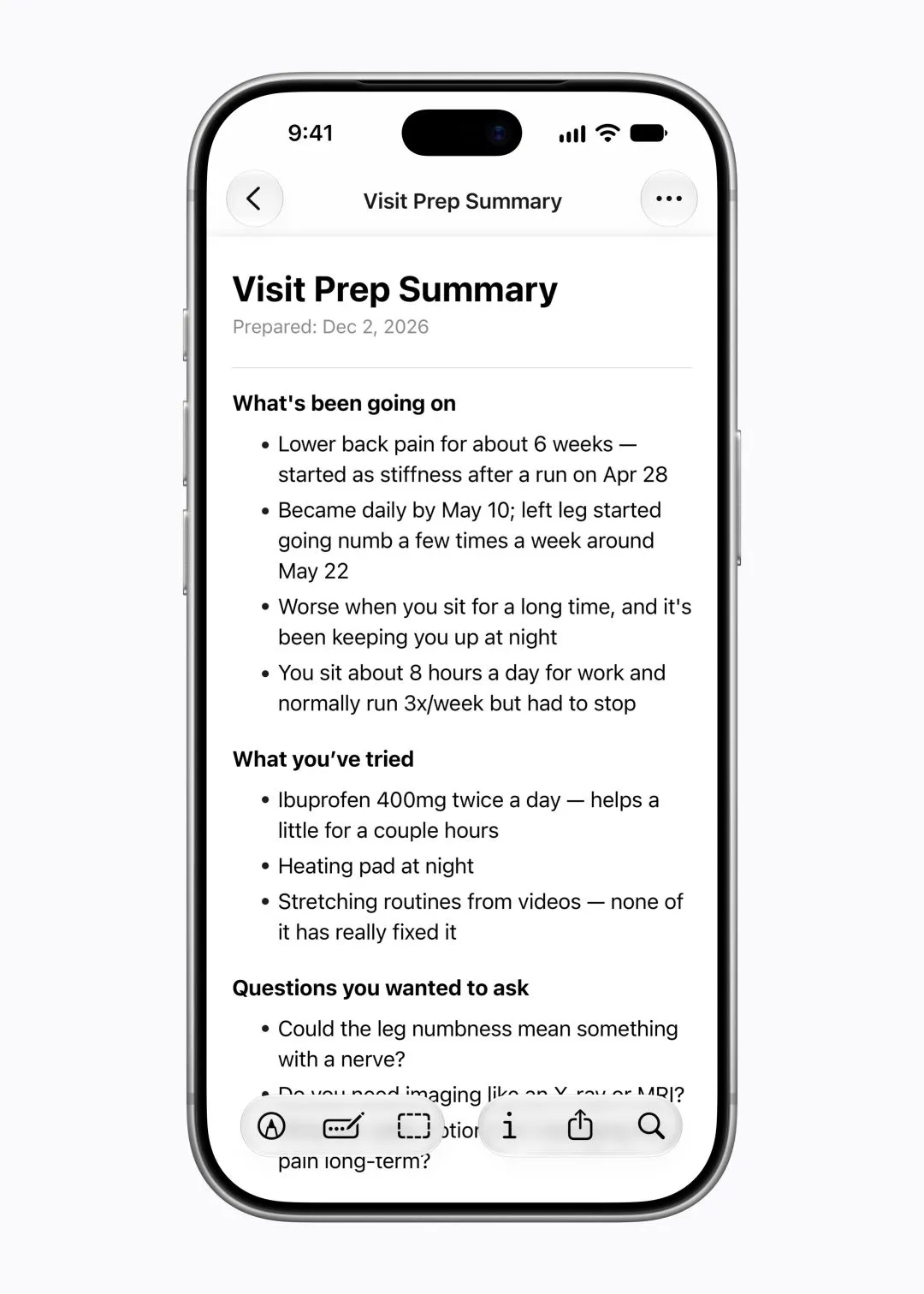
- What it does: answers questions about symptoms and conditions, explains the user's own data, helps prepare for doctor visits, and suggests exercise or meal plans (App Store).
Read the full section
- App: "Apple Health AI Study App," published by Apple Inc. It needs iOS 26 or later and is iPhone-only (App Store).
- Who can join: U.S. residents aged 21+ with an iPhone 15 or later and Apple Intelligence turned on (TechCrunch).
- What it does: answers questions about symptoms and conditions, explains the user's own data, helps prepare for doctor visits, and suggests exercise or meal plans (App Store).
- Personal data: users can choose to share HealthKit data such as resting heart rate, sleep, activity and lab results.
- Model: Apple and OpenEvidence have not named the underlying model or its version.
Technical analysis for researchers and developers
- Setup: Apple designed the study; OpenEvidence supplies the AI (Healthcare Dive). No architecture has been published.
- What gets measured: in-app ratings, free-text feedback, monthly surveys and, for those who opt in, HealthKit data.
- Data handling: data is anonymised before going to a third-party cloud.
Read the full section
- Setup: Apple designed the study; OpenEvidence supplies the AI (Healthcare Dive). Answers are grounded in sources including NEJM, JAMA and Nature, which suggests a retrieval-based design. No architecture has been published.
- What gets measured: in-app ratings, free-text feedback, monthly surveys and, for those who opt in, HealthKit data. The questions are trust, answer quality and behaviour change.
- Data handling: data is anonymised before going to a third-party cloud. OpenEvidence deletes queries and responses after 24 hours, and the data is not used for training (TechCrunch).
- Not published: a protocol, an IRB or registry record, or an analysis plan.
Claims and evidence
- "Clinically grounded" answers: this comes from Apple and OpenEvidence. No independent evaluation of the consumer app's answers exists yet.
- No training on study data: stated by Apple (Healthcare Dive).
- Anonymised data: stated by Apple, but the App Store privacy label lists user IDs as data linked to identity (App Store).
Read the full section
- "Clinically grounded" answers: this comes from Apple and OpenEvidence. No independent evaluation of the consumer app's answers exists yet.
- No training on study data: stated by Apple (Healthcare Dive).
- Anonymised data: stated by Apple, but the App Store privacy label lists user IDs as data linked to identity (App Store).
- OpenEvidence's reach among doctors: the figure is "about two-thirds" of U.S. physicians in Healthcare Dive and "over 40%" in January (HLTH). Both are company-sourced.
- Size of demand: TechCrunch cites "300 million health queries a week," while OpenAI's figure is 230 million people a week (Storyboard18).
Context and prior work
- Apple has run large digital health studies before. The Apple Health Study launched in 2025 with Brigham and Women's Hospital (Apple Newsroom).
- Bloomberg reported that Apple expects a future Siri to handle more advanced health questions (9to5Mac).
- About one-third of U.S. adults have used AI chatbots for health information, according to KFF data cited by Healthcare Dive.
Read the full section
- Apple has run large digital health studies before. The Apple Health Study launched in 2025 with Brigham and Women's Hospital (Apple Newsroom).
- Bloomberg reported that Apple expects a future Siri to handle more advanced health questions (9to5Mac).
- About one-third of U.S. adults have used AI chatbots for health information, according to KFF data cited by Healthcare Dive.
Limitations, safety and contested findings
- Benchmarks vs. real use: in the Oxford trial, the LLMs alone identified the relevant condition in 94.9% of cases.
- Safety design: the app is meant to flag worrying questions and point users to a healthcare provider.
- Who is in the sample: participants choose to join and must own an iPhone 15 or newer, so they are unlikely to represent the general population.
Read the full section
- Benchmarks vs. real use: in the Oxford trial, the LLMs alone identified the relevant condition in 94.9% of cases. Participants using the same LLMs identified it in under 34.5% of cases and chose the right course of action in under 44.2%, no better than the control group (Nature Asia). The authors concluded the models were not ready for direct patient care. Apple's study is designed to measure exactly this kind of real-world gap.
- Safety design: the app is meant to flag worrying questions and point users to a healthcare provider. It says it does not provide medical advice, diagnosis or treatment (App Store).
- Who is in the sample: participants choose to join and must own an iPhone 15 or newer, so they are unlikely to represent the general population.
Business and practitioner implications
- For Apple: the study generates data to inform whether conversational health features reach the Health app or Siri.
- For OpenEvidence: a route from physicians to consumers. This could later raise questions about its advertising-based business model (Sacra).
- For builders: user-level outcomes and deleting data within 24 hours are becoming the marks of credible health AI, alongside benchmark scores.
Read the full section
- For Apple: the study generates data to inform whether conversational health features reach the Health app or Siri. It also lets Apple go slower than OpenAI did with ChatGPT Health. TechCrunch says Apple's plans for the Health app and Siri are unclear.
- For OpenEvidence: a route from physicians to consumers. This could later raise questions about its advertising-based business model (Sacra).
- For builders: user-level outcomes and deleting data within 24 hours are becoming the marks of credible health AI, alongside benchmark scores.