
FundingRounds, leads & terms
Fractile raises $720M Series C for memory-focused AI inference chips at a reported $7B valuation
UK chip startup Fractile raised $720M to build inference hardware around stacked memory rather than raw compute. It reached a reported $7B valuation on the strength of an Anthropic order and its bandwidth thesis, though its first chip is not expected until 2027.
From the 20VC podcast episode of November 14, 2026 and cited sources: Thrive, Founders Fund, Lightspeed and Redpoint led the $720M Series C. [2] [4] [9] [10]
SOURCES[2] SiliconANGLE: Fractile raises $720M siliconangle.com[4] Tech Funding News: Fractile $720M Series C techfundingnews.com[9] TNW: Fractile $220M inference chip thenextweb.com
 AT Pulse research deskPublished · Updated · 5 min read · AI-assisted analysis
AI-assisted, not human-edited. Methodology Corrections Who owns this site
- What happened
- Thrive, Founders Fund, Lightspeed and Redpoint led the $720M Series C. [2] [4] [9] [10] [11] [13]
- Original source
- 20VC podcast episode, independent perspective
- Brief by
- AT Pulse research desk AI-assisted; publisher and contact on the desk page
- When
- November 14, 2026 podcast episode published
- Covered
- Nov 14 edition
- Evidence
- 13 sources across 11 sites; no transcript
- 120VC: Taking on NVIDIA: Fractile CEO on the Future of…thetwentyminutevc.libsyn.com
- 2SiliconANGLE: Fractile raises $720Msiliconangle.com
- 3TNW: $6.5B valuation after Anthropic dealthenextweb.com
- 4Tech Funding News: Fractile $720M Series Ctechfundingnews.com
- 5Tech.eu: Fractile secures $15Mtech.eu
- 6New Electronics: Fractile $15M seednewelectronics.co.uk
Reach: not measured yet
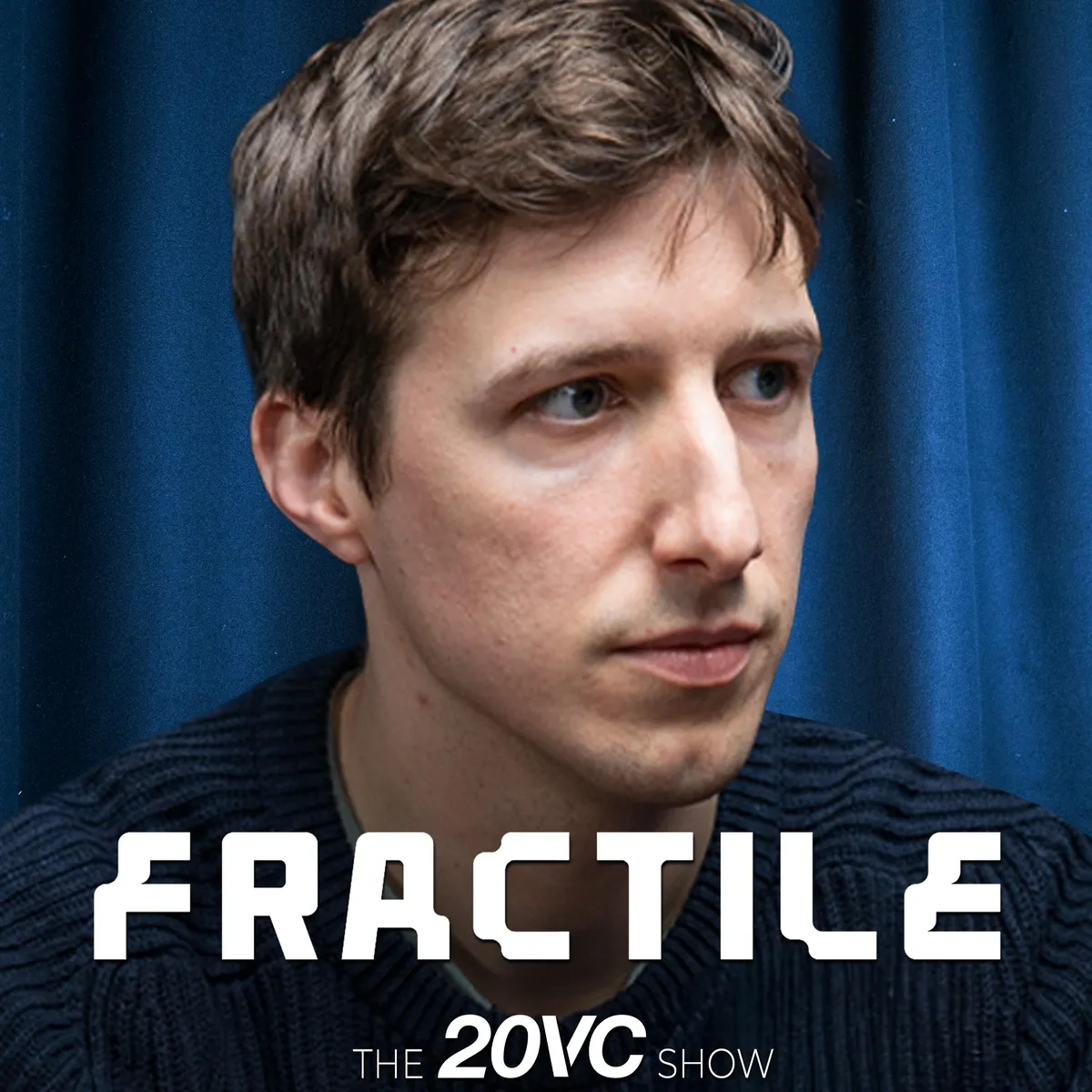
Thrive, Founders Fund, Lightspeed and Redpoint led the $720M Series C. Coverage citing deal sources puts the post-money valuation near $7B, up from about $1B at the $220M Series B in May. UK filings show £577M of shares issued in September and October. [2] [4] [9] [10] [11] [13]
Fractile argues that memory bandwidth, not compute, is what limits inference speed. Its planned answer is custom DRAM stacked in 3D directly on logic, meant to give more bandwidth than HBM and more capacity than on-die SRAM for large, long-context models. [2] [12]
investors priced one anchor customer and a memory-bandwidth thesis, not revenue or shipped silicon.
Read the full assessment
Implication: if stacked DRAM delivers, inference buyers gain a non-Nvidia option; performance figures so far are company claims ranging from 10x to 100x.
Taking on Nvidia: Fractile's $720M Series C and the inference memory bet (20VC, 14 Nov 2026)
Executive brief
Fractile is a British chip startup founded in 2022 that has never shipped a commercial chip. Even so, its valuation has risen roughly sixfold in six months, to a reported $7B. The $720M Series C was led by Thrive, Founders Fund, Lightspeed and Redpoint (SiliconANGLE). An initial chip order of about $250M from Anthropic, reported in August, supports the bet (TNW). Fractile's thesis is that memory bandwidth, not compute, limits how fast AI models can answer. The 20VC interview with CEO Walter Goodwin is promotional commentary. 20VC is also listed as an investor in the round (Tech Funding News).
What changed and event timeline
Fractile leaves stealth
Fractile announced a $15M seed round for in-memory-compute inference chips. Its early targets were 100x faster and 10x cheaper than current hardware (;).
Nvidia licenses Groq
Nvidia signed a non-exclusive licence for Groq's inference technology, valued at $20B. Groq founder Jonathan Ross and president Sunny Madra joined Nvidia, and Groq stays independent (;).
$220M Series B
Accel led the round, with Pat Gelsinger joining as an angel investor. Reported valuation was about $1B. Fractile had disclosed only simulation and small-silicon results ().
Anthropic order reported
Bloomberg, citing unnamed sources, reported an initial chip agreement of about $250M with Anthropic for 2027 delivery. It also reported talks to raise about $600M at a $6.5B pre-money valuation ().
11–12 Nov 2026: $720M Series C
Coverage put the post-money valuation at $7B. Reported investors include CapitalG, BlackRock, the UK Sovereign AI fund and the British Business Bank (;).
20VC interview
Goodwin discusses capex, neoclouds, token costs, and whether the Groq deal was Nvidia's insurance against losing OpenAI. The episode description gives the valuation as $7.5B ().
Capabilities and access
- No commercial product exists yet. The first chip is expected in 2027 (TNW).
- Chips are to be sold inside rack-scale systems with custom software (SiliconANGLE).
- No model names, chip versions, public pricing or developer access have been disclosed.
Read the full section
- No commercial product exists yet. The first chip is expected in 2027 (TNW).
- Chips are to be sold inside rack-scale systems with custom software (SiliconANGLE).
- No model names, chip versions, public pricing or developer access have been disclosed.
- The only reported customer commitment is Anthropic's initial order (Silicon Republic).
Technical analysis for researchers and developers
- Architecture as described in Series C coverage: custom DRAM stacked in 3D directly on top of logic.
- Possible design change: May coverage described SRAM cells on the same die as compute (TNW).
- Reproducibility: there are no published benchmarks, papers or at-scale comparisons against GPU clusters.
Read the full section
- Architecture as described in Series C coverage: custom DRAM stacked in 3D directly on top of logic. The stated aim is more bandwidth than HBM and more capacity than on-die SRAM, enough for large models with long context windows (TNW; SiliconANGLE). SiliconANGLE contrasts this with Cerebras's on-chip SRAM and Samsung's zHBM.
- Possible design change: May coverage described SRAM cells on the same die as compute (TNW). That suggests the design moved from SRAM to stacked DRAM, but no technical paper documents it.
- Reproducibility: there are no published benchmarks, papers or at-scale comparisons against GPU clusters.
Claims and evidence
- Round size: company-announced. Leads are confirmed in multiple reports (Verdict).
- $7B valuation: not confirmed by the company. No independent report corroborates 20VC's $7.5B figure.
- $940M total raised: this equals Series B plus Series C and excludes the 2024 $15M seed.
Read the full section
- Round size: company-announced. Leads are confirmed in multiple reports (Verdict). UK Companies House filings show £577M (about $774M) of shares issued between 9 Sep and 23 Oct (Tech Funding News; FourWeekMBA).
- $7B valuation: not confirmed by the company. It comes from Reuters citing a deal participant, the FT, and unnamed sources (Silicon Republic; Tech Funding News). No independent report corroborates 20VC's $7.5B figure.
- $940M total raised: this equals Series B plus Series C and excludes the 2024 $15M seed.
- Performance claims are self-reported and inconsistent across coverage: "up to 10x faster" (TNW); "up to 100x" with 90% less energy (SiliconANGLE); "25x faster at one-tenth the cost" (TNW, May).
Context and prior work
- Inference-specialist chipmakers include Groq, Cerebras and in-memory-compute designs. Nvidia's $20B Groq licence shows the incumbent paying heavily for low-latency inference IP (Tom's Hardware).
- Goodwin argues that over 25 years chip compute grew about a millionfold while memory bandwidth grew about 40x.
- Anthropic already uses Nvidia GPUs, Google TPUs and Amazon Trainium. Fractile would be a fourth supplier (TNW).
Read the full section
- Inference-specialist chipmakers include Groq, Cerebras and in-memory-compute designs. Nvidia's $20B Groq licence shows the incumbent paying heavily for low-latency inference IP (Tom's Hardware).
- Goodwin argues that over 25 years chip compute grew about a millionfold while memory bandwidth grew about 40x. On his figures that is a 25,000x gap (TNW).
- Anthropic already uses Nvidia GPUs, Google TPUs and Amazon Trainium. Fractile would be a fourth supplier (TNW).
Limitations, safety and contested findings
Read the full section
- The performance gains have not been shown on production silicon (TNW).
- The Anthropic order is for chips that do not exist yet, and its terms come from unnamed sources (TNW).
- Reported valuations conflict: $6.5B pre-money, $7B post-money, and $7.5B in the 20VC episode.
- Conflict of interest: 20VC, the fund behind the podcast, is listed among the round's investors (Tech Funding News). Thrive's Philip Clark, whose firm co-led the round, is the one predicting an inference market as large as Nvidia's current one (TNW).
Business and practitioner implications
- Buyers: plan on 2027 at the earliest and expect a full rack-and-software system, not a drop-in GPU replacement.
- Investors: the price reflects one anchor customer and the memory-bandwidth thesis, not revenue. Fractile does not yet have chip sales.
- Strategy: UK state funds participated, and the UK AI minister publicly endorsed the company. That makes Fractile part of Britain's sovereign-compute policy (Verdict).
Read the full section
- Buyers: plan on 2027 at the earliest and expect a full rack-and-software system, not a drop-in GPU replacement. Evaluate on measured tokens per second and cost per token for your own models.
- Investors: the price reflects one anchor customer and the memory-bandwidth thesis, not revenue. Fractile does not yet have chip sales.
- Strategy: UK state funds participated, and the UK AI minister publicly endorsed the company. That makes Fractile part of Britain's sovereign-compute policy (Verdict).
- Developers: wait for a compiler and runtime before planning around it. None has been documented.
The source trail.
Sources (13)
20VC: Taking on NVIDIA: Fractile CEO on the Future of Chips | What Everyone Gets Wrong About Capex Spending | The Winners and Losers in Neo Clouds with Walter Goodwin
Metadata only. Transcript unavailable: Audio transcription returned HTTP 429.
thetwentyminutevc.libsyn.com