
StocksEquities, earnings & valuations
Nasdaq 100 has its worst day since 2020 after midterm votes against data centers, and Nvidia's Jensen Huang resigns
Within about ten days, voters rejected data centers in 40 of 41 local ballot measures, the Nasdaq 100 had its worst day since March 2020, and Nvidia's CEO resigned during a board investigation into an alleged link to Chinese intelligence.
From the A Wealth of Common Sense article of November 14, 2026 and cited sources: In the midterms, voters in 10 states opposed data-center development in 40 of 41 local measures. [4] [3] [6]
SOURCES[4] CNBC: Voters rebuff data centers in every ballot measure… cnbc.com[3] Idaho Business Review: Why the midterm sweep triggered the… idahobusinessreview.com[6] Investing.com: Oversold AI and chip stocks after the… investing.com
 AT Pulse research deskPublished · Updated · 5 min read · AI-assisted analysis
AI-assisted, not human-edited. Methodology Corrections Who owns this site
- What happened
- In the midterms, voters in 10 states opposed data-center development in 40 of 41 local measures. [4] [3] [6]
- Source caveat
- The losses fell mostly on AI stocks. [2]
- Original source
- A Wealth of Common Sense article, independent perspective
- Brief by
- AT Pulse research desk AI-assisted; publisher and contact on the desk page
- When
- November 14, 2026 article published
- Covered
- Nov 14 edition
- Evidence
- 11 sources across 8 sites
- 1Living a Better Life Nowawealthofcommonsense.com
- 2Linked video: Living a Better Life Nowyoutube.com
- 3Idaho Business Review: Why the midterm sweep triggered the…idahobusinessreview.com
- 4CNBC: Voters rebuff data centers in every ballot measure…cnbc.com
- 5AOL/Esquire: What's Eating George Clooney?aol.com
- 6Investing.com: Oversold AI and chip stocks after the…investing.com
RisingHow it’s measured
YouTube video · 43.5K views · 665 likes
Reach blends public engagement (views, likes, comments, shares, stars) from the platforms where the story or its original source lives: YouTube, Hacker News, GitHub, Substack and similar. A video and the article written from its transcript share one score, taken from the video. Platforms with no data are left out rather than counted as zero, and the age of a story never lowers its score.
In the midterms, voters in 10 states opposed data-center development in 40 of 41 local measures. On Nov. 5 the Nasdaq 100 fell about 6.4%, the S&P 500 fell 4.4% and the Philadelphia Semiconductor Index fell 12%. Nvidia lost roughly $450 billion in market value that day. [4] [3] [6]
The losses fell mostly on AI stocks. Animal Spirits relayed figures from Fidelity strategist Jurrien Timmer; these were not independently checked. On his numbers, AI stocks were about 30% below their highs, the S&P 500 excluding AI was slightly up, and the equal-weight S&P was down only 1.3%. The hosts read this as a rotation into other stocks, not a move to cash. They noted that after the dot-com bubble burst, the S&P 500 excluding tech and telecom still had a positive return. [2]
On Nov. 8 Nvidia's board opened an investigation into Huang's relationship with a woman whom NYT and FT reporting tied to Chinese intelligence. Huang resigned, and CFO Colette Kress became interim CEO. Nvidia shares fell more than 14% intraday before partly recovering. No criminal charges have been filed, and China calls the allegation unsubstantiated. [7] [8] [9] [10]
Voters clearly opposed local data centers, and AI and chip stocks fell hardest. Carlson's reading, which is opinion, is that projects get more expensive and less profitable rather than stopped, which could favor hyperscalers that can pay more.
Read the full assessment
Nvidia's crisis shows key-person risk.
Executive brief
The commentary piece is about slowing down. The podcast episode linked from it covers one of the most volatile weeks for AI stocks since 2020. On Nov. 5, 2026, the Nasdaq 100 fell about 6.4%, its worst day since March 2020, after Democratic midterm wins in states with heavy data-center building (Idaho Business Review). In the same election, voters ruled against data centers in 40 of 41 local ballot measures (CNBC). Ben Carlson's essay uses George Clooney's Lake Como story to argue that money is not a precondition for enjoying life. Within that one week, the investment case for AI infrastructure ran into voters, local politics and a governance crisis at its most important company.
What changed and event timeline
Clooney's Lake Como story published
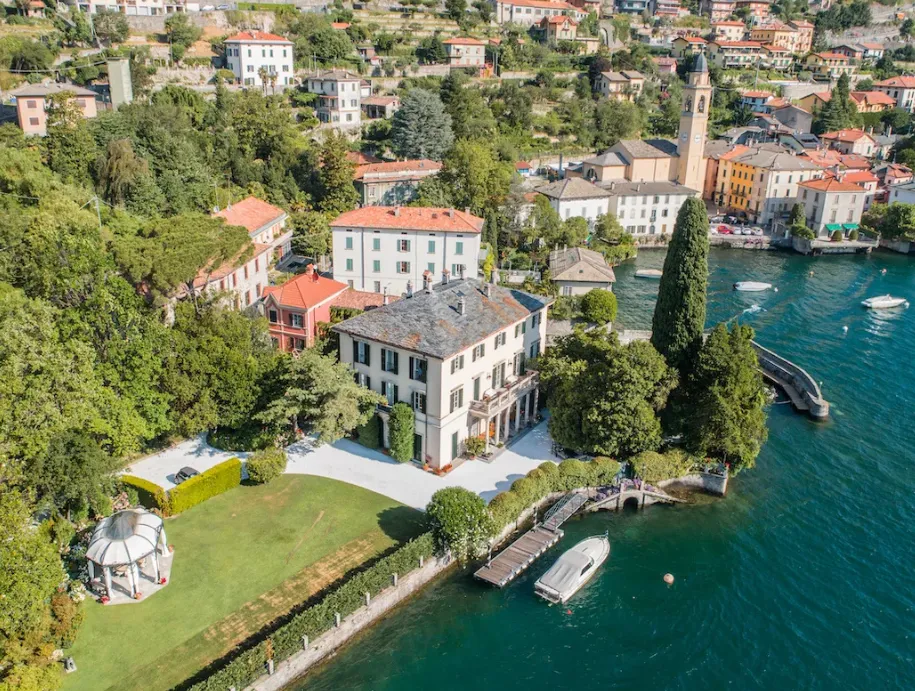
Esquire tells how Clooney bought a lakeside villa from a member of the Heinz family. On his first evening there he watched construction workers singing on their walk home.
Midterms turn against data centers
Voters in 10 states sided against data-center development in 40 of 41 measures; Ohio alone had 21. In a CNBC voter poll, 56% called data centers a crucial or major factor in their vote.
AI stocks fall sharply
The Nasdaq 100 fell 6.4%, the S&P 500 4.4% and the Philadelphia Semiconductor Index 12%. Nvidia lost about $450 billion in market value.
Nvidia's board opens an investigation into Huang
Jensen Huang admitted an affair with a woman whom NYT and FT reporting tied to Chinese intelligence. The board said it had no reason to believe national security or company secrets were compromised.
Huang resigns
Nvidia shares fell more than 14% intraday before partly recovering.
More detail
Essay published
Carlson pairs the Clooney story with his own recent trip to Italy and links to that week's Animal Spirits episode.
Capabilities and access
- The essay is free personal-finance commentary and makes no market calls.
- The episode is Animal Spirits, with Ben Carlson and Michael Batnick of Ritholtz Wealth Management.
- The episode is sponsored by AdvisorShares (00:04).
Read the full section
- The essay is free personal-finance commentary and makes no market calls.
- The episode is Animal Spirits, with Ben Carlson and Michael Batnick of Ritholtz Wealth Management. It was recorded on the morning of Tuesday, Nov. 10 (09:47), before Huang resigned, so the hosts' discussion of Nvidia's leadership is speculation about what might happen next.
- The episode is sponsored by AdvisorShares (00:04).
Technical analysis for researchers and developers
- Rotation, not a rush to cash: The hosts cite Fidelity strategist Jurrien Timmer.
- Leverage: Carlson thinks over-leveraged hedge funds being forced to sell probably drove the Thursday fall and the Monday rebound (09:12).
- Precedent: Batnick says that when the dot-com bubble burst, the S&P excluding tech and telecom still had a positive return from peak to trough (49:30).
Read the full section
- Rotation, not a rush to cash: The hosts cite Fidelity strategist Jurrien Timmer. On his figures, AI stocks were about 30% below their highs while the equal-weight S&P was down only 1.3% and the S&P excluding AI was up 0.5% (07:49). These numbers are relayed in the episode and are not independently checked here.
- Leverage: Carlson thinks over-leveraged hedge funds being forced to sell probably drove the Thursday fall and the Monday rebound (09:12). That is his hypothesis, not established fact.
- Precedent: Batnick says that when the dot-com bubble burst, the S&P excluding tech and telecom still had a positive return from peak to trough (49:30).
Claims and evidence
Read the full section
- Data-center ballots: The transcript says roughly 43 of 44 measures went against data centers (26:28). CNBC reports 40 of 41 (CNBC).
- Size of the selloff: The hosts say more than $2 trillion was wiped out. Reports put the Nov. 5 loss at about $2.3 trillion for the Nasdaq and about $3 trillion for the S&P 500 (Investing.com; Idaho Business Review).
- Claims made by company leaders:
- Musk told Ron Baron that SpaceX would reach a $100 billion annual revenue run rate by December (43:55).
- Amazon CEO Andy Jassy described AWS at a $184 billion run rate growing about 39% (45:00).
- Neither figure is corroborated by the reviewed sources.
- Spy allegation: There are no criminal charges, and China calls the claim unsubstantiated (Al Jazeera).
Context and prior work
- The fisherman-and-businessman parable is a staple of personal-finance writing.
- The Clooney story comes from Ryan D'Agostino's Esquire profile (AOL/Esquire).
- The hosts link today's crowded travel spots to a 2022 line from their colleague Josh Brown: widespread prosperity is incompatible with the American dream (55:16).
Read the full section
- The fisherman-and-businessman parable is a staple of personal-finance writing.
- The Clooney story comes from Ryan D'Agostino's Esquire profile (AOL/Esquire).
- The hosts link today's crowded travel spots to a 2022 line from their colleague Josh Brown: widespread prosperity is incompatible with the American dream (55:16).
- A Dallas Fed report linked data centers to a 6.9% rise in wholesale electricity prices (Al Jazeera).
Limitations, safety and contested findings
- The essay draws general lessons from one celebrity story and one week of travel. Carlson himself calls the parable an imperfect example.
- Cause of the selloff is disputed: reporting blames fears of AI regulation (Idaho Business Review), while the hosts point to positioning and leverage.
- Unverified podcast figures: the hosts say unemployment has stayed below 5% for 61 straight months (50:30). No BLS confirmation was found.
Read the full section
- The essay draws general lessons from one celebrity story and one week of travel. Carlson himself calls the parable an imperfect example.
- Cause of the selloff is disputed: reporting blames fears of AI regulation (Idaho Business Review), while the hosts point to positioning and leverage.
- Unverified podcast figures: the hosts say unemployment has stayed below 5% for 61 straight months (50:30). No BLS confirmation was found.
- Auto-caption errors: the automatic captions garble some names (for example "Instinct" and "Barzone").
Business and practitioner implications
- Local approval is now a cost: On Carlson's read, voter pushback will make data centers more expensive to build and lower their returns, rather than stop them.
- Key-person risk is concrete: Nvidia's leadership crisis shows how much governance shocks can move a single dominant stock.
- A slower buildout may suit companies: The hosts argue that slower capex could sit better with investors who disliked heavy cash burn.
Read the full section
- Local approval is now a cost: On Carlson's read, voter pushback will make data centers more expensive to build and lower their returns, rather than stop them. In his view that could entrench the hyperscalers, who can afford to pay more (26:58).
- Key-person risk is concrete: Nvidia's leadership crisis shows how much governance shocks can move a single dominant stock.
- A slower buildout may suit companies: The hosts argue that slower capex could sit better with investors who disliked heavy cash burn. That is their opinion, and nothing here is investment advice.
The source trail.
Sources (11)
Living a Better Life Now
Article text retrieved; extracted text may omit tables or interactive elements. A transcript of the video linked from this page is supplied (linked video auto captions; https://www.youtube.com/watch?v=jcyzW0rmW6c); automatic text may contain errors.
awealthofcommonsense.comLinked video: Living a Better Life Now
linked video auto captions
www.youtube.com