
BusinessMarkets, money & strategy
Anthropic's seven co-founders will hold 50.1% of the shareholder vote after the IPO through one Founder LLC share
Anthropic's IPO will leave its seven co-founders, who own roughly 10% of the company, with 50.1% of shareholder votes through a single non-economic share, while a benefit trust elects most of the board and public investors' voting power is capped.
From the CNBC · Technology article of November 14, 2026 and cited sources: The S-1 creates five share classes. [1] [3] [5]
SOURCES[1] Meet the seven co-founders of Anthropic cnbc.com[3] Motley Fool: Anthropic's IPO keeps founders in control fool.com[5] Fortune: Anthropic's dual-class share structure fortune.com
 AT Pulse research deskPublished · Updated · 5 min read · AI-assisted analysis
AI-assisted, not human-edited. Methodology Corrections Who owns this site
- Original source
- CNBC · Technology article, independent perspective
- Brief by
- AT Pulse research desk AI-assisted; publisher and contact on the desk page
- When
- November 14, 2026 article published
- Covered
- Nov 14 edition
- Evidence
- 8 sources across 6 sites
- 1Meet the seven co-founders of Anthropiccnbc.com
- 2Linked video: Meet the seven co-founders of Anthropicyoutube.com
- 3Motley Fool: Anthropic's IPO keeps founders in controlfool.com
- 4CNBC/Reuters: Anthropic leaders to control AI labcnbc.com
- 5Fortune: Anthropic's dual-class share structurefortune.com
- 6CNBC: Anthropic sets IPO price range of $70 to $78cnbc.com
RisingHow it’s measured
YouTube video · 146.9K views · 2.3K likes
Reach blends public engagement (views, likes, comments, shares, stars) from the platforms where the story or its original source lives: YouTube, Hacker News, GitHub, Substack and similar. A video and the article written from its transcript share one score, taken from the video. Platforms with no data are left out rather than counted as zero, and the age of a story never lowers its score.
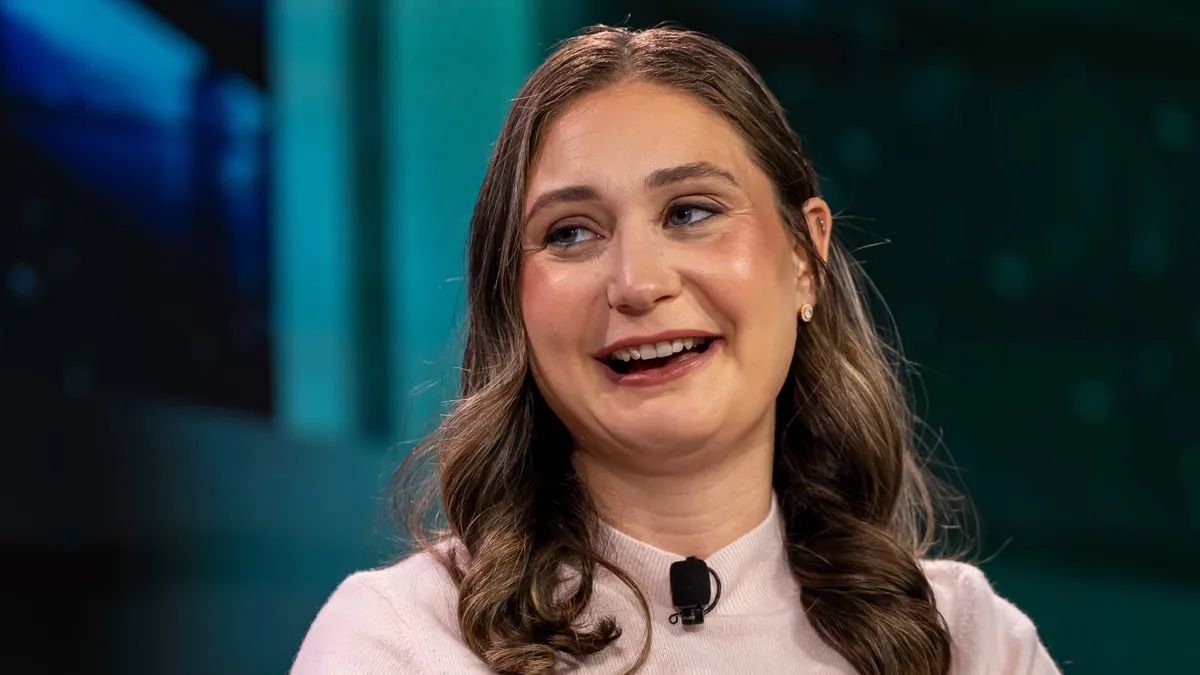
The S-1 creates five share classes. A Class F share held by Founder LLC carries 50.1% of the vote but no economic rights. A Class T share gives the Long-Term Benefit Trust the power to elect a board majority. Public Class A holders get one vote per share, capped at 49.9% of voting power combined, and the filing warns they generally cannot change voting outcomes. [1] [3] [5]
Anthropic is offering 825 million shares at $70–78, which would raise up to $64.35 billion. Pricing is set for Nov. 18, and trading on Nasdaq under ANT is expected Nov. 19. CNBC reports each co-founder could receive about $250 million in cash from the offering and keep stock worth $17–18 billion at the range. Revenue figures of $33.24 billion for the nine months to Sept. 30 and an $81 billion annualized run-rate come from the company's filing, not an independent audit. [1] [6]
The safeguards around founder control are loose. The 80% charity pledge is voluntary and revocable. Fortune reports co-founders could sell 98% of their shares and still stay in the controlling LLC. The Class F share lapses only if fewer than three co-founders remain in the LLC for 90 days. [1] [5] [8]
The founders left OpenAI in late 2020 over its approach to safety. Brown says that in summer 2022 the company held back an internal Claude chatbot, partly over doubts that a launch would be good for the world and partly because it lacked serving infrastructure. He says the business did not seem to work until Claude 3.5 Sonnet's coding ability took off. [1] [2]
The filing terms are clear: public buyers get economic exposure with little say over governance. Whether founder control protects the safety mission or simply entrenches insiders after large payouts is a judgment call. The documents cannot settle it.
Executive brief
Seven people who together own about 10% of Anthropic will control 50.1% of its shareholder vote after the IPO. CNBC reports that each co-founder stands to receive about $250 million in cash from shares sold in the offering, and to hold stock worth $17–18 billion at the target price range. The seven are Dario and Daniela Amodei, Tom Brown, Jack Clark, Jared Kaplan, Sam McCandlish and Chris Olah.
Read the full section
Seven people who together own about 10% of Anthropic will control 50.1% of its shareholder vote after the IPO. They do it through one share with no economic rights, held by "Founder LLC" (CNBC; Motley Fool). Trading is expected on Nov. 19. CNBC reports that each co-founder stands to receive about $250 million in cash from shares sold in the offering, and to hold stock worth $17–18 billion at the target price range. The seven are Dario and Daniela Amodei, Tom Brown, Jack Clark, Jared Kaplan, Sam McCandlish and Chris Olah. All left OpenAI in late 2020 over its approach to safety. They have pledged 80% of their equity to charity, but the pledge is revocable.
What changed and event timeline
OpenAI defection
The Amodei siblings, then vice presidents at OpenAI, left with five colleagues. They founded Anthropic in 2021 as a lab focused on safety (). Brown says about 25 OpenAI staff joined within a few months ().
Summer 2022: Claude held back
About nine months before ChatGPT launched, Anthropic had an internal Claude 1 Slackbot. It did not launch it, partly because it was unsure a launch would be good for the world and partly because it lacked serving infrastructure ().
Control plan reported
Reuters reported that Anthropic's leaders would keep control of the company in order to put the public good ahead of market forces ().
S-1 lays out five share classes
The filing gives Class F 50.1% of votes and gives the Long-Term Benefit Trust, through its Class T share, the power to elect a board majority ().
Price range set
Anthropic is offering 825 million shares at $70–78. That would raise up to $64.35 billion, with pricing on Nov. 18 and Nasdaq trading as ANT on Nov. 19 ().
Capabilities and access
This is a corporate and governance story, with no model release.
Read the full section
This is a corporate and governance story, with no model release.
- Shares: Public investors get Class A shares, one vote each, capped at 49.9% of total voting power together (Fortune). CNBC reports a retail allocation target of about 20% (CNBC).
- Products: Brown says Anthropic did not seem to be working as a company until Claude 3.5 Sonnet and its coding ability. He says Claude 3.7 Sonnet surprised the team with how much agentic coding it enabled (video, 20:34). Claude Code began as an internal tool for Anthropic engineers (video, 26:20).
Technical analysis for researchers and developers
- Evaluation: Brown says Anthropic has no team dedicated to raising public benchmark scores. Its teams optimize against internal benchmarks that are not published (video, 24:13).
- Hardware: Anthropic runs on GPUs, TPUs and Trainium.
- Scaling: Brown describes the original scaling-laws result as a straight line across 12 orders of magnitude, i.e. a power law.
Read the full section
- Evaluation: Brown says Anthropic has no team dedicated to raising public benchmark scores. Its teams optimize against internal benchmarks that are not published (video, 24:13). Outsiders therefore cannot reproduce the targets the company trains against.
- Hardware: Anthropic runs on GPUs, TPUs and Trainium. This splits its performance-engineering teams but lets it use more total capacity and match chips to training or inference work (video, 33:03).
- Scaling: Brown describes the original scaling-laws result as a straight line across 12 orders of magnitude, i.e. a power law. CNBC's description of models getting "exponentially better" with more data is looser than that (video, 14:01).
Claims and evidence
- Stakes: Each co-founder holds about 240 million Class A shares, roughly 1.4% each.
- Valuation (sources conflict): CNBC puts the top of the range at $1.405 trillion on a fully diluted basis (CNBC).
- Revenue: $33.24 billion for the nine months to Sept. 30, and about $81 billion annualized run-rate at the end of October.
Read the full section
- Stakes: Each co-founder holds about 240 million Class A shares, roughly 1.4% each. These were worth about $14 billion apiece at the $58.90 private-round price (CNBC).
- Valuation (sources conflict): CNBC puts the top of the range at $1.405 trillion on a fully diluted basis (CNBC). Other coverage gives $916 billion to $1.02 trillion, likely on a different share count (FinanceFeeds).
- Revenue: $33.24 billion for the nine months to Sept. 30, and about $81 billion annualized run-rate at the end of October. Both figures come from the company's filing, not an independent audit (CNBC).
- Research credits: CNBC credits the founders with RLHF, scaling laws and constitutional AI. This compresses multi-author work into individual credit (CNBC).
Context and prior work
- Founder backgrounds: Brown led training engineering for GPT-3, which grew from GPT-2's 1.5 billion parameters to 175 billion. Olah runs interpretability research.
- Early odds: Brown recalls OpenAI having a billion dollars and star power, while Anthropic was seven co-founders working through COVID with no clear product (video, 17:11).
- Comparable control structures: Meta's abandoned 2017 plan for non-voting shares, Musk's 82.4% voting control of SpaceX, and the Ochs-Sulzberger family trust at the New York Times (Fortune).
Read the full section
- Founder backgrounds: Brown led training engineering for GPT-3, which grew from GPT-2's 1.5 billion parameters to 175 billion. Olah runs interpretability research. Kaplan is still a physics professor at Johns Hopkins (CNBC).
- Early odds: Brown recalls OpenAI having a billion dollars and star power, while Anthropic was seven co-founders working through COVID with no clear product (video, 17:11).
- Comparable control structures: Meta's abandoned 2017 plan for non-voting shares, Musk's 82.4% voting control of SpaceX, and the Ochs-Sulzberger family trust at the New York Times (Fortune).
Limitations, safety and contested findings
- Limited shareholder voice: The S-1 warns that Class A holders generally will not be able to affect the outcome of matters put to a vote (Fortune).
- Pledge is not binding: The filing calls the 80% charity pledge voluntary and revocable.
- Sunset clause: The Class F share expires if fewer than three co-founders remain in the LLC for 90 days (itechguides).
Read the full section
- Limited shareholder voice: The S-1 warns that Class A holders generally will not be able to affect the outcome of matters put to a vote (Fortune).
- Pledge is not binding: The filing calls the 80% charity pledge voluntary and revocable. Fortune reports co-founders could sell 98% of their shares and still stay in the LLC that holds voting control.
- Sunset clause: The Class F share expires if fewer than three co-founders remain in the LLC for 90 days (itechguides).
- Incentives: Former early staffer Jeffrey Ladish, now at Palisade Research, warns that money shapes behavior. Kaplan, cited via The Guardian, expects the decision to let AI recursively improve itself to be taken sometime between 2027 and 2030 (CNBC).
Business and practitioner implications
- Investors: Buyers get economic exposure without real governance influence.
- Developers: Brown frames Anthropic as the lab most focused on developers and its API, and says founders have room to build tools that treat models as users.
- Infrastructure: Brown cites spending on AI compute rising about 3x a year and names power as the biggest constraint on the buildout (video, 32:27).
Read the full section
- Investors: Buyers get economic exposure without real governance influence. Control sits with the founders' 50.1% and the Trust's power to elect a board majority (Motley Fool).
- Developers: Brown frames Anthropic as the lab most focused on developers and its API, and says founders have room to build tools that treat models as users. Claude Code also shows the lab will compete with the products built on its API (video, 29:20).
- Infrastructure: Brown cites spending on AI compute rising about 3x a year and names power as the biggest constraint on the buildout (video, 32:27).
The source trail.
Sources (8)
Meet the seven co-founders of Anthropic
Article text retrieved; extracted text may omit tables or interactive elements. A transcript of the video linked from this page is supplied (linked video auto captions; https://www.youtube.com/watch?v=JdT78t1Offo); automatic text may contain errors.
cnbc.comLinked video: Meet the seven co-founders of Anthropic
linked video auto captions
www.youtube.com