
BusinessMarkets, money & strategy
Nvidia CEO Jensen Huang resigns after reports tie him to suspected Chinese spy, prompting probe of H200 export approvals
Jensen Huang stepped down as Nvidia CEO after reports linked him to a Megaspeed executive U.S. officials suspect of spying for China, followed by further affair reports. Congressional Democrats are now probing whether Trump approved H200 sales to China despite being briefed on the link.
From the TechCrunch AI article of November 13, 2026 and cited sources: Huang resigned after 33 years as Nvidia's only CEO. [1] [5] [6]
SOURCES[1] The unfolding Jensen Huang scandal: a timeline techcrunch.com[5] Axios: Nvidia sinks after second affair report axios.com[6] Al Jazeera: Why did Jensen Huang resign? aljazeera.com
 AT Pulse research deskPublished · Updated · 4 min read · AI-assisted analysis
AI-assisted, not human-edited. Methodology Corrections Who owns this site
- Original source
- TechCrunch AI article, independent perspective
- Brief by
- AT Pulse research desk AI-assisted; publisher and contact on the desk page
- When
- November 13, 2026 article published
- Covered
- Nov 14 edition
- Evidence
- 12 sources across 12 sites
- 1The unfolding Jensen Huang scandal: a timelinetechcrunch.com
- 2Linked video: The unfolding Jensen Huang scandal: a timelineyoutube.com
- 3Wyden–Neal letter to Lutnick (PDF)wyden.senate.gov
- 4CNBC: What is Megaspeed?cnbc.com
- 5Axios: Nvidia sinks after second affair reportaxios.com
- 6Al Jazeera: Why did Jensen Huang resign?aljazeera.com
RisingHow it’s measured
YouTube video · 192.1K views · 599 likes
Reach blends public engagement (views, likes, comments, shares, stars) from the platforms where the story or its original source lives: YouTube, Hacker News, GitHub, Substack and similar. A video and the article written from its transcript share one score, taken from the video. Platforms with no data are left out rather than counted as zero, and the age of a story never lowers its score.
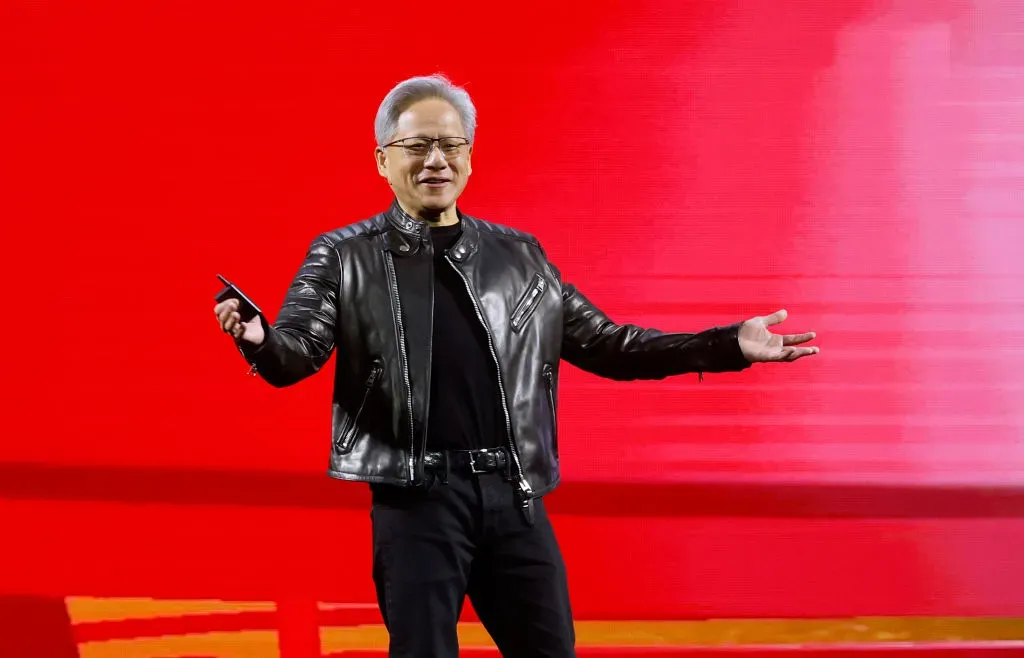
Huang resigned after 33 years as Nvidia's only CEO. CFO Colette Kress became interim CEO and Harvey Jones became board chair. The board had backed Huang after he admitted infidelity, then began weighing his removal once a second affair was reported, this time with Kimberly Powell, a vice president who reports directly to him. [1] [5] [6]
Senator Wyden and Representative Neal allege that Trump was briefed on the relationship in late 2025 but still approved H200 exports to China that December, under an arrangement that gives the government a share of sales. They have opened a probe into those approvals. [3] [7]
The espionage claim is unproven. It rests on a secret memo described by anonymous officials, and reporting says the government has found no proof. China calls the report groundless, and Nvidia's board says it has seen no evidence that company information or U.S. security was compromised. [2] [6] [8] [9]
Megaspeed, a Singapore firm that rents out Nvidia GPU capacity from Southeast Asian data centers, was already under U.S. and Singaporean investigation for possible export-control evasion. Inspections by Commerce, Malaysia and Nvidia found no violations, but the reviewed sources describe no method for verifying where chips end up after sale. [1] [4]
Documented: a CEO exit with no obvious successor and an open congressional probe into H200 approvals.
Read the full assessment
Implication, not yet shown: tighter China export licensing and closer scrutiny of Southeast Asian GPU-rental resellers, plus leadership risk for a company central to AI infrastructure.
Executive brief
Nvidia's co-founder Jensen Huang, its only CEO in 33 years, resigned on November 12, 2026. Two weeks earlier, reporting had tied him to Alice Huang, a Megaspeed executive whom U.S. officials suspect of spying for China. The national-security angle is what gives the story weight beyond Nvidia. Democrats in Congress allege that President Trump was briefed on the relationship in late 2025 and still approved H200 sales to China that December (Wyden–Neal letter). The espionage claim itself is not proven. Nvidia's board says it has no reason to believe security was compromised, and China calls the report groundless.
What changed and event timeline
H200 exports to China approved
According to Democratic lawmakers, Trump allowed Nvidia to sell H200 chips to China in exchange for a cut of sales, after reportedly being briefed on Huang's relationship ().
NYT reveals the relationship
The Times reported a close relationship between Huang and the Megaspeed executive. Nvidia said meeting customers is a normal part of a CEO's job ().
Huang admits infidelity
In a letter to staff, Huang admitted being unfaithful without naming Alice Huang, and the board opened an independent investigation (). Trump called him "a fine person" who should stay on ().
Second affair reported
The NYT reported an affair with healthcare VP Kimberly Powell, who reports directly to Huang. The board began weighing his removal and the stock fell ().
Resignation and congressional probes
CFO Colette Kress became interim CEO and Harvey Jones became board chair (). Wyden and Neal opened a probe (), and Reuters reported a third affair ().
Capabilities and access
No AI model or product launched.
Read the full section
No AI model or product launched. The hardware at issue:
- H200 GPUs: approved for export to China in December 2025 under a tariff and licensing setup. The chips are made in Taiwan, imported to the U.S. for a security review, then licensed for export (Wyden–Neal letter).
- Megaspeed: a Singapore company that rents out Nvidia GPU capacity from data centers in Southeast Asia (CNBC).
Technical analysis for researchers and developers
The core technical question is whether chips can be tracked after sale. The risk with renting out compute is that hardware sits idle and gets moved on, or that remote access serves restricted users: The reviewed sources document no technical methods for verifying where chips end up.
Read the full section
The core technical question is whether chips can be tracked after sale. The risk with renting out compute is that hardware sits idle and gets moved on, or that remote access serves restricted users:
- A Commerce official who visited Megaspeed's Malaysian site in 2024 found Nvidia equipment still in boxes (TechCrunch).
- Inspections by Commerce, Malaysia and Nvidia found no violations (CNBC).
The reviewed sources document no technical methods for verifying where chips end up.
Claims and evidence
- Alice Huang is a spy for China's Ministry of State Security. This rests on a secret memo described by anonymous officials.
- Chip volumes differ by source: $4.8B of Megaspeed purchases; $7.5B through Shanghai Century Litong, per The Information (TechCrunch).
- No leaks: Nvidia's board states this, and the investigation is ongoing (video; Al Jazeera).
Read the full section
- Alice Huang is a spy for China's Ministry of State Security. This rests on a secret memo described by anonymous officials. Reporting says the government has found no proof (Wikipedia), and China dismissed the claim (SCMP).
- Chip volumes differ by source: $4.8B of Megaspeed purchases; $7.5B through Shanghai Century Litong, per The Information (TechCrunch).
- No leaks: Nvidia's board states this, and the investigation is ongoing (video; Al Jazeera).
- Third affair: only Reuters has reported it, and no other outlet in the reviewed sources independently confirms it.
Context and prior work
- The U.S. and Singapore were both investigating Megaspeed by October 2025 over possible export-control evasion (TechCrunch).
- In December 2025, Senate Banking Democrats pressed the administration not to allow H200 sales (Senate Banking).
- NPR places the case within the long history of "honey trap" espionage (NPR).
Limitations, safety and contested findings
- Timing: TechCrunch says Huang gave up his role Wednesday night (Nov 11). Al Jazeera dates the resignation to Thursday, November 12.
- Market reaction: reports differ. TechCrunch cites roughly an 8% after-hours drop. Al Jazeera reports an intraday drop of more than 14% on Thursday.
- Spy allegation: the case is circumstantial. Public reporting does not show that Huang knowingly shared anything (implicator.ai).
Read the full section
- Timing: TechCrunch says Huang gave up his role Wednesday night (Nov 11). Al Jazeera dates the resignation to Thursday, November 12.
- Market reaction: reports differ. TechCrunch cites roughly an 8% after-hours drop. Al Jazeera reports an intraday drop of more than 14% on Thursday.
- Spy allegation: the case is circumstantial. Public reporting does not show that Huang knowingly shared anything (implicator.ai).
- Board stance: the board backed Huang on Sunday, Nov 8, and reversed only after the Powell report (Al Jazeera).
Business and practitioner implications
- Key-person risk: Huang has about 60 direct reports and Nvidia had no obvious successor (TechCrunch).
- Leadership: Kress has been CFO since 2013. The WSJ reports Huang had doubted her ability to steer strategy.
- Export policy: Congressional testimony, expected before November 26, and the Wyden–Neal probe could tighten approvals for China sales and checks on GPU-rental resellers in Southeast Asia.
Read the full section
- Key-person risk: Huang has about 60 direct reports and Nvidia had no obvious successor (TechCrunch). Bloomberg's Ian King says the company is "built around him" (video).
- Leadership: Kress has been CFO since 2013. The WSJ reports Huang had doubted her ability to steer strategy.
- Export policy: Congressional testimony, expected before November 26, and the Wyden–Neal probe could tighten approvals for China sales and checks on GPU-rental resellers in Southeast Asia.
The source trail.
Sources (12)
The unfolding Jensen Huang scandal: a timeline
Article text retrieved; extracted text may omit tables or interactive elements. A transcript of the video linked from this page is supplied (linked video manual captions; https://www.youtube.com/watch?v=w-qWtVt2prU); automatic text may contain errors.
techcrunch.comLinked video: The unfolding Jensen Huang scandal: a timeline
linked video manual captions
www.youtube.com