
FoundersOperators, strategy & lessons
Theranos whistleblower Tyler Shultz warns that AI investors are repeating Theranos-era diligence failures
Tyler Shultz helped expose Theranos. He says the AI funding boom has the same weak points: shallow investor checks, products that are easy to fake and NDAs that discourage employees from speaking up. In a new podcast, he details how Theranos suppressed internal dissent.
From the Y Combinator video of November 11, 2026 and cited sources: Shultz says it is hard to tell real AI breakthroughs from thin wrappers around existing models. [2] [8]
SOURCES[2] The Next Web: Shultz on AI thenextweb.com[8] Technology.org technology.org
 AT Pulse research deskPublished · Updated · 4 min read · AI-assisted analysis
AI-assisted, not human-edited. Methodology Corrections Who owns this site
- What happened
- Shultz says it is hard to tell real AI breakthroughs from thin wrappers around existing models. [2] [8]
- Original source
- Y Combinator video, independent perspective
- Brief by
- AT Pulse research desk AI-assisted; publisher and contact on the desk page
- When
- November 11, 2026 video published
- Covered
- Nov 12 edition
- Evidence
- 11 sources across 11 sites; transcript sourced
RisingHow it’s measured
YouTube video · 14.6K views · 107 likes
Reach blends public engagement (views, likes, comments, shares, stars) from the platforms where the story or its original source lives: YouTube, Hacker News, GitHub, Substack and similar. A video and the article written from its transcript share one score, taken from the video. Platforms with no data are left out rather than counted as zero, and the age of a story never lowers its score.
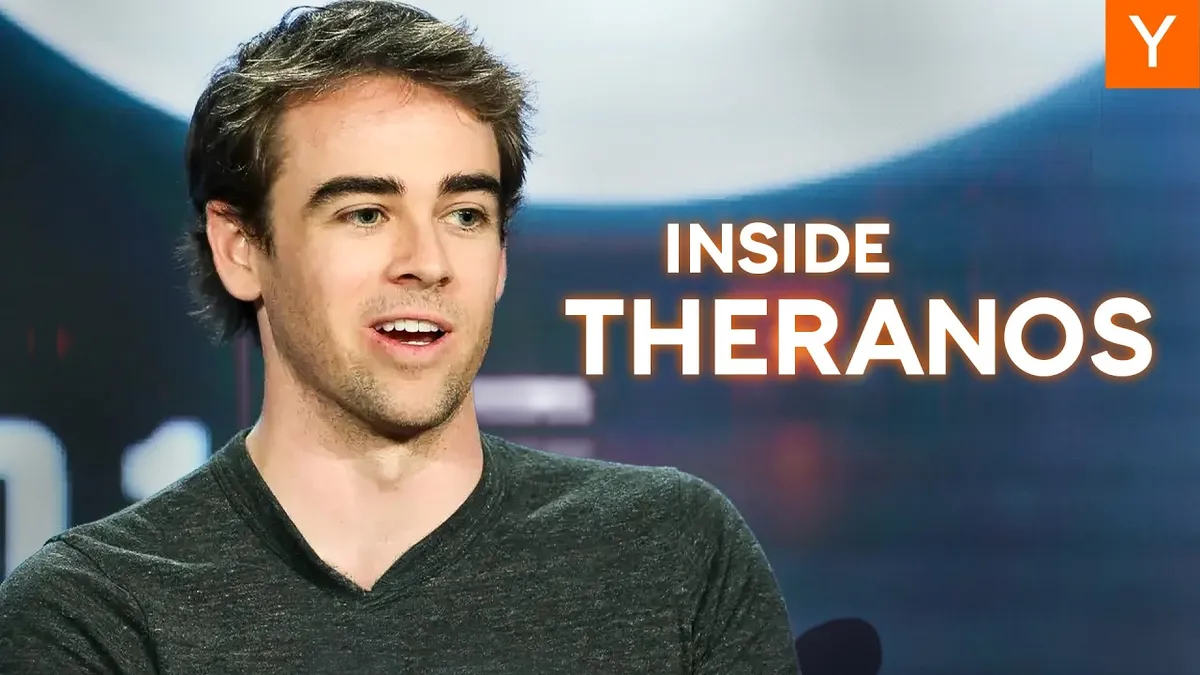
Shultz says it is hard to tell real AI breakthroughs from thin wrappers around existing models. He says quick meeting-based due diligence should end. He also calls AI-lab NDAs overbearing and argues that few laws protect AI whistleblowers. [2] [8]
Theranos's pitch was any central-lab test from one drop of blood. In practice, its device ran only a limited set of tests, and most patient samples were run on commercial analyzers. That gap led to fraud charges and to Holmes receiving a sentence of more than 11 years. [1] [4] [6] [7]
Shultz describes how Theranos kept dissent quiet. It fired and sued critics. It relied on a prestige board whose members deferred to one another. Company lawyers were waiting for him at his grandfather's house. His complaint to a state regulator was forwarded to federal regulators, and it stalled there. [1] [3] [10]
The SEC alleges Theranos raised over $700M through fraud. Its 2014 revenue was just over $100,000, against a projected $100M-plus.
Read the full assessment
The lesson for AI investors and buyers is to rely on independent, reproducible testing, not company-run demos and undisclosed methods.
Executive brief
The person who helped expose Theranos now says the AI funding boom has similar weak spots. In The Next Web's account of an SF Standard interview (Oct 31, 2026), Tyler Shultz said it is hard to tell real AI breakthroughs apart from "ChatGPT wrapper" products, and he called NDAs at AI labs overbearing. In a podcast published Nov 11, 2026, he walks through how Theranos stopped people from speaking up. His points: a culture of fear built over a decade, a board picked for its prestige, and Boies Schiller lawyers waiting for him at his grandfather's house. The podcast adds personal testimony but no new documents.
What changed and event timeline
Shultz resigns
He left after raising concerns with Holmes and facing retaliation from president Sunny Balwani ().
WSJ exposé
John Carreyrou reported that Theranos ran most tests on outside machines such as Siemens analyzers because its Edison devices fell short. Shultz was a confidential source (;).
SEC charges "massive fraud."
The SEC said Theranos raised more than $700M through fraud. Holmes settled without admitting or denying the charges and paid a $500,000 penalty ().
Holmes sentenced
She received more than 11 years after being convicted in January 2022 on four counts of wire fraud. Prosecutors had sought 15 years ().
AI warning
Shultz told the SF Standard that "30-minute coffee" due diligence should end and that AI products are easy to fake (;).
Podcast published
In a nearly three-hour, two-part interview, Shultz retells his time at Theranos and what happened after he left ().
Capabilities and access
- What Theranos claimed: any test a central lab can run, done on a single drop of blood anywhere with electricity (transcript 00:03:28).
- What it delivered: the SEC says the device could run only a limited number of tests, and most patient testing used ordinary commercial analyzers (SEC).
- The episode: free on YouTube, run as a two-part interview with two hosts.
Read the full section
- What Theranos claimed: any test a central lab can run, done on a single drop of blood anywhere with electricity (transcript 00:03:28).
- What it delivered: the SEC says the device could run only a limited number of tests, and most patient testing used ordinary commercial analyzers (SEC).
- The episode: free on YouTube, run as a two-part interview with two hosts. The hosts are named only by first name in the auto-captions, which may contain errors.
Technical analysis for researchers and developers
- Validation gaps: Shultz says Theranos mishandled a New York state proficiency-testing audit.
- Quality control: he says Balwani pushed staff to run patient samples even after quality-control checks failed (00:15:00).
- Regulatory theater: because Theranos used the lab-developed-test route, it didn't have to submit data to the FDA.
Read the full section
- Validation gaps: Shultz says Theranos mishandled a New York state proficiency-testing audit. He says a vice president admitted this in part, and the state regulator called it a clear violation (00:29:23).
- Quality control: he says Balwani pushed staff to run patient samples even after quality-control checks failed (00:15:00). Trial testimony described Theranos deleting results that didn't fit, so its machines looked more accurate (Yahoo).
- Regulatory theater: because Theranos used the lab-developed-test route, it didn't have to submit data to the FDA. Holmes cited FDA "presubmissions" as proof of rigor. Shultz notes that anyone can request one (00:46:25).
- Lesson for AI: when the vendor controls the demos and keeps the method secret ("trade secrets"), the evidence is weak. Only independent, reproducible testing settles the question.
Claims and evidence
- $700M raised by fraud: alleged by the SEC (SEC). In the podcast, Shultz describes this as a single "$700 million mega round" (00:59:29).
- Valuation: news coverage reports a peak of about $9B (Yahoo). Shultz cites $10B (The Next Web). Neither figure comes from a filing in the reviewed sources.
- Revenue: Theranos projected more than $100M for 2014. The SEC says actual revenue was just over $100,000 (SEC).
Read the full section
- $700M raised by fraud: alleged by the SEC (SEC). In the podcast, Shultz describes this as a single "$700 million mega round" (00:59:29). The SEC gives only the total, not a single round.
- Valuation: news coverage reports a peak of about $9B (Yahoo). Shultz cites $10B (The Next Web). Neither figure comes from a filing in the reviewed sources.
- Revenue: Theranos projected more than $100M for 2014. The SEC says actual revenue was just over $100,000 (SEC).
- Insider knowledge: Shultz says nearly every employee knew the device didn't work (00:18:14). This is his personal testimony.
Context and prior work
Read the full section
- Carreyrou won a 2015 Polk Award for this reporting. His book Bad Blood used a pseudonym for lab director Adam Rosendorff, who Shultz says was the WSJ's first source (00:43:28 in part two, 01:43:28).
- In 2016, Techdirt covered Theranos's campaign against Shultz (Techdirt).
- Shultz later founded Flux Biosciences and The Healthyr Company (Wikipedia).
Limitations, safety and contested findings
- Shultz's legal costs are reported differently: more than $400,000 (Telecare Aware) versus about half a million (Wikipedia).
- Some podcast claims are his own interpretation, not established fact.
- Shultz was not called as a witness at Holmes's trial (Wikipedia).
Read the full section
- Shultz's legal costs are reported differently: more than $400,000 (Telecare Aware) versus about half a million (Wikipedia).
- Some podcast claims are his own interpretation, not established fact. Examples: that Holmes timed having children to influence her sentence (01:01:54), and that his grandfather was coached to hide that lawyers were present (01:59:37).
- Shultz was not called as a witness at Holmes's trial (Wikipedia).
- His complaint to New York regulators was forwarded to CMS and stalled (01:31:22).
Business and practitioner implications
- Shultz says Kissinger privately doubted "the box" existed (02:00:10).
- Investors in AI: ask for independent benchmarks you can rerun, and check revenue against bank records.
- AI labs: broad NDAs and suing departing employees discourage reporting, and Shultz argues few laws protect AI whistleblowers (The Next Web).
Read the full section
- Boards: a prestige board isn't oversight. Shultz says Kissinger privately doubted "the box" existed (02:00:10).
- Investors in AI: ask for independent benchmarks you can rerun, and check revenue against bank records. Don't rely on vendor demos.
- AI labs: broad NDAs and suing departing employees discourage reporting, and Shultz argues few laws protect AI whistleblowers (The Next Web). He tells founders to set core values early so ethical drift is noticed in time (02:52:26).
The source trail.
Sources (11)
Inside Theranos with ex-Employee Tyler Shultz
Transcript retrieved via youtube_auto_captions; language en. Timestamped text, not direct audiovisual review. Source: https://www.youtube.com/watch?v=iXWSYlAX5Lg. Automatic captions/transcription may contain errors.
www.youtube.com