
FundingRounds, leads & terms
Nidus Raises $30M Pre-Seed and Seed, Led by Costanoa and Kleiner Perkins, for Defense Factory Robotics AI
Founded in March 2026 by former Vannevar hardware engineers, Nidus fine-tunes existing AI models on private, teleoperated factory data and runs them on robots defense manufacturers already own. Its first task is wire-harness prep, with kitting and circuit boards planned next.
From the Upstarts Media article of November 10, 2026 and cited sources: Nidus announced $30 million across a pre-seed led by Costanoa and a seed led by Kleiner Perkins, with Ludlow Ventures, Absolute Partners and angels joining. [1] [3] [4]
SOURCES[1] Upstarts Media: Nidus raises $30M upstartsmedia.com[3] ENGtechnica engtechnica.com[4] Phemex News phemex.com
 AT Pulse research deskPublished · Updated · 4 min read · AI-assisted analysis
AI-assisted, not human-edited. Methodology Corrections Who owns this site
- What happened
- Nidus announced $30 million across a pre-seed led by Costanoa and a seed led by Kleiner Perkins, with Ludlow Ventures, Absolute Partners and angels joining. [1] [3] [4]
- Original source
- Upstarts Media article, independent perspective
- Brief by
- AT Pulse research desk AI-assisted; publisher and contact on the desk page
- When
- November 10, 2026 article published
- Covered
- Nov 13 edition
- Evidence
- 9 sources across 8 sites
QuietHow it’s measured
Substack · 11 likes
Reach blends public engagement (views, likes, comments, shares, stars) from the platforms where the story or its original source lives: YouTube, Hacker News, GitHub, Substack and similar. A video and the article written from its transcript share one score, taken from the video. Platforms with no data are left out rather than counted as zero, and the age of a story never lowers its score.
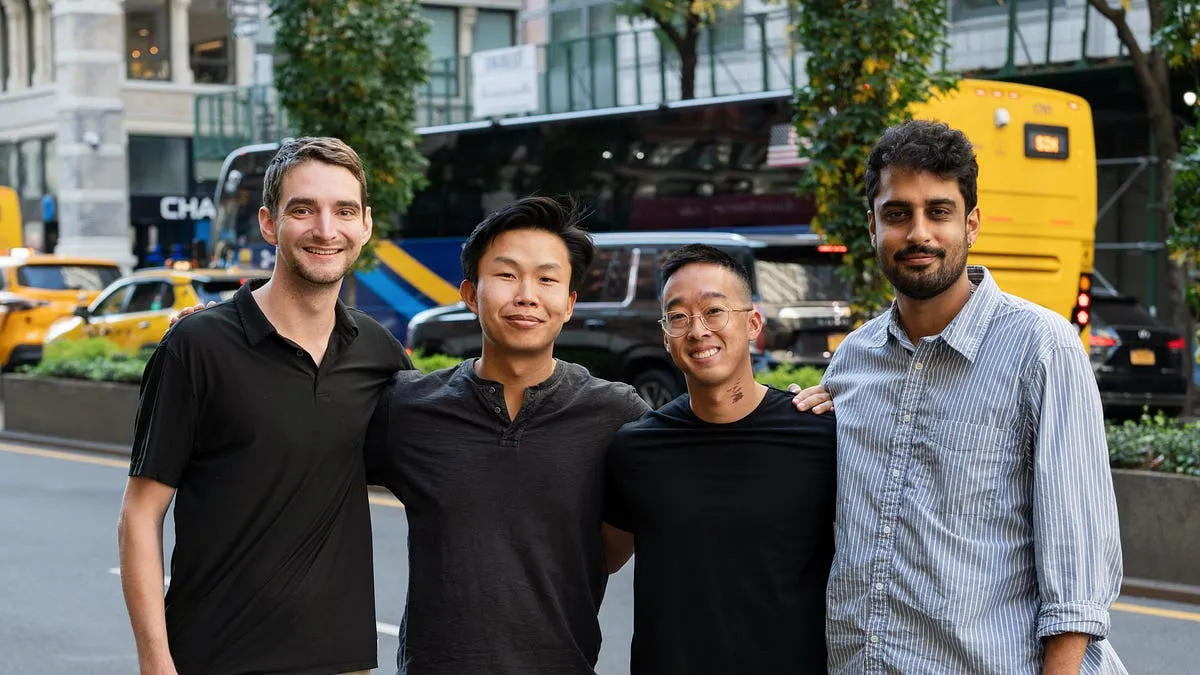
Nidus announced $30 million across a pre-seed led by Costanoa and a seed led by Kleiner Perkins, with Ludlow Ventures, Absolute Partners and angels joining. How the total splits between rounds and the valuation were not disclosed. [1] [3] [4]
Rather than building general-purpose robots, Nidus places a GPU beside a customer's existing industrial robot and runs models fine-tuned for that customer. It began with open-source models and has since moved to frontier models, with customers keeping ownership of their process knowledge. [1] [4] [6]
a roughly eight-month-old company raised $30M for defense-focused physical AI. Implication: investors are betting that private factory data and clearance access, not model architecture, can be a moat for retrofitting older production lines.
Executive brief
Nidus Technologies is a New York startup founded in March 2026 by four people who previously worked together on defense startup Vannevar's hardware team. The company says it booked more than $1 million from defense-industrial customers within four months. It has now announced $30 million in combined pre-seed and seed funding, led by Costanoa and Kleiner Perkins (Upstarts Media). Its plan is not to build general-purpose robots. Instead, it fine-tunes existing AI models on private, teleoperated factory data and runs them on robots that defense manufacturers already own, starting with wire harnesses. No customers, valuation or technical results have been disclosed.
What changed and event timeline
Essay sparks the company
Around Christmas, CEO Justin Sealy wrote an essay arguing that US industry should use accessible robotics to depend less on China. It circulated among VCs ().
Nidus founded
Sealy, Harrison Nguyen, Charu Dwivedi and Cane Punma incorporated the company with the blessing of Vannevar's CEO. They spent months visiting factories before picking wire-harness prep as the first task ().
Bookings reportedly pass $1M
Nidus says it reached seven-figure bookings within four months. Customers are unnamed, and the figure is self-reported (;).
$30M announced
Upstarts reported the round as an exclusive. Costanoa led the pre-seed and Kleiner Perkins led the seed. Ludlow Ventures, Absolute Partners and angels also invested ().
Trade outlets repeat the release
These outlets add SF1 and Tau as investors, and angels Adrian Aoun and Nikhil Goel. They describe traction as "revenue" rather than bookings (;).
Capabilities and access
- Task: cutting and prepping wire harnesses. Harnesses are used in aircraft, missiles and military vehicles.
- Deployment: a custom model runs on a GPU placed next to a customer's existing industrial robot (Upstarts Media).
- Model: no model name, version, base model or benchmark has been published. Access is private, through customer deployments.
Read the full section
- Task: cutting and prepping wire harnesses. Harnesses are used in aircraft, missiles and military vehicles. Planned next steps are kitting, pre-assembly and printed circuit boards (Upstarts Media; citybiz).
- Deployment: a custom model runs on a GPU placed next to a customer's existing industrial robot (Upstarts Media).
- Model: no model name, version, base model or benchmark has been published. Access is private, through customer deployments.
Technical analysis for researchers and developers
- Data: about a dozen staff teleoperate rigs, repeating tasks thousands of times. Training data is uploaded to a secure cloud (Upstarts Media).
- Models: the company started with open-source models and has moved to "frontier" models, fine-tuned for each customer (Upstarts Media).
- "Sovereign AI" training: customers keep ownership of their own process knowledge (Phemex News).
Read the full section
- Data: about a dozen staff teleoperate rigs, repeating tasks thousands of times. They grip a wire around 3 inches from its end and align it with a rotating brush wheel. Training data is uploaded to a secure cloud (Upstarts Media).
- Models: the company started with open-source models and has moved to "frontier" models, fine-tuned for each customer (Upstarts Media). A job listing mentions vision-language-action (VLA) approaches (Simplify).
- "Sovereign AI" training: customers keep ownership of their own process knowledge (Phemex News).
- Reproducibility: none. There are no published evaluations, success rates or comparisons with other approaches.
Claims and evidence
- $30M, two leads: announced by the company and reported exclusively by Upstarts.
- How the $30M splits between the pre-seed and seed: not disclosed.
- Valuation: not disclosed (Phemex News).
Read the full section
- $30M, two leads: announced by the company and reported exclusively by Upstarts. Later coverage matches it (ENGtechnica; Pomegra). No filing confirmation was found, and the later reports appear to come from the same announcement.
- How the $30M splits between the pre-seed and seed: not disclosed.
- Valuation: not disclosed (Phemex News).
- More than $1M in four months: self-reported. Upstarts calls it bookings, while release-based coverage calls it revenue (Simplify). Pomegra describes these as contracted commitments, not recognized revenue.
- 10x worker efficiency: a stated goal, not a measured result (Upstarts).
Context and prior work
- Wire-harness automation has been worked on for years. The ARM Institute has funded projects on automated harness assembly and robot-assisted installation. Sanctuary AI has claimed progress on the same task.
- Sealy contrasts Nidus with general robotics labs such as Physical Intelligence, Skild AI and Figure.
- He describes the edge-deployment model as borrowed from Palantir, where he spent three years as a deployment strategist.
Read the full section
- Wire-harness automation has been worked on for years. The ARM Institute has funded projects on automated harness assembly and robot-assisted installation. Sanctuary AI has claimed progress on the same task.
- Sealy contrasts Nidus with general robotics labs such as Physical Intelligence, Skild AI and Figure. He also contrasts it with large autonomous-factory efforts, such as Jeff Bezos's Prometheus (Upstarts).
- He describes the edge-deployment model as borrowed from Palantir, where he spent three years as a deployment strategist.
Limitations, safety and contested findings
- Traction wording conflicts: bookings and revenue are different measures, and the reviewed sources use both.
- Investor lists differ: Upstarts names Amca CEO Jai Malik as an angel.
- Investor commentary: the strategic case comes mostly from Aatish Nayak of Kleiner Perkins, who led the seed.
Read the full section
- Traction wording conflicts: bookings and revenue are different measures, and the reviewed sources use both.
- Investor lists differ: Upstarts names Amca CEO Jai Malik as an angel. Release-based coverage names Aoun and Goel instead, and adds SF1 and Tau (ENGtechnica).
- Investor commentary: the strategic case comes mostly from Aatish Nayak of Kleiner Perkins, who led the seed. He is commenting on his own firm's portfolio company. He also admits competitors exist and that "speed is the name of the game" (Upstarts).
- No independent technical validation: the reviewed sources contain no third-party test of the robots or models.
Business and practitioner implications
- Investor appetite: a $30M combined pre-seed/seed for a company about eight months old shows how much VCs want physical AI aimed at defense.
- Data as the moat: the claimed advantage is private customer data and security clearance access, not model architecture.
- Brownfield factories: adding a GPU and fine-tuned models to existing robots avoids rebuilding production lines.
Read the full section
- Investor appetite: a $30M combined pre-seed/seed for a company about eight months old shows how much VCs want physical AI aimed at defense.
- Data as the moat: the claimed advantage is private customer data and security clearance access, not model architecture. Nayak argues larger labs may prefer to partner with Nidus rather than catch up (Upstarts).
- Brownfield factories: adding a GPU and fine-tuned models to existing robots avoids rebuilding production lines. That lowers the hurdle for defense contractors running old equipment.
- What would show it works: named customer deployments, published task success rates, and recognized revenue as distinct from bookings.