
FundingRounds, leads & terms
Helix raises $6.2M pre-seed led by Chicago Ventures, with Siri co-founder Dag Kittlaus as adviser
Voice-verification startup Helix raised a $6.2 million pre-seed round led by Chicago Ventures for an on-device spoken challenge that checks a user is human and estimates age, arriving ahead of New York's SAFE for Kids age-assurance rules taking effect January 2027.
From the TechCrunch · Fundraising article of November 11, 2026 and cited sources: The $6.2 million pre-seed round was led by Chicago Ventures, and no valuation was disclosed. [1] [4] [5]
SOURCES[1] TechCrunch: Siri co-founder backs Helix for its voice ID… techcrunch.com[4] IDTechWire: Helix raises $6.2 million idtechwire.com[5] The Daily Star: Helix raises $6.2 million thedailystar.net
 AT Pulse research deskPublished · Updated · 4 min read · AI-assisted analysis
AI-assisted, not human-edited. Methodology Corrections Who owns this site
- What happened
- The $6.2 million pre-seed round was led by Chicago Ventures, and no valuation was disclosed. [1] [4] [5]
- Original source
- TechCrunch · Fundraising article, independent perspective
- Brief by
- AT Pulse research desk AI-assisted; publisher and contact on the desk page
- Studies
- arXiv 2210.09524 (Oct 2022) [7] date from arXiv ID
- When
- November 11, 2026 article published
- Covered
- Nov 13 edition
- Evidence
- 10 sources across 10 sites
- 1TechCrunch: Siri co-founder backs Helix for its voice ID…techcrunch.com
- 2Hunton: NY AG final SAFE for Kids ruleshunton.com
- 3ZwillGen: New York's final ruleszwillgen.com
- 4IDTechWire: Helix raises $6.2 millionidtechwire.com
- 5The Daily Star: Helix raises $6.2 millionthedailystar.net
- 6AVPA: Helix member pageavpassociation.com
Reach: not measured yet
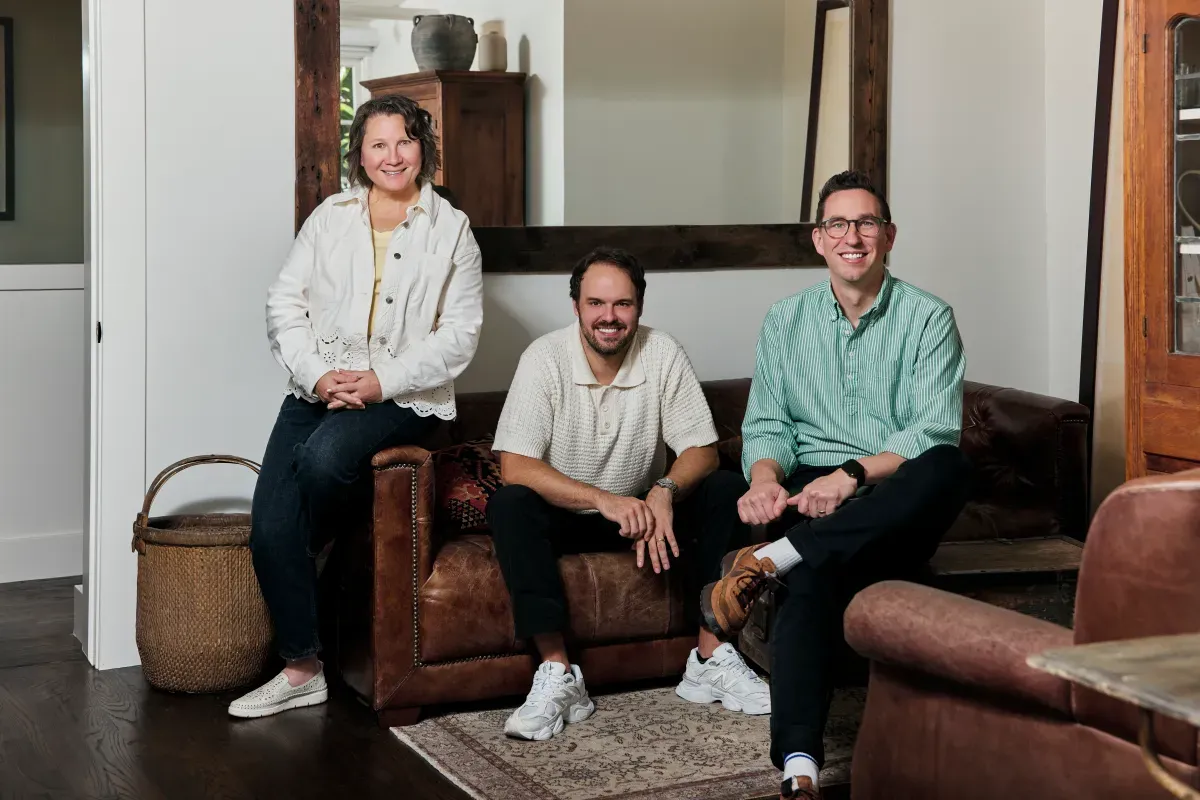
The $6.2 million pre-seed round was led by Chicago Ventures, and no valuation was disclosed. Siri co-founder Dag Kittlaus is an investor and adviser. Former Ticketmaster president Jared Smith joined as an investor and board member. Helix was founded in 2025 by Alex Oberg, Anna Dorofiyenko and Mike Hall. Oberg previously helped build Ticketmaster's Verified Fan. [1] [4] [5]
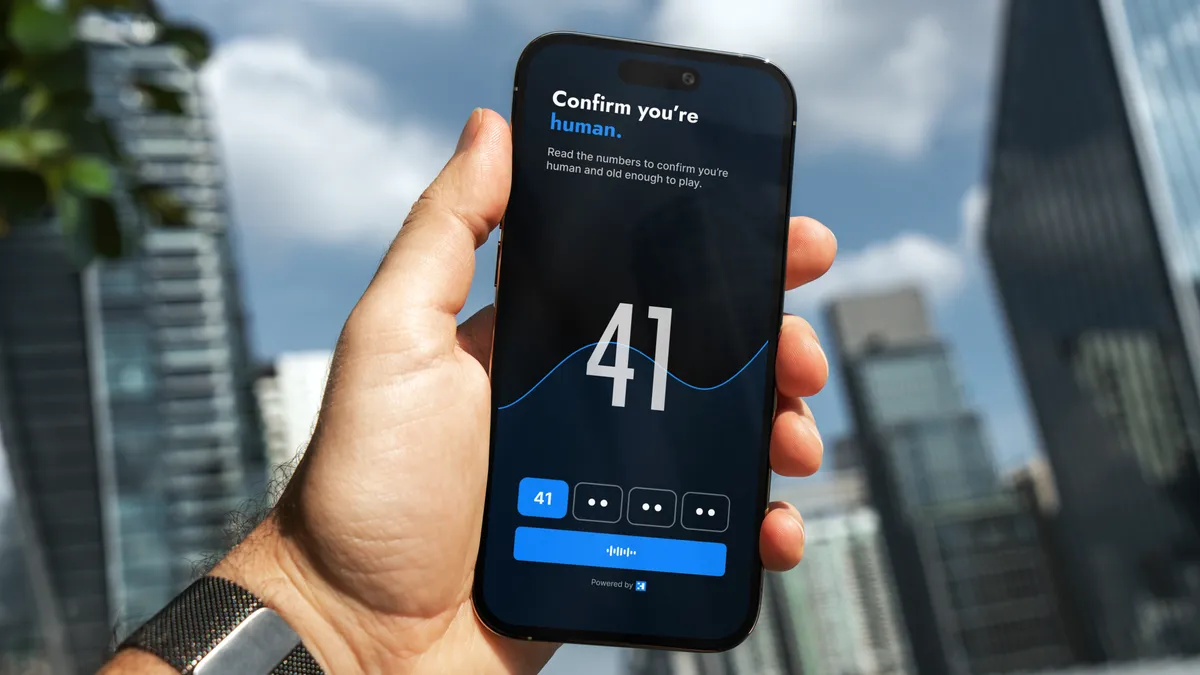
Users read a short number prompt aloud, and the phone processes the audio locally. The check reportedly runs on devices as old as an iPhone 13. Published durations differ, from about two seconds to under four. No error rates or demographic breakdowns are public. Academic voice age estimators typically show mean errors of about five years. [1] [4] [6] [7]
New York finalized its SAFE for Kids age-assurance rules on July 28, 2026, and they take effect January 25, 2027. The rules reportedly cap error rates at 1% for children aged 8–13. They also require annual third-party certification and carry penalties of up to $5,000 per violation. Together, these create demand for age checks that do not require ID. [2] [3]
Helix's ISO/IEC 27566-1, ACCS and IEEE certifications are company claims. No certificate or registry listing appears in the reviewed sources, and Helix's AVPA member page lists none. The CEO says the system cannot reliably detect lying or AI agents on live calls, which is narrower than how Kittlaus frames it. Zeel, the only named customer, is still a beta partner. [1] [4] [5] [6]
New York's rules set a firm compliance date with strict error caps and annual certification.
Read the full assessment
Implication: on-device, ID-free checks could appeal to platforms, but buyers will need certificates, age-band error rates and spoofing tests Helix has not published.
Executive brief
Helix pitches a four-second spoken challenge, run entirely on the phone, as a way to check that a user is human and estimate their age without asking for ID. The New York rules that make this kind of tool relevant take effect January 25, 2027. The startup raised $6.2 million in a pre-seed round led by Chicago Ventures. Siri co-founder Dag Kittlaus is backing the company and advising it (TechCrunch). The company says its system meets age-assurance certification standards. None of the reviewed sources publishes accuracy figures, and the only named customer, Zeel, is a beta partner.
What changed and event timeline
Helix founded
Alex Oberg (who helped build Ticketmaster's Verified Fan), Anna Dorofiyenko (formerly at Live Nation and Zillow) and Mike Hall (formerly at Nike and Tinder) started the company ().
New York finalizes SAFE for Kids rules
The Attorney General released age-assurance rules covering estimation, inference and verification. They take effect January 25, 2027 (;).
TechCrunch reports the round
The report covers the $6.2M raise, the investor list and Kittlaus's adviser role ().
Pre-seed announcement and wider coverage
The round is described as pre-seed with no valuation disclosed. Former Ticketmaster president Jared Smith is named as an investor and board member (;).
Capabilities and access
- What it does: Helix says it checks that a speaker is human and estimates their age from a short spoken number challenge, processed on the device.
- Pilots: The company is testing whether voice can signal drunkenness or distress.
- Access: Helix is in beta. No model name or version, pricing or public SDK is documented.
Read the full section
- What it does: Helix says it checks that a speaker is human and estimates their age from a short spoken number challenge, processed on the device. It says this works on hardware as old as an iPhone 13 (TechCrunch; IDTechWire).
- Pilots: The company is testing whether voice can signal drunkenness or distress.
- Access: Helix is in beta. No model name or version, pricing or public SDK is documented.
Technical analysis
- Pipeline: Users read a prompt aloud, features are extracted locally, and age is estimated on the client.
- Timing is inconsistent: Helix's materials give different durations: about two seconds (AVPA) and "under four seconds" (IDTechWire).
- Benchmark context: Academic voice age estimators typically report mean absolute errors of roughly 5 years on TIMIT and NIST SRE10 (arXiv 2210.09524).
Read the full section
- Pipeline: Users read a prompt aloud, features are extracted locally, and age is estimated on the client. The company says the model was trained on "hundreds of thousands" of real-world voice samples. It publishes no error rates, false-accept or false-reject rates, or demographic breakdowns (AVPA member page).
- Timing is inconsistent: Helix's materials give different durations: about two seconds (AVPA) and "under four seconds" (IDTechWire).
- Benchmark context: Academic voice age estimators typically report mean absolute errors of roughly 5 years on TIMIT and NIST SRE10 (arXiv 2210.09524). Errors that size are large compared with the thresholds age laws care about.
- Reproducibility: None. There is no paper, model card or public evaluation.
Claims and evidence
- Funding: $6.2M, pre-seed, led by Chicago Ventures. The reviewed sources cite no filing, and no valuation was disclosed.
- Certification: Helix claims ISO/IEC 27566-1, accreditation under the Age Check Certification Scheme (ACCS), and IEEE certification (IDTechWire).
- Privacy: The claim that a stored voiceprint cannot be used to reconstruct a voice is the company's own statement (TechCrunch).
Read the full section
- Funding: $6.2M, pre-seed, led by Chicago Ventures. This is company-announced and was reported consistently by TechCrunch and The Daily Star. The reviewed sources cite no filing, and no valuation was disclosed.
- Certification: Helix claims ISO/IEC 27566-1, accreditation under the Age Check Certification Scheme (ACCS), and IEEE certification (IDTechWire). The reviewed sources include no certificate or registry listing, and Helix's own AVPA page mentions no certifications.
- Privacy: The claim that a stored voiceprint cannot be used to reconstruct a voice is the company's own statement (TechCrunch).
- Kittlaus: His view that voice ID now "works reliably" comes from an investor and adviser talking about his own portfolio company.
Context and prior work
- Prior certification: In April 2023, Privately's VoiceAssure became the first voice-based age estimator certified by ACCS, at Evaluation Assurance Level 1 (Biometric Update).
- Standards: ISO/IEC 27566-1:2025 covers age-assurance systems as a whole, while IEEE 2089.1 tests specific components (ACCS).
- Founder background: Oberg's Verified Fan work at Ticketmaster was bot filtering, not biometrics.
Read the full section
- Prior certification: In April 2023, Privately's VoiceAssure became the first voice-based age estimator certified by ACCS, at Evaluation Assurance Level 1 (Biometric Update).
- Standards: ISO/IEC 27566-1:2025 covers age-assurance systems as a whole, while IEEE 2089.1 tests specific components (ACCS).
- Founder background: Oberg's Verified Fan work at Ticketmaster was bot filtering, not biometrics.
Limitations, safety and contested findings
- Self-reported limits: CEO Oberg says the system cannot reliably detect lying or catch AI agents on live calls (TechCrunch).
- Tension with the adviser: Kittlaus describes Helix's work in terms of whether speakers are "lying" or "impaired," which goes beyond what the CEO says the system can reliably do.
- Demanding thresholds: New York's rules reportedly cap error rates at 1% for children aged 8–13 and require annual third-party certification (ZwillGen).
Read the full section
- Self-reported limits: CEO Oberg says the system cannot reliably detect lying or catch AI agents on live calls (TechCrunch).
- Tension with the adviser: Kittlaus describes Helix's work in terms of whether speakers are "lying" or "impaired," which goes beyond what the CEO says the system can reliably do.
- Demanding thresholds: New York's rules reportedly cap error rates at 1% for children aged 8–13 and require annual third-party certification (ZwillGen). Helix has published no figures that can be checked against these caps.
Business and practitioner implications
- Demand: New York's January 2027 deadline and its requirement for annual certification create buyers for age-assurance tools that don't require ID.
- Cost: Running on the device keeps serving costs low and limits how much data a platform holds.
- Before deploying: Buyers should ask for certificates, error rates by age band, accent and demographic coverage, and evidence that the check holds up against voice cloning and replay attacks.
Read the full section
- Demand: New York's January 2027 deadline and its requirement for annual certification create buyers for age-assurance tools that don't require ID. Penalties run up to $5,000 per violation (Hunton).
- Cost: Running on the device keeps serving costs low and limits how much data a platform holds.
- Before deploying: Buyers should ask for certificates, error rates by age band, accent and demographic coverage, and evidence that the check holds up against voice cloning and replay attacks.
- Use cases: The only named one, worker verification at Zeel, is still in evaluation (The Daily Star).