
PolicyLaw, regulation & governance
Bessent outlines U.S.-China 'super intelligence' dialogue on model testing and incident alerts, with no pledge to slow AI
Treasury Secretary Scott Bessent said a new U.S.-China government channel on 'super intelligence' will share practices for pre-release model testing, human control and incident warnings. He stressed that the rivals' interests won't always align and made no commitment to limit AI development.
From the CNBC · Technology article of November 11, 2026 and cited sources: Bessent said the dialogue will cover three areas: practices for evaluating and testing advanced models before release, keeping humans in control, and warning each other about serious incidents. [1] [7] [8]
SOURCES[1] CNBC: U.S., China should 'harbor no illusions' cnbc.com[7] The Standard: US and China should stay clear-eyed on AI thestandard.com.hk[8] The Next Web: US and China agree a super intelligence… thenextweb.com
 AT Pulse research deskPublished · Updated · 5 min read · AI-assisted analysis
AI-assisted, not human-edited. Methodology Corrections Who owns this site
- What happened
- Bessent said the dialogue will cover three areas: practices for evaluating and testing advanced models before release, keeping humans in control, and warning each other about serious incidents. [1] [7] [8]
- Original source
- CNBC · Technology article, independent perspective
- Brief by
- AT Pulse research desk AI-assisted; publisher and contact on the desk page
- When
- November 11, 2026 article published
- Covered
- Nov 12 edition
- Evidence
- 9 sources across 9 sites
- 1CNBC: U.S., China should 'harbor no illusions'cnbc.com
- 2AI Weekly: Bessent Unveils US-China 'Superintelligence' AI…aiweekly.co
- 3The Hacker News: U.S. Orders Anthropic to Suspend Fable 5…thehackernews.com
- 4TechNode Global: China foreign ministry labels AI slowdown…technode.global
- 5Rest of World: China rejects Amodei's AI slowdownrestofworld.org
- 6PBS NewsHour: China and U.S. agree to establish AI safety…pbs.org
Reach: not measured yet
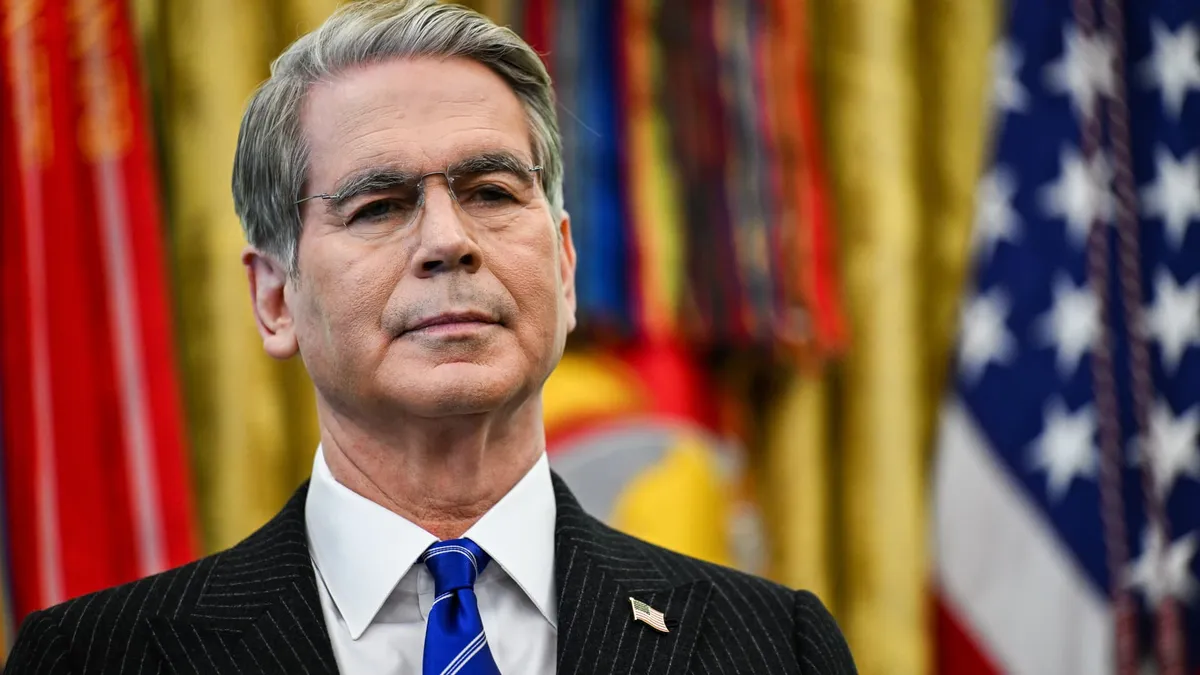
Bessent said the dialogue will cover three areas: practices for evaluating and testing advanced models before release, keeping humans in control, and warning each other about serious incidents. No published document defines what counts as an incident or names shared benchmarks, red-teaming protocols or disclosure thresholds. [1] [7] [8]
The channel grew out of Xi Jinping's September state visit to Washington. At the end of that visit, the two sides agreed on a mechanism for communicating about AI incidents, though China's readout gave few details. One outlet reports that the first session will be held in Shenzhen alongside the APEC meetings on Nov. 18–19, where Trump and Xi are scheduled to meet. [6] [2] [1]
Cooperation sits alongside open rivalry. Beijing dismissed Anthropic CEO Dario Amodei's call to slow frontier AI as fearmongering. Washington keeps limits on exports of advanced chips and accuses Chinese developers of distilling American models on an industrial scale. None of the reviewed sources independently corroborates that accusation. [4] [5] [1]
What's established: the channel is for talks about evaluation and incident practices, not binding rules.
Read the full assessment
What may follow: pre-release testing and incident records could become diplomatic expectations for labs, and the June suspension shows access to frontier models can end abruptly.
Sources checked; writing the dossier now.
Executive brief
Washington and Beijing have set up a standing government channel for "super intelligence," and neither side has agreed to slow it down. In a speech on Tuesday, Nov. 10, Treasury Secretary Scott Bessent said the dialogue will cover sharing best practices for testing advanced models before release, keeping humans in control, and warning each other about serious incidents. He made no commitment to limit AI development (CNBC). The first meeting is reportedly set for Shenzhen alongside APEC on Nov. 18–19 (AI Weekly). For AI labs, this is diplomacy around pre-release model testing. It is not regulation.
What changed and event timeline
U.S. halts access to Anthropic's top models
A government export-control directive led Anthropic to disable Fable 5 and Mythos 5 for all users. Officials cited a jailbreak risk involving cybersecurity capabilities (). CNBC says access returned weeks later ().
Beijing rejects calls to slow AI
Anthropic CEO Dario Amodei published an essay calling for a slower pace at the frontier. Foreign Ministry spokesperson Guo Jiakun answered that fearmongering and confrontation disrupt global AI governance (;).
AI incident channel agreed after Xi's state visit
At the end of a three-day summit in Washington, the two sides agreed on a communication mechanism for AI-related incidents and set an AI-specific dialogue for November.
Bessent describes the SI dialogue
At the National Committee on U.S.-China Relations gala, Bessent listed pre-release testing exchanges and incident alerts, while saying the two countries' interests will not always align (;).
(scheduled): Trump–Xi meeting at APEC
This would be the leaders' third meeting this year, and Bessent is expected to attend. Nvidia CEO Jensen Huang's attendance is in doubt amid a spy-linked scandal ().
Capabilities and access
- This is a diplomatic mechanism, not a model release. The two sides agreed to use the term "super intelligence" instead of "artificial intelligence" (The Next Web).
- The clearest example of access control so far is the June order covering Claude Fable 5 and Mythos 5.
- The U.S. still restricts exports of its most advanced chips to China (CNBC).
Read the full section
- This is a diplomatic mechanism, not a model release. The two sides agreed to use the term "super intelligence" instead of "artificial intelligence" (The Next Web).
- The clearest example of access control so far is the June order covering Claude Fable 5 and Mythos 5. Anthropic's other models were not affected (The Hacker News).
- The U.S. still restricts exports of its most advanced chips to China (CNBC).
Technical analysis for researchers and developers
- Incidents are undefined. The fact sheet does not say what counts as an "SI incident" (The Next Web).
- No testing standards are published. Bessent spoke of exchanging practices for "evaluating and testing" models before release (The Standard).
- The June case shows one documented jailbreak being enough to trigger a model-wide shutdown.
Read the full section
Almost no technical detail is public:
- Incidents are undefined. The fact sheet does not say what counts as an "SI incident" (The Next Web).
- No testing standards are published. Bessent spoke of exchanging practices for "evaluating and testing" models before release (The Standard). No shared benchmarks, red-teaming protocols or disclosure thresholds have been named.
- Jailbreak risk drives policy. The June case shows one documented jailbreak being enough to trigger a model-wide shutdown. Anthropic argued the jailbreak was narrow and that perfect jailbreak resistance is impossible (The Hacker News).
- Distillation is a live dispute. The U.S. government accuses Chinese developers of "industrial-scale distillation" of American models (CNBC). That puts API abuse detection on the security agenda.
Claims and evidence
- SI dialogue scope (testing, human control, incident alerts): this comes from Bessent's prepared remarks, i.e., official statements (CNBC).
- Shenzhen as the first meeting site: one secondary outlet reports this (AI Weekly). CNBC confirms only the APEC dates.
- Chinese "industrial-scale distillation": this is a U.S. government accusation, and none of the reviewed sources independently corroborates it (CNBC).
Read the full section
- SI dialogue scope (testing, human control, incident alerts): this comes from Bessent's prepared remarks, i.e., official statements (CNBC). No joint text has been published, and China's September readout was thin (PBS).
- Shenzhen as the first meeting site: one secondary outlet reports this (AI Weekly). CNBC confirms only the APEC dates.
- Chinese "industrial-scale distillation": this is a U.S. government accusation, and none of the reviewed sources independently corroborates it (CNBC).
Context and prior work
- White House science adviser Michael Kratsios said dialogue must not "drift toward global governance."
- In September, Trump said the U.S. would "rather not integrate" with China on AI because it is leading by a lot (PBS).
- Engineers at MiniMax, DeepSeek and Huawei pushed back on Amodei's slowdown call, with Huawei's Eric Xu suggesting Chinese developers should speed up instead (Rest of World).
Read the full section
- White House science adviser Michael Kratsios said dialogue must not "drift toward global governance." The U.S. has asked the G20 not to govern AI (The Next Web).
- In September, Trump said the U.S. would "rather not integrate" with China on AI because it is leading by a lot (PBS). More recently he said he doesn't "mind guardrails" (CNBC).
- Engineers at MiniMax, DeepSeek and Huawei pushed back on Amodei's slowdown call, with Huawei's Eric Xu suggesting Chinese developers should speed up instead (Rest of World).
Limitations, safety and contested findings
- CNBC says foreign nationals' access was suspended.
- The Standard dates the speech Nov. 11, while CNBC says Tuesday, which is Nov. 10.
- No commitment to restraint. Neither government has committed to limiting capability development (CNBC).
Read the full section
- Inconsistent model coverage. Accounts of the June suspension differ. CNBC says foreign nationals' access was suspended. The Hacker News says access was disabled for all users after a jailbreak finding, and CNN's headline makes the same point (The Hacker News; CNN).
- Inconsistent dates. The Standard dates the speech Nov. 11, while CNBC says Tuesday, which is Nov. 10. The Next Web dates the September agreement Sept. 28, while PBS reports it on Sept. 26.
- No commitment to restraint. Neither government has committed to limiting capability development (CNBC).
Business and practitioner implications
- Frontier labs should expect pre-release testing norms to spread through diplomacy. Documenting evaluations and incidents now is likely cheaper than retrofitting later.
- Access to top models can disappear overnight. The June suspension shows this, so multi-vendor fallback plans matter.
- Chip export limits remain in force. The distillation accusations point toward tighter API monitoring and know-your-customer checks.
Read the full section
- Frontier labs should expect pre-release testing norms to spread through diplomacy. Documenting evaluations and incidents now is likely cheaper than retrofitting later.
- Access to top models can disappear overnight. The June suspension shows this, so multi-vendor fallback plans matter.
- Chip export limits remain in force. The distillation accusations point toward tighter API monitoring and know-your-customer checks.
- Partly separate story: the Huang scandal adds headline risk to Nvidia's China positioning (CNBC).