
AgentsAutonomy & tool use
ChatGPT Work route-generation demo highlights agentic output and missing provenance
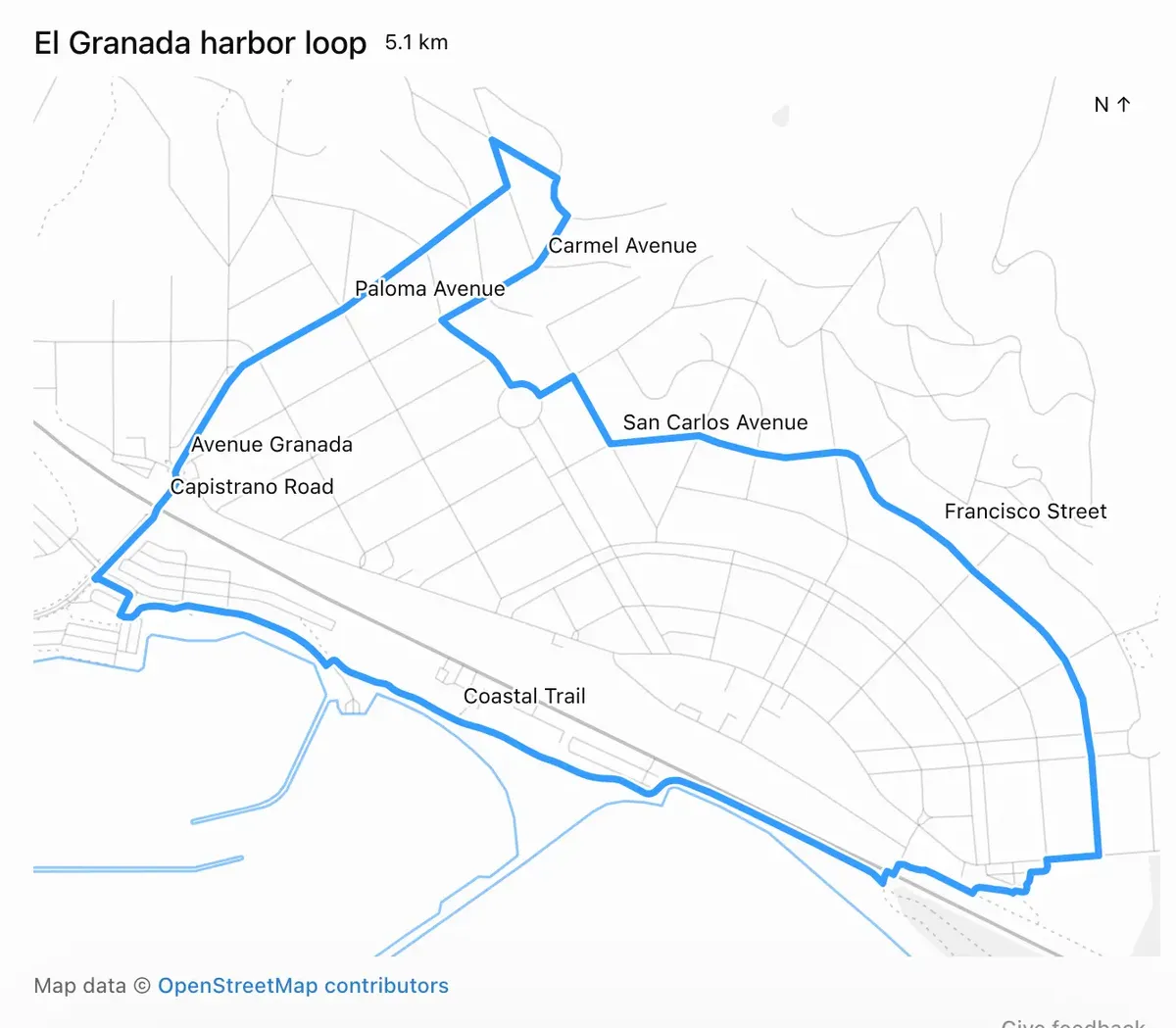
Simon Willison reported that ChatGPT Work with GPT-6 Astra generated 5K and 10K loop routes from OpenStreetMap data, including map and GPX/GeoJSON outputs. The more durable lesson for teams is the audit gap: the code and routing decisions were not recoverable.
 AT Pulse research deskSeptember 14, 2026 · 10 min read · AI-assisted analysis
The reported run produced user-facing geospatial artifacts—a map plus GPX and GeoJSON files—but it remains a single-user anecdote rather than a reproducible benchmark. [1] [3]
OpenAI describes ChatGPT Work as intended for longer multi-step deliverables, and positions GPT-6 Astra as a broadly deployed model, but those capability claims are vendor-reported. [6] [8] [11]
The evidence is limited: Willison reported one successful route-generation task, and no independent reproduction was found in the reviewed sources.
Read the full assessment
OpenAI’s materials support the general plausibility of long-running agent work, but not the exact execution. The implication for practitioners is significant: agents can package APIs, computation, visualization, and file export into useful business artifacts, while also creating new requirements for provenance, privacy handling, licensing compliance, and safety review before outputs are operationally trusted.
Executive brief
On September 12, 2026, Simon Willison published a short commentary describing a successful single-user task: he asked ChatGPT Work with GPT‑6 Astra (Max) to generate 5K and 10K loop running routes from his home using OpenStreetMap data. According to Willison, the agent worked for 27 minutes and returned an embedded map plus downloadable GPX and GeoJSON files. The underlying capabilities are plausible in the context of OpenAI’s own claims for GPT‑6 Astra and ChatGPT Work—multi-step work, web/network use, file generation, visual outputs—but those product claims are vendor-reported unless separately evaluated.
Read the full section
On September 12, 2026, Simon Willison published a short commentary describing a successful single-user task: he asked ChatGPT Work with GPT‑6 Astra (Max) to generate 5K and 10K loop running routes from his home using OpenStreetMap data. According to Willison, the agent worked for 27 minutes and returned an embedded map plus downloadable GPX and GeoJSON files. The article’s most important contribution is not a benchmark result; it is a concrete product-design observation: the agent apparently performed useful multi-step geospatial work, but the user could not inspect the code or exact process after the conversation had been compacted. Generating running routes with GPT-6 Astra and ChatGPT Work
The story is best treated as commentary and anecdotal evidence, not independent evaluation. No independent coverage or reproduction of this exact running-route event was found in the reviewed sources. The underlying capabilities are plausible in the context of OpenAI’s own claims for GPT‑6 Astra and ChatGPT Work—multi-step work, web/network use, file generation, visual outputs—but those product claims are vendor-reported unless separately evaluated. GPT-6 Astra: A new generation of intelligence | OpenAI
For practitioners, the practical lesson is two-sided. Agentic systems can now combine geocoding, open map data, local computation, visualization, and file export into a user-facing artifact. But reproducibility, auditability, privacy, attribution, and context-retention failures become first-order concerns when the agent’s working code and intermediate decisions are hidden or lost. Generating running routes with GPT-6 Astra and ChatGPT Work
What changed and event timeline
Rollout
OpenAI’s GPT‑6 Astra product page says Astra is rolling out to ChatGPT Plus, Pro, Business, and Enterprise users, and to the OpenAI API, Azure, and AWS Bedrock.
More detail
OpenAI lists the API model name as
gpt-6-astra; it also says Pro, Business, and Enterprise users get access to GPT‑6 Astra Pro, while enterprise admins must enable Astra because access is off by default at launch.OpenAI published the GPT‑6 Astra system card
The card says Astra is OpenAI’s most capable broadly deployed model and its first model to reach OpenAI’s “Critical” cybersecurity capability threshold. This is vendor safety documentation, not independent validation.
Willison asked ChatGPT Work with GPT‑6 Astra (Max) to find 5K and 10K loop routes from his address using OSM data. Relevant OSM/context-compaction sources—but no independent reproduction of this exact event.
More detail
The article reports the task ran for 27 minutes and produced an embedded visualization plus GPX and GeoJSON downloads.
Capabilities and access
The exact deployed model snapshot behind Willison’s run is not documented. OpenAI’s help page states that Plus plans include GPT‑6 Astra in ChatGPT Work and Codex; GPT‑6 Pro, powered by GPT‑6 Astra, is available in ChatGPT for Pro $100, Pro $200, Business, and Enterprise plans.
Read the full section
The exact deployed model snapshot behind Willison’s run is not documented. The article names “GPT‑6 Astra (Max)” inside ChatGPT Work, but it does not expose the backend version, system prompt, tool permissions, network policy, or code execution transcript. OpenAI’s help article says ChatGPT Work is an agent for longer multi-step work and finished deliverables, while Codex is dedicated to software-development and technical work. Generating running routes with GPT-6 Astra and ChatGPT Work
OpenAI’s help page states that Plus plans include GPT‑6 Astra in ChatGPT Work and Codex; GPT‑6 Pro, powered by GPT‑6 Astra, is available in ChatGPT for Pro $100, Pro $200, Business, and Enterprise plans. It also says Work is available on ChatGPT web and mobile for eligible paid plans, and in the desktop app when included for the user’s plan and workspace. ChatGPT Work and Codex | OpenAI Help Center
OpenAI describes Work as able to research, analyze information, and create documents, spreadsheets, presentations, reports, or Sites. The Willison route example extends that general pattern to a geospatial artifact: ingest a location, query open data, compute routes, render a map, and export standard geodata formats. That last sentence is an inference from the reported artifact and ChatGPT’s reported explanation, not a separately observed execution trace. Generating running routes with GPT-6 Astra and ChatGPT Work
Technical analysis for researchers and developers
When asked how it created the route, ChatGPT reportedly told Willison it used Nominatim to locate the address, Overpass to download local OSM roads and trails, and then calculated loops locally. The embedded output used the visualize skill, according to Willison. The HTML includes a visible OSM attribution line in the fragment shown by Willison.
Read the full section
Reported workflow
When asked how it created the route, ChatGPT reportedly told Willison it used Nominatim to locate the address, Overpass to download local OSM roads and trails, and then calculated loops locally. That is a credible geospatial pipeline: geocode the origin, fetch candidate network geometry, build a walk/run graph, search for loops near target distances, then export the chosen path. But the actual code was not visible, and the route algorithm is undocumented. Generating running routes with GPT-6 Astra and ChatGPT Work
Nominatim is an OSM geocoding/search system that supports structured and free-form search queries. Overpass API is commonly used in the OSM ecosystem to query map features such as roads, paths, and trails, though public Overpass instances impose resource limits and may refuse expensive queries under load. Search - Nominatim Manual
Visualization implementation
The embedded output used the visualize skill, according to Willison. The copied HTML loads D3 v7.9.0 from jsDelivr, parses inline JSON geometry, projects the route with d3.geoMercator().fitExtent(...), and renders roads, trails, coastline, and the route as SVG paths. The HTML includes a visible OSM attribution line in the fragment shown by Willison. Generating running routes with GPT-6 Astra and ChatGPT Work
The skill reference hosted by Willison says the visualize skill is intended to create visualizations and interactive tools directly in conversation; its map guidance says local maps should fetch published neighborhood, street, or comparable geometry and include verified geometry in the final HTML. It also lists the CDN allowlist that includes jsDelivr. visualize · Skill source
Reproducibility implications
The critical reproducibility gap is that the agent’s route-selection code, Overpass query, graph construction rules, filtering choices, and objective function were not preserved in a user-visible way. Without those, a developer cannot know whether the agent excluded private roads, weighted trails versus roads, avoided unsafe crossings, snapped endpoints correctly, or simply found an approximate loop. Generating running routes with GPT-6 Astra and ChatGPT Work
A reproducible implementation would log at least: geocoder endpoint and response ID, Overpass query text, OSM timestamp or extract date, routing graph construction rules, distance tolerance, surface/access filters, route scoring function, final geometry, and validation checks. That is an engineering recommendation derived from the observed opacity, not a claim about what ChatGPT internally did. Generating running routes with GPT-6 Astra and ChatGPT Work
Claims and evidence
- ChatGPT Work with GPT‑6 Astra generated 5K/10K loop routes for Willison — Independent commentary by user
- The task took 27 minutes and produced embedded visualization plus GPX/GeoJSON downloads — Independent commentary by user
- The agent said it used Nominatim, Overpass, and local calculation — Model-reported inside user commentary
Read the full section
| Material claim | Classification | Evidence status |
| ChatGPT Work with GPT‑6 Astra generated 5K/10K loop routes for Willison | Independent commentary by user | Reported by Willison; no independent reproduction found. Generating running routes with GPT-6 Astra and ChatGPT Work |
| The task took 27 minutes and produced embedded visualization plus GPX/GeoJSON downloads | Independent commentary by user | Reported by Willison; artifact HTML partially available. Generating running routes with GPT-6 Astra and ChatGPT Work |
| The agent said it used Nominatim, Overpass, and local calculation | Model-reported inside user commentary | Plausible, but not independently verified because code/logs are missing. Generating running routes with GPT-6 Astra and ChatGPT Work |
| ChatGPT Work is intended for longer multi-step work and finished deliverables | Vendor-reported | OpenAI Help Center. ChatGPT Work and Codex | OpenAI Help Center |
| Astra has stronger computer-use/professional-work capabilities than prior OpenAI models | Vendor-reported | OpenAI product page/system card; some listed metrics are internal or vendor-run and should not be treated as independent proof. GPT-6 Astra: A new generation of intelligence | OpenAI |
| OSM data requires attribution and ODbL notice when used | Primary source | OSM copyright/license page. Copyright and License | OpenStreetMap |
Context and prior work
This event sits at the intersection of four trends: agentic computer use, long-running task delegation, open geospatial data, and inline artifact generation. A 2026 context-compaction theory paper similarly argues that compaction necessarily risks losing information needed for later queries when the agent replaces full state with a compacted representation.
Read the full section
This event sits at the intersection of four trends: agentic computer use, long-running task delegation, open geospatial data, and inline artifact generation. OpenAI had already introduced ChatGPT Work as a longer-task agent in the unified ChatGPT app, with Axios describing it in July 2026 as an agent for longer multistep tasks that can use connected apps and files to create finished outputs. How to choose the right OpenAI GPT-5.6 model
OpenAI’s own architecture discussion for agent environments explains why long-running agents need containers, file systems, network controls, and context compaction. It says agent loops can fill the context window with tool calls, skill outputs, and summaries; OpenAI’s native compaction is meant to preserve key state while removing extraneous content. From model to agent: Equipping the Responses API with a computer environment | OpenAI
The Willison case is notable because it exposes the downside: compaction may preserve enough state for the agent to finish, yet not enough detail for the user to audit the work later. A 2026 context-compaction theory paper similarly argues that compaction necessarily risks losing information needed for later queries when the agent replaces full state with a compacted representation. Generating running routes with GPT-6 Astra and ChatGPT Work
Limitations, safety, and contested findings
The strongest limitation is lack of observability. Willison says the code and exact details were not visible in the ChatGPT UI, and when he later asked for the Python code, ChatGPT could not provide it, apparently because the thread had been compacted.
Read the full section
The strongest limitation is lack of observability. Willison says the code and exact details were not visible in the ChatGPT UI, and when he later asked for the Python code, ChatGPT could not provide it, apparently because the thread had been compacted. This is a product-level transparency failure for workflows where outputs may be operationally used. Generating running routes with GPT-6 Astra and ChatGPT Work
OpenAI’s Astra page says Astra is introducing a way for Codex to preserve and retrieve context when the context window fills, with earlier context windows searchable and an experimental feature configurable in Codex. That statement does not prove the feature was active in Willison’s ChatGPT Work run; in fact, the reported loss of code suggests the relevant history was not user-recoverable in that product path. GPT-6 Astra: A new generation of intelligence | OpenAI
There are also geospatial safety issues. A generated running route can be wrong in ways that matter: unsafe crossings, private access, construction, poor lighting, steep terrain, missing sidewalks, or local hazards. OSM is an open community-maintained dataset; its licensing page emphasizes open map data and contributor attribution, but OSM data quality and routability still depend on local tagging completeness and freshness. Copyright and License | OpenStreetMap
Privacy is another concern. The user’s home address was the seed for geocoding and route generation. OpenAI’s agent help page says agent browsing history and screenshots can remain in conversation history until deletion, and that limited authorized personnel or service providers may access agent content for listed purposes; business data is not used for training by default for Business, Enterprise, and Edu plans. ChatGPT agent | OpenAI Help Center
Business and practitioner implications
For business leaders, this is a preview of “small automation” that crosses traditional software boundaries: a non-specialist can ask for a finished operational artifact rather than a chat answer. OpenAI’s own architecture note recognizes compaction as a response to long-running agent context pressure; Willison’s post shows why compaction summaries alone may be insufficient for accountable work.
Read the full section
For business leaders, this is a preview of “small automation” that crosses traditional software boundaries: a non-specialist can ask for a finished operational artifact rather than a chat answer. The near-term value is not that GPT‑6 Astra is a verified routing engine; it is that agentic workspaces can orchestrate APIs, computation, visualization, and exports in one session. Generating running routes with GPT-6 Astra and ChatGPT Work
For developers, the lesson is to design agent workflows with audit logs by default. If an agent can produce a GPX file or dashboard, it should also produce a machine-readable provenance bundle: code, queries, source timestamps, package versions, generated files, and validation results. Without that, teams cannot debug, certify, or defend outputs. Generating running routes with GPT-6 Astra and ChatGPT Work
For AI product teams, this is an argument for separating working memory from user-accessible provenance. Compaction may be necessary for token efficiency, but it should not be allowed to erase the audit trail. OpenAI’s own architecture note recognizes compaction as a response to long-running agent context pressure; Willison’s post shows why compaction summaries alone may be insufficient for accountable work. From model to agent: Equipping the Responses API with a computer environment | OpenAI
Sources
Key sources used: Simon Willison’s original commentary and copied HTML artifact; OpenAI’s GPT‑6 Astra product page, Help Center article, agent architecture note, and system card; OpenStreetMap copyright, Nominatim, and Overpass documentation; Axios background on ChatGPT Work; and recent research on context compaction. No independent reproduction of this exact running-route task was found.
The source trail.
Sources (11)
Generating running routes with GPT-6 Astra and ChatGPT Work
Article text retrieved; extracted text may omit tables or interactive elements.
simonwillison.net