
BusinessMarkets, money & strategy
Musk says SpaceX has closed a $40 billion debt deal to buy AI chips
Elon Musk says SpaceX has closed $40 billion in mostly callable debt to buy AI chips arriving in the first half of 2027, days after reports that the deal was stalling, and warns tightening credit could force a shakeout among GPU-rental neoclouds.
From the CNBC · Technology article of October 26, 2026 and cited sources: Musk says on X that SpaceX has closed $40 billion of mostly callable debt to pay for GPUs arriving in Q1–Q2 2027. [1] [5] [6]
SOURCES[1] CNBC cnbc.com[5] Investing.com/Bloomberg investing.com[6] Tesla North teslanorth.com
 AT Pulse research deskPublished · Updated · 4 min read · AI-assisted analysis
AI-assisted, not human-edited. Methodology Corrections Who owns this site
- What happened
- Musk says on X that SpaceX has closed $40 billion of mostly callable debt to pay for GPUs arriving in Q1–Q2 2027. [1] [5] [6]
- Original source
- CNBC · Technology article, independent perspective
- Brief by
- AT Pulse research desk AI-assisted; publisher and contact on the desk page
- When
- October 26, 2026 article published
- Covered
- Oct 26 edition
- Evidence
- 10 sources across 10 sites
Reach: not measured yet
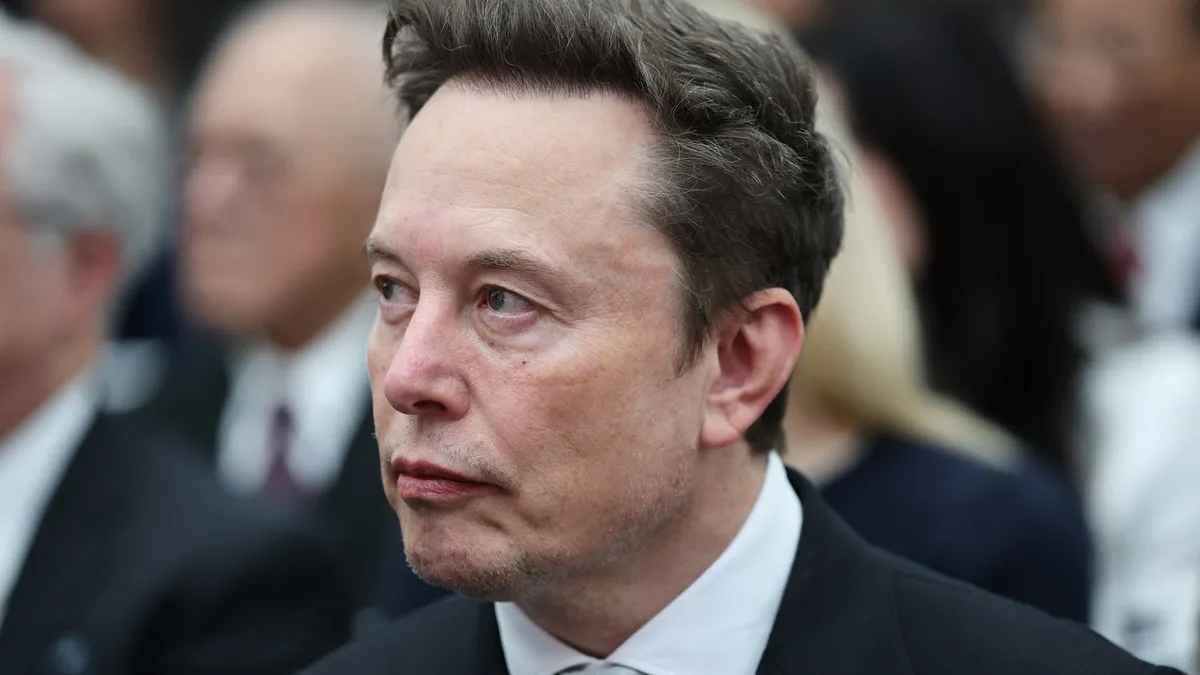
Musk says on X that SpaceX has closed $40 billion of mostly callable debt to pay for GPUs arriving in Q1–Q2 2027. He credits the company's investment-grade rating and its Starlink and launch revenue. Two days earlier, Bloomberg reported the deal stalling and talks reopening on price as credit markets worsened. [1] [5] [6]
Reports describe the deal's structure differently. The FT described about $10 billion in bank loans plus $30 billion in investment-grade bonds, led by Apollo. Bloomberg described an off-balance-sheet vehicle issuing three privately placed tranches, mostly subordinated, with Goldman leading and earlier pricing near the mid-8% range. One estimate has SpaceX's total debt roughly doubling to about $80 billion. [3] [5] [10]
Musk argues that credit markets have closed to companies that rely only on AI data centers, and he predicts a shakeout among more than 200 neocloud GPU-rental providers. Outlets disagree on which firms he named: CoreWeave with Lambda in one account, CoreWeave with Nebius in another. [6] [8]
Nvidia is involved on several sides of the deal. It is the reported chip supplier and holds about 122.8 million SpaceX shares from its 2025 xAI investment. Apollo, the lender the FT names as lead, signed a preliminary agreement in August 2026 to set up an Nvidia compute-financing platform. [5] [10]
The closing rests on Musk's posts alone. If accurate, GPU debt is flowing mainly to investment-grade borrowers with non-AI revenue, so teams renting from smaller neoclouds should check providers' funding before multi-year commitments.
SpaceX's $40B GPU debt deal is drafted below; one gap matters most: no lender, bank or Nvidia has confirmed it.
Executive brief
Elon Musk says SpaceX has closed $40 billion in debt to buy AI chips. Two days earlier, Bloomberg had reported the deal stalling in rough credit markets. Musk's X posts are the only first-party confirmation. No lender, arranger or chip vendor has confirmed the final terms (implicator.ai). Musk says the money is mostly callable debt for GPUs arriving in Q1–Q2 2027 (CNBC). He also says credit markets have closed to companies that depend only on AI data centers, and predicts a shakeout among more than 200 "neocloud" GPU-rental providers.
What changed and event timeline
Talks reported
The FT reported SpaceX seeking about $10B in bank loans and $30B in investment-grade debt, led by Apollo with PIMCO in talks, for Nvidia chips for Colossus 2 ().
AI unit becomes largest segment
Q3 revenue at the "Super Intelligence" (SI) unit reached $7.56B, ahead of the connectivity segment (Starlink) at $5.25B ().
Deal reported stalling
Bloomberg described three privately placed bond tranches through an off-balance-sheet vehicle, led by Goldman. Talks to reprice were reopening as markets worsened ().
Musk says it closed
On X, Musk said the financing had closed, pointing to SpaceX's investment-grade rating and its Starlink and launch revenue. He also said SpaceX is not buying any neoclouds ().
Major outlets carry the claim
CNBC reported the closing as Musk's statement, citing Bloomberg's earlier structure reporting rather than any independent confirmation ().
Capabilities and access
- This is a financing deal. No new model or chip is announced.
- Reports name Nvidia as the supplier (Investing.com/Bloomberg). Musk's posts, as summarized, do not name the vendor (implicator.ai).
- Tesla North reports purchases of 200,000 GB300 chips a month through 2026, moving to Vera Rubin in 2027 (Tesla North).
Read the full section
- This is a financing deal. No new model or chip is announced.
- Reports name Nvidia as the supplier (Investing.com/Bloomberg). Musk's posts, as summarized, do not name the vendor (implicator.ai).
- Tesla North reports purchases of 200,000 GB300 chips a month through 2026, moving to Vera Rubin in 2027 (Tesla North).
- Q3 nameplate compute was 1.7 GW, with a 2.5–3 GW year-end target (Teslarati).
Technical analysis for researchers and developers
- Structure: A special purpose vehicle, run by Apollo-backed Atlas SP, would hold the debt so it stays off SpaceX's balance sheet.
- Accounting: The same report says SpaceX had to recognize $13B of debt after an earlier xAI financing failed to qualify for off-balance-sheet treatment.
- Callable debt: If the debt is callable, as Musk says, SpaceX can refinance or repay it early, so a GPU's useful life need not match the loan term.
Read the full section
- Structure: A special purpose vehicle, run by Apollo-backed Atlas SP, would hold the debt so it stays off SpaceX's balance sheet. The subordinated tranche is $25–30B, with tranches of about $10B and up to $5B. Earlier talks priced the subordinated debt around the mid-8% range (Investing.com/Bloomberg).
- Accounting: The same report says SpaceX had to recognize $13B of debt after an earlier xAI financing failed to qualify for off-balance-sheet treatment. That makes the treatment of this vehicle a real question.
- Callable debt: If the debt is callable, as Musk says, SpaceX can refinance or repay it early, so a GPU's useful life need not match the loan term.
Claims and evidence
- "Closed," $40B, callable, H1 2027 delivery: this rests only on Musk's posts (CNBC). No independent corroboration is available.
- Payback under a year, possibly six months: this is management's own claim (Teslarati).
- Neocloud die-off: this is Musk's prediction. Outlets disagree on which firms were named: CoreWeave and Lambda (Tesla North) or CoreWeave and Nebius (investingLive).
Read the full section
- "Closed," $40B, callable, H1 2027 delivery: this rests only on Musk's posts (CNBC). No independent corroboration is available. One newsletter still describes the deal as in progress (implicator.ai).
- Payback under a year, possibly six months: this is management's own claim (Teslarati).
- Neocloud die-off: this is Musk's prediction. Outlets disagree on which firms were named: CoreWeave and Lambda (Tesla North) or CoreWeave and Nebius (investingLive).
Context and prior work
Read the full section
- SpaceX absorbed xAI in February 2026 and went public in June (Wikipedia).
- Nvidia sits on several sides of this deal (TIKR):
- it is the chip supplier;
- it holds about 122.8M SpaceX shares from its 2025 xAI investment;
- Apollo, the reported lead, signed a preliminary agreement on Aug 10, 2026 to set up a Nvidia compute-financing platform.
- Morgan Stanley projects AI infrastructure will need $1.5T of outside financing by 2028 (The Star/FT).
Limitations, safety and contested findings
- Structure and lead: the FT described bank loans plus investment-grade bonds led by Apollo.
- Debt load: TIKR estimates total debt would roughly double, from $39.7B to about $80B (TIKR).
- Capex guidance: outlets disagree on whether the $35–40B spending guidance covers Q4 2026 (investingLive) or Q1 2027 (Teslarati).
Read the full section
- Structure and lead: the FT described bank loans plus investment-grade bonds led by Apollo. Bloomberg described SPV tranches, mostly subordinated, with Goldman leading the talks.
- Debt load: TIKR estimates total debt would roughly double, from $39.7B to about $80B (TIKR).
- Capex guidance: outlets disagree on whether the $35–40B spending guidance covers Q4 2026 (investingLive) or Q1 2027 (Teslarati).
- Pricing: final pricing is undisclosed.
Business and practitioner implications
- Who can borrow: if Musk is right, GPU debt is open mainly to borrowers with investment-grade ratings and revenue outside AI.
- Buyers of GPU capacity: teams renting from smaller providers should check those providers' funding before signing multi-year capacity contracts.
- Supply: a $40B order landing in H1 2027 could tighten the supply of next-generation Nvidia systems.
Read the full section
- Who can borrow: if Musk is right, GPU debt is open mainly to borrowers with investment-grade ratings and revenue outside AI. Neoclouds would face higher costs or no access at all.
- Buyers of GPU capacity: teams renting from smaller providers should check those providers' funding before signing multi-year capacity contracts.
- Supply: a $40B order landing in H1 2027 could tighten the supply of next-generation Nvidia systems.
- What would confirm the deal: filings, lender statements or rating-agency actions would be the first real confirmation of the closing and its terms.