
ModelsArchitectures & capability
Simon Willison argues LLM-written code now beats dedicated image models for most illustrations
Simon Willison says text models that write SVG, HTML or Blender code now produce more useful non-photographic illustrations than image models, because the output stays editable. He also drops his view that Anthropic's lack of an image model was a product gap.
From the Simon Willison article of November 28, 2026 and cited sources: Willison's main argument is about how the image is stored. [1] [2]
SOURCES[1] Willison: Code-driven AI illustrations simonwillison.net[2] Code-driven AI illustrations are more useful than images… x.com
 AT Pulse research deskPublished · Updated · 5 min read · AI-assisted analysis
AI-assisted, not human-edited. Methodology Corrections Who owns this site
- Original source
- Simon Willison article, independent perspective
- Brief by
- AT Pulse research desk AI-assisted; publisher and contact on the desk page
- When
- November 28, 2026 article published
- Covered
- Nov 29 edition
- Evidence
- 11 sources across 10 sites
- 1Willison: Code-driven AI illustrationssimonwillison.net
- 2Code-driven AI illustrations are more useful than images…x.com
- 3Anthropic: Introducing Claude Designanthropic.com
- 49to5Mac: Claude Design launch9to5mac.com
- 5OpenAI Help: Sora discontinuationhelp.openai.com
- 6VentureBeat: Claude Design overhaulventurebeat.com
RisingHow it’s measured
Hacker News · 22 likes · 2 comments
Reach blends public engagement (views, likes, comments, shares, stars) from the platforms where the story or its original source lives: YouTube, Hacker News, GitHub, Substack and similar. A video and the article written from its transcript share one score, taken from the video. Platforms with no data are left out rather than counted as zero, and the age of a story never lowers its score.
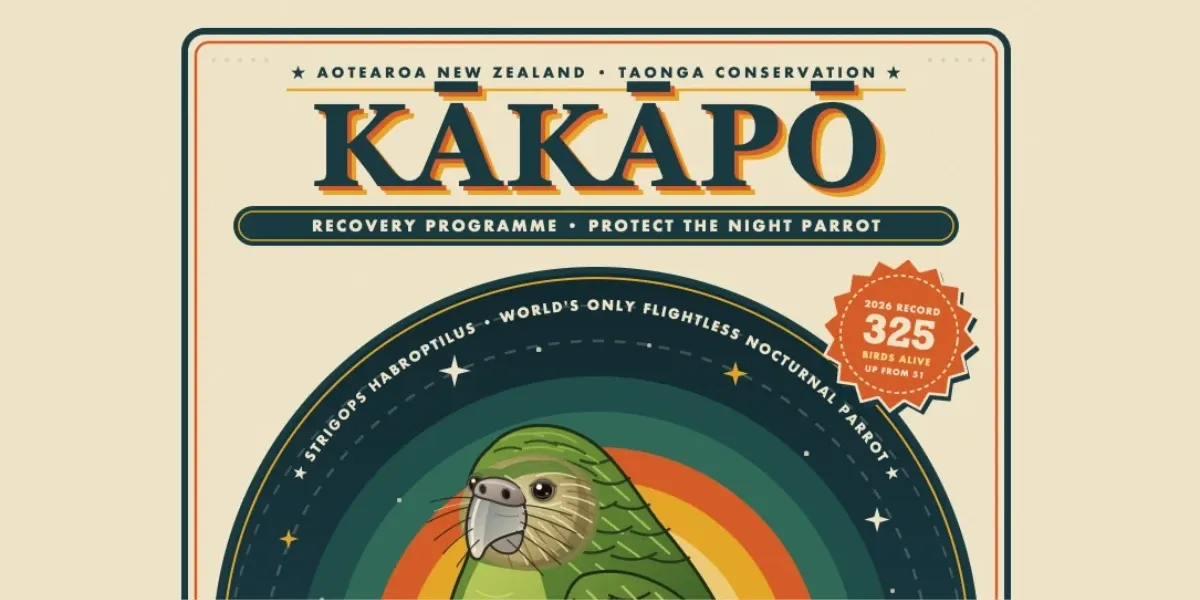
Willison's main argument is about how the image is stored. Code describes it as separate elements you can edit, such as real fonts, layers and parameters. That makes it a better fit for diagrams, UI and game assets. Bitmap models output pixels directly, so text and fine details can come out garbled. He now sees design-through-code as filling the image gap he once thought Anthropic had. [1] [2]
His test case was a 1970s-style kākāpō conservation poster in SVG, made with Gemini 4 Neon over several prompts. Google AI Studio does not render SVG, so the model could not see its own mistakes, and he had to send screenshots back to it. An agent loop that renders the output and screenshots it would close that gap. He published the full session transcript. [1]
Image models are narrowing the gap. Willison concedes they still lead on photorealism. Ideogram 4.0 now lets users place elements with JSON bounding boxes on a 0–1000 grid, which partly answers his criticism that image models offer little layout control. [1] [7] [11]
Designing through code has real costs. One reviewer used 80% of a weekly Claude Pro allowance in about 25 minutes with Claude Design, before Anthropic's June update reduced usage per turn. In one outlet's tests of 15 Gemini 4 Neon builds, there were stream timeouts, rate limits and four demos with badly placed UI elements. [6] [9]
Evidence is one practitioner's documented test plus community demos, with no controlled comparison.
Read the full assessment
If it holds, teams producing diagrams, decks and game assets could favor version-controlled code output and weigh design-through-code tooling and token cost over owning an image model.
Executive brief
Simon Willison now argues that text-output LLMs writing code (SVG, HTML/CSS, Blender scripts, shaders) produce more useful illustrations than dedicated image models for most non-photographic work. The main reason is that the output stays editable. He also reverses his earlier view that Anthropic had a "product gap" because it had no image model. His test case was a 1970s-style kākāpō conservation poster in SVG, made with Google's Gemini 4 Neon over several prompt iterations. No controlled study comparing code-driven and bitmap image generation was found, so the thesis rests on one practitioner's experience plus scattered community demos.
What changed and event timeline
Claude Design launches
Anthropic Labs released a tool for prototypes, slides and one-pagers, powered by Claude Opus 4.7. It builds a team design system by reading the team's codebase and design files.
More detail
Sora app discontinued
OpenAI shut down the Sora web and app experiences. The Sora API followed on September 24.
Design control on two fronts
Claude Design added design-system imports, a code round-trip with Claude Code, and direct canvas editing. A day later, Ideogram 4.0 shipped as an open-weight image model with bounding-box layout control.
More detail
Opus 5.5 speeds up code-built 3D and games
Willison dates frontier models becoming "really good" at code-generated 3D models and game development to September–October.
Gemini 4 Neon launches
Google's model drew community demos of SVG art, 3D scenes and single-file games.
Willison publishes the thesis
He presents his SVG poster test and says Anthropic's image gap is closed by design through code.
Capabilities and access
- Gemini 4 Neon in Google AI Studio produced Willison's poster. He had to send screenshots back to it. Willison
- Claude Opus 5.5, GPT-6 Astra and Gemini 4 Neon are named as able to make game assets through code. Willison
- Claude Design is a hosted product. Since June its usage counts against the same limits as Chat and Code. VentureBeat
Read the full section
- Gemini 4 Neon in Google AI Studio produced Willison's poster. AI Studio does not render SVG, so the model cannot see its own visual mistakes; he had to send screenshots back to it. Willison
- Claude Opus 5.5, GPT-6 Astra and Gemini 4 Neon are named as able to make game assets through code. Willison
- Claude Design is a hosted product. Since June its usage counts against the same limits as Chat and Code. VentureBeat
Technical analysis for researchers and developers
- Representation is the key difference. Code describes an image as structured, addressable elements: real fonts, layers, parameters.
- The model needs to see what it made. An agent that can render and screenshot closes that gap.
- Targets include SVG, Canvas, WebGPU, Blender and PDF; anything a script can write to disk works.
Read the full section
- Representation is the key difference. Code describes an image as structured, addressable elements: real fonts, layers, parameters. Bitmap models produce pixels directly, so text shapes and fine details can glitch. Willison
- The model needs to see what it made. Without a renderer in the loop, the model cannot check its output. An agent that can render and screenshot closes that gap.
- Targets include SVG, Canvas, WebGPU, Blender and PDF; anything a script can write to disk works.
- Scale of outputs. One tester's four Neon prompts produced 10,686 lines of code with no external assets; a single SVG ran 957 lines with 45 SMIL animations. DEV
- Reproducibility. Willison published his full session transcript. transcript
Claims and evidence
- The poster's facts are accurate. Willison says he checked every figure the model found through search.
- Code-driven images are "a better bet" for diagrams, UI and game assets. This is opinion. No benchmark or controlled comparison supports it.
- Ideogram 4.0 scores about 97% on large English text and about 90% on small text. These are vendor-reported figures. Ideogram
Read the full section
- The poster's facts are accurate. Willison says he checked every figure the model found through search. This is author-verified and not checked by anyone else. Willison
- Code-driven images are "a better bet" for diagrams, UI and game assets. This is opinion. No benchmark or controlled comparison supports it.
- Ideogram 4.0 scores about 97% on large English text and about 90% on small text. These are vendor-reported figures. Ideogram
- Gemini 4 Neon cost an average of US$3.78 per build at high effort. This comes from a single outlet's tests on 15 builds. Sulat
- Claude Design had over one million users in its first week. This is a company figure. Anthropic
Context and prior work
- Willison has long used SVG generation as an informal test of models.
- He frames the shift as a case of the bitter lesson: general models kept improving until they absorbed a task he thought needed a specialist tool.
- The essay follows his three LLM inflection points post and his piece on vibe game development.
Read the full section
- Willison has long used SVG generation as an informal test of models.
- He frames the shift as a case of the bitter lesson: general models kept improving until they absorbed a task he thought needed a specialist tool.
- The essay follows his three LLM inflection points post and his piece on vibe game development.
- Bitmap generation has not stood still. Nano Banana and ChatGPT Images now handle multi-turn editing well, and Google has added Gemini Omni.
Limitations, safety and contested findings
- Dedicated image models still lead there.
- His "flatness" critique is partly outdated.
- Generating designs as code is expensive. Anthropic says the June update reduced per-turn usage. VentureBeat
Read the full section
- Willison concedes photorealism. Dedicated image models still lead there.
- His "flatness" critique is partly outdated. His own update notes that Ideogram 4.0 offers JSON-specified bounding-box placement on a 0–1000 grid, which narrows the gap on layout control.
- Generating designs as code is expensive. One reviewer used 80% of a weekly Pro allowance in about 25 minutes. Anthropic says the June update reduced per-turn usage. VentureBeat
- Neon builds have known failure modes: stream timeouts on large outputs, rate limits, and 4 of 15 demos placing UI elements badly. Sulat
Business and practitioner implications
- For decks, diagrams, brand assets and game prototypes, try code output first.
- Put a renderer in the agent loop so the model can check its own visual output.
- Keep bitmap models for photography-style work, or try layout-aware models such as Ideogram 4.0.
Read the full section
- For decks, diagrams, brand assets and game prototypes, try code output first. The results can be put under version control, edited in Inkscape or Illustrator, and kept on brand through a design system.
- Put a renderer in the agent loop so the model can check its own visual output.
- Keep bitmap models for photography-style work, or try layout-aware models such as Ideogram 4.0.
- Vendor evaluation is shifting. Lacking an image model may now matter less than design-through-code tooling and token cost.
The source trail.
Sources (11)
Willison: Code-driven AI illustrations
simonwillison.netCode-driven AI illustrations are more useful than images from dedicated image models: https://t.co/4hJDOY6YxT I thought Anthropic had a product gap: no equivalent to Nano
Related coverage; assess separately
x.com