
PolicyLaw, regulation & governance
Nvidia reinstates Jensen Huang as CEO after Trump intervenes with the board
Nvidia's board reinstated Jensen Huang as CEO on 23 November. He had resigned eleven days earlier over an affair with a woman US intelligence linked to China. The reversal followed direct lobbying by Donald Trump, who said he made the deal.
From the The Guardian · AI article of November 27, 2026 and cited sources: Huang resigned on 12 November and Colette Kress became interim CEO. [2] [5] [6] [9]
SOURCES[2] CNBC – Trump sealed deal for Nvidia to rehire Huang cnbc.com[5] NVIDIA – Board reinstates Jensen Huang nvidianews.nvidia.com[6] CBS News – Inside Trump's effort to reinstate Huang cbsnews.com
 AT Pulse research deskPublished · Updated · 5 min read · AI-assisted analysis
AI-assisted, not human-edited. Methodology Corrections Who owns this site
- Original source
- The Guardian · AI article, independent perspective
- Brief by
- AT Pulse research desk AI-assisted; publisher and contact on the desk page
- When
- November 27, 2026 article published
- Covered
- Nov 29 edition
- Evidence
- 12 sources across 9 sites
- 1Trump is destroying the rule of law in the US – to protect…theguardian.com
- 2CNBC – Trump sealed deal for Nvidia to rehire Huangcnbc.com
- 3NBC News – Huang reinstated after Trump pushes boardnbcnews.com
- 4CNBC – Nvidia investigates Huang's relationshipcnbc.com
- 5NVIDIA – Board reinstates Jensen Huangnvidianews.nvidia.com
- 6CBS News – Inside Trump's effort to reinstate Huangcbsnews.com
Reach: not measured yet
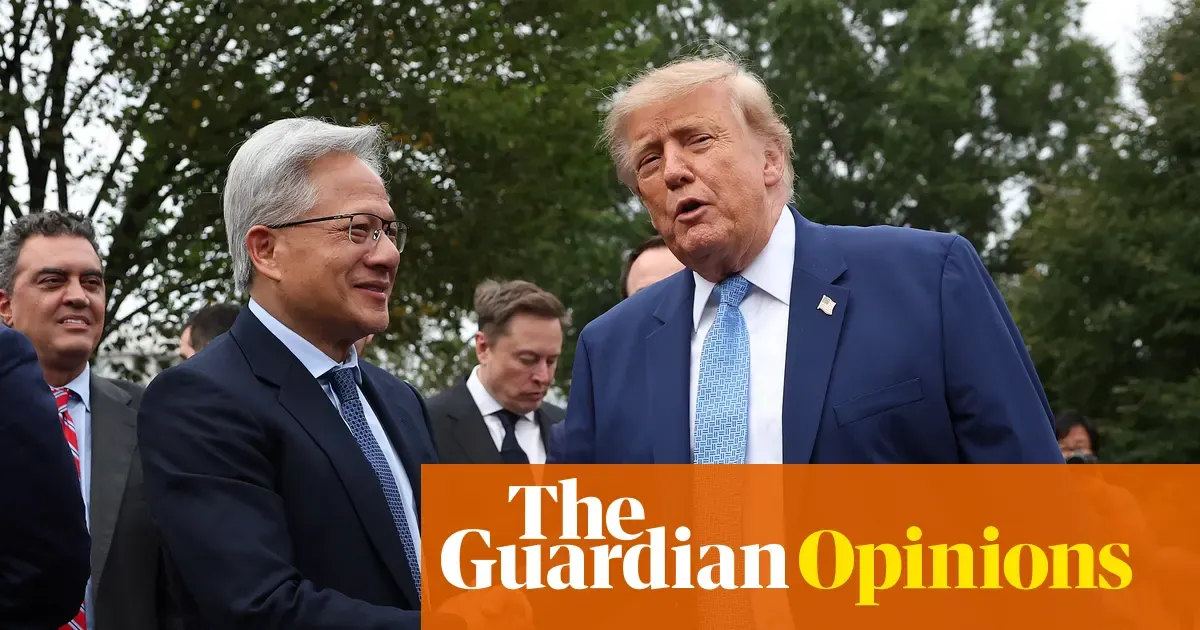
Huang resigned on 12 November and Colette Kress became interim CEO. On 17 November the board chair said directors did not plan to bring Huang back. Six days later the board voted unanimously to reinstate him, citing input from senior levels of the US government. Trump and Vance had spoken with directors and their counsel, and Trump publicly took credit for the outcome. [2] [5] [6] [9]
The security questions remain open. The New York Times reported that officials believed Alice Huang was recruited to influence the CEO. Agencies later told Congress they had no indication she was tasked to target him, though they acknowledged gaps in what they know. The Attorney General said the DOJ has no evidence Huang acted unlawfully, which is a lack of evidence rather than an exoneration. [3] [8] [10]
The underlying policy issue is how advanced Nvidia chips reach China. Reported routes include intermediaries such as Singapore-based Megaspeed, which is under federal investigation and denies wrongdoing, and remote cloud access from data centres in third countries, which avoids controls on physical shipments. Nvidia responded by creating an independent-director export-control committee, recruiting a chief compliance officer and keeping an internal investigation running. [5] [7] [8]
Jonathan Freedland's column argues the intervention amounts to a pre-emptive pardon for a favoured tech leader. He builds the argument on the 2024 presidential-immunity ruling, the pardon power and the erosion of the post-Watergate norm that the DOJ stays independent. The Center for American Progress, a progressive think tank, estimates Trump personally gained up to $15m from the share rebound. [1] [7]
What is documented: a board reversed its own decision within days of contact from the White House, and Nvidia's stock moved about 25–31% each way.
Read the full assessment
What follows from that: political access may now shape governance at AI companies and how export-control enforcement plays out.
Sources are gathered. Writing the dossier now.
Executive brief
The president of the United States personally got a CEO back into his job at the world's most valuable AI chipmaker. Jensen Huang resigned from Nvidia on 12 November 2026, after admitting an affair with a woman US intelligence linked to China's Ministry of State Security. Eleven days later the board reinstated him unanimously. Donald Trump said "I made the deal", and the board had been assured that Huang broke no national security laws (CNBC). Jonathan Freedland's Guardian column argues this amounts to executive-granted immunity for AI leaders. Nvidia shares rose about 31% on the news (NBC News).
What changed and event timeline
Huang confesses, board investigates
Huang emailed staff to admit infidelity. The board opened an independent probe into alleged Chinese intelligence links to Alice Huang, who was tied to the Nvidia customer Megaspeed ().
Huang resigns
Huang stepped down and CFO Colette Kress became interim CEO. Nvidia stock then fell more than 25% in a week ().
Megaspeed probe opens, board says no
The DOJ and Commerce announced a joint Megaspeed investigation. Board chair Harvey Jones told analysts the board did not intend to reinstate Huang ().
Reinstatement after White House input
The board voted unanimously to reinstate Huang and cited "input from senior levels" of the US government (). Trump and Vance spoke with directors and their counsel ().
Critics tally the gains
The Center for American Progress estimated Trump gained up to $15m from the reinstatement (). Freedland called it a pre-emptive pardon in all but name ().
Capabilities and access
No model or product launched. The story is about who controls Nvidia and how its chips reach China:
Read the full section
No model or product launched. The story is about who controls Nvidia and how its chips reach China:
- Advanced Nvidia AI chips reportedly reached China through intermediaries such as Megaspeed, and through remote cloud access from data centres in third countries (CAP).
- Megaspeed is Singapore-based, under federal investigation, and denies any export violations (CBS News).
- Freedland names Thailand and Singapore as routes. The reviewed sources do not independently confirm the Thailand route.
Technical analysis for researchers and developers
No architecture or benchmark is involved. The documented technical point is how export controls get around: renting compute remotely in third countries avoids the physical-shipment controls that apply to chips themselves (CAP). Nvidia's response is organisational (Nvidia): Developers buying or reselling GPU capacity across borders should expect closer checks on who their customers are.
Read the full section
No architecture or benchmark is involved. The documented technical point is how export controls get around: renting compute remotely in third countries avoids the physical-shipment controls that apply to chips themselves (CAP). Nvidia's response is organisational (Nvidia):
- a new National Security and Export Control Committee made up of independent directors
- a Chief Compliance Officer, now being recruited
- an independent committee that will keep investigating the foreign-intelligence reports
Developers buying or reselling GPU capacity across borders should expect closer checks on who their customers are.
Claims and evidence
- Trump brokered the deal. Trump says so himself, and Nvidia's own statement confirms it received government input (ABC News; Nvidia).
- "No unlawful conduct." Attorney General Todd Blanche said the DOJ has no evidence that Huang acted unlawfully (NBC News).
- Alice Huang as a spy. Here the reporting conflicts:
Read the full section
- Trump brokered the deal. Trump says so himself, and Nvidia's own statement confirms it received government input (ABC News; Nvidia).
- "No unlawful conduct." Attorney General Todd Blanche said the DOJ has no evidence that Huang acted unlawfully (NBC News). That is a statement about missing evidence, not a finding that he is cleared.
- Alice Huang as a spy. Here the reporting conflicts:
- The New York Times reported that officials believe she was recruited to influence Huang (NBC News).
- Agencies later told Congress there is "no indication" she was tasked to target him or passed on valuable information, while admitting gaps in what they know (CBS News).
- The $15m gain. This is an "up to" estimate from CAP, a progressive think tank, based on an estimated holding of about 370,000 shares (CAP). Freedland presents it as a fact.
Context and prior work
- In China earlier in 2026, Trump defended Huang over possible chip diversion, saying "we have to take care of our geniuses" (Newsweek).
- Huang and Trump had publicly agreed that fears of catastrophic AI risk are a "hoax" (Axios).
- Freedland's legal argument rests on the 2024 Supreme Court presidential-immunity ruling, the pardon power and the post-Watergate norm that presidents keep the DOJ at arm's length (Guardian).
Read the full section
- In China earlier in 2026, Trump defended Huang over possible chip diversion, saying "we have to take care of our geniuses" (Newsweek).
- Huang and Trump had publicly agreed that fears of catastrophic AI risk are a "hoax" (Axios).
- Freedland's legal argument rests on the 2024 Supreme Court presidential-immunity ruling, the pardon power and the post-Watergate norm that presidents keep the DOJ at arm's length (Guardian).
Limitations, safety and contested findings
- The Guardian piece is opinion.
- Lawmakers from both parties are sceptical. John Cornyn asked, "No national security risk?
- California's attorney general is continuing an investigation (NBC News).
Read the full section
- The Guardian piece is opinion. Its claims about the AI-generated "bra" image and about workplace abuse allegations are not corroborated by the other reviewed sources.
- Lawmakers from both parties are sceptical. Sen. John Cornyn asked, "No national security risk? Based on what?" (NBC News).
- California's attorney general is continuing an investigation (NBC News).
- CAP says Trump overrode warnings from Marco Rubio. The reviewed sources do not independently confirm the contents of Rubio's memo (CAP).
Business and practitioner implications
- Political risk is now governance risk.
- Closed-door House interviews are set for 1 December, and a public Senate Banking hearing, "Protecting America's AI Advantage", for 3 December (NBC News).
- Expect tighter scrutiny of resellers and cloud capacity.
Read the full section
- Political risk is now governance risk. A board reversed a decision it had made days earlier after White House pressure, and the stock swung by about 25–31% each way (CNBC).
- Watch the hearings. Closed-door House interviews are set for 1 December, and a public Senate Banking hearing, "Protecting America's AI Advantage", for 3 December (NBC News).
- Expect tighter scrutiny of resellers and cloud capacity. Megaspeed has reportedly been placed on the Entity List (CAP), and checks on customers and intermediaries are likely to intensify.
The source trail.
Sources (12)
Trump is destroying the rule of law in the US – to protect himself and the tech titans he worships as new gods | Jonathan Freedland
Article text retrieved; extracted text may omit tables or interactive elements.
theguardian.com