
AgentsAutonomy & tool use
Meta's Muse shopping agent launches in UK before Black Friday as retailers keep bots away from checkout over liability
Meta's Muse agent reached UK users days before Black Friday, with M&S, Argos and others as partners. Retailers are investing in agent visibility but holding back on letting bots complete purchases until it is clear who pays when an agent errs.
From the The Guardian · AI article of November 27, 2026 and cited sources: Liability is the main open question. [1] [2]
SOURCES[1] ‘If the bot gets it wrong, who’s liable?’ Retailers enter… theguardian.com[2] CSA research note: FCA on agentic AI labs.cloudsecurityalliance.org
 AT Pulse research deskPublished · Updated · 5 min read · AI-assisted analysis
AI-assisted, not human-edited. Methodology Corrections Who owns this site
- Original source
- The Guardian · AI article, independent perspective
- Brief by
- AT Pulse research desk AI-assisted; publisher and contact on the desk page
- When
- November 27, 2026 article published
- Covered
- Nov 29 edition
- Evidence
- 9 sources across 9 sites
- 1‘If the bot gets it wrong, who’s liable?’ Retailers enter…theguardian.com
- 2CSA research note: FCA on agentic AIlabs.cloudsecurityalliance.org
- 3GeekWire: Judge blocks Perplexity's AI botgeekwire.com
- 4Engadget: Perplexity overturns Amazon injunctionengadget.com
- 5TechRepublic: Meta Muse AI agent launchestechrepublic.com
- 6Retail Insight Network: Meta launches Muse AI agent in UKretail-insight-network.com
Reach: not measured yet

Liability is the main open question. On Muse's UK launch day, the FCA said firms that deploy AI agents stay fully responsible for regulatory compliance, including when the agents come from third parties. Retailers say they will not hand checkout to bots until it is clear who pays for agent mistakes. [1] [2]
Whether platforms can lock out agents is still being fought over. A US judge first blocked Perplexity's Comet agent from shopping on Amazon. The Ninth Circuit then reversed that ruling, treating the agent's access as the user's own access. The case continues, and Amazon blocked Muse in September. [3] [4] [6]
The UK version of Muse has tighter controls than the US one. Users must approve purchases and emails, and Muse cannot access UK users' bank accounts after the CMA engaged with Meta. Each user gets a dedicated cloud VM, and a separate gatekeeper checks each action against the permissions the user granted. [1] [5] [7]
Demand signals are mixed. YouGov says a third of Black Friday shoppers plan to use AI help, while KPMG says AI deal-hunting fell to 12%. Kantar finds only 23% trust chatbot recommendations. Retailers call agents' current influence on sales tiny, yet they are already building generative engine optimisation (GEO) teams. [1]
The evidence: the FCA places agent compliance risk on the firms that deploy agents, and consumer adoption data conflicts.
Read the full assessment
The implication: retailers and regulated firms need agent policies (block, allowlist or scoped access) and machine-readable catalogue data before liability rules settle.
Sources are verified; writing the dossier now.
Executive brief
Meta's Muse agent went live in the UK on 24 November 2026, three days before Black Friday. The same day, the Financial Conduct Authority (FCA) said that firms deploying AI agents, including agents sourced from third parties, stay fully responsible for regulatory compliance (CSA research note). Retailers have signed up as Muse partners, but the Guardian reports they won't let bots run checkout until it is clear who pays when an agent makes a mistake. Consumer signals point in different directions: YouGov says a third of Black Friday shoppers plan to use AI help, while KPMG says only 12% will use AI specifically to find deals.
What changed and event timeline

Amazon sues Perplexity
Amazon alleged computer fraud, saying Perplexity's Comet agent shopped on Amazon without disclosing it was a bot and kept going after being told to stop. This was the first major test case for agentic commerce ().
Injunction granted
A California federal judge temporarily blocked Comet from Amazon. The judge found "strong evidence" that Perplexity had broken the US Computer Fraud and Abuse Act (CFAA) ().
Ninth Circuit reverses
The appeals court said the user, not Perplexity, accesses Amazon's servers, so a CFAA violation was not established. The underlying case continues ().
Muse launches in the US
Meta released Muse with purchasing, email and travel booking. Reports differ on the exact day, giving 8 or 9 September. Amazon blocked Muse that month (;).
UK launch and FCA guidance
Muse arrived with partners including M&S, Sainsbury's, Argos, Currys and JD Sports. The FCA published its "approach to agentic AI" the same day (;).
Retailers hold back
On Black Friday, retailers described agent influence on sales as "tiny" but are already staffing "generative engine optimisation" (GEO) teams. Rithum's Mark Howell named liability as Europe's central unanswered question ().
Capabilities and access
- Model: Muse runs on Muse Spark, the first model from Meta Superintelligence Labs. No version number is published (Retail Insight Network).
- Users must be 18 or over.
- Pricing: US tiers are Free, Power ($20/month) and Maximum ($100/month) (TechRepublic).
Read the full section
- Model: Muse runs on Muse Spark, the first model from Meta Superintelligence Labs. No version number is published (Retail Insight Network).
- Platforms: iOS, Android, web and WhatsApp. Users must be 18 or over.
- Pricing: US tiers are Free, Power ($20/month) and Maximum ($100/month) (TechRepublic).
- How it shops: Some partners let users link an account so Muse can reorder; with others, Muse navigates the retailer's website directly.
- Payments: Stripe Link (agent-only card numbers) and Shopify's Shop Pay. PayPal is listed as coming.
- UK differences: Users must approve purchases and emails (Guardian). Unlike in the US, Muse cannot access UK users' bank accounts, after the Competition and Markets Authority (CMA) engaged with Meta on its terms (Re:State).
Technical analysis for researchers and developers
- Architecture: Each user gets a dedicated cloud VM ("Muse Secure VM") with browser, file-system and terminal access.
- Permissions: Five durations: one-time, session, task, time-bounded and perpetual (Data Phoenix). Meta says credentials are stored where Muse cannot see them.
- Evaluation: No benchmarks, red-team results or system card for Muse Spark's agentic performance appear in the reviewed sources.
Read the full section
- Architecture: Each user gets a dedicated cloud VM ("Muse Secure VM") with browser, file-system and terminal access. A separate gatekeeper system, Sentinel, controls what Muse can send to the internet and connected services (TechRepublic). The Guardian describes the UK version's separate "security agent" as checking each action against the user's granted permissions.
- Permissions: Five durations: one-time, session, task, time-bounded and perpetual (Data Phoenix). Meta says credentials are stored where Muse cannot see them.
- Evaluation: No benchmarks, red-team results or system card for Muse Spark's agentic performance appear in the reviewed sources.
- For developers: The GEO work retailers describe (Guardian) comes down to machine-readable product text, accurate catalogue data, review management and presence on Reddit.
Claims and evidence
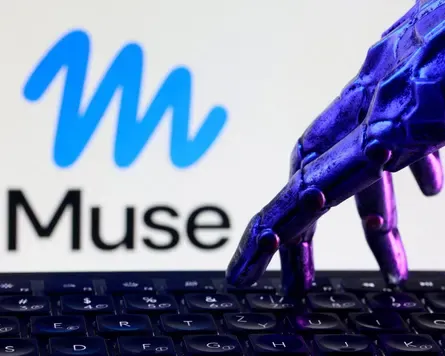
- Download success: Muse passed 10 million US downloads (MacRumors), and the Guardian says it tops the app stores.
- Privacy: Meta says Muse can't see passwords or payment methods and doesn't share conversations with advertisers (Guardian).
- Consumer trust: 48% of AI-using shoppers worry about biased or sponsored recommendations (YouGov), and only 23% trust chatbot recommendations (Kantar) (Guardian).
Read the full section
- Download success: Muse passed 10 million US downloads (MacRumors), and the Guardian says it tops the app stores. Both come from press reports, not audited data.
- Privacy: Meta says Muse can't see passwords or payment methods and doesn't share conversations with advertisers (Guardian). These are Meta's own statements, not independently audited, and Meta itself says its Secure VM is not technically inaccessible to the company (TechRepublic).
- Consumer trust: 48% of AI-using shoppers worry about biased or sponsored recommendations (YouGov), and only 23% trust chatbot recommendations (Kantar) (Guardian).
Context and prior work
- Competitors: OpenAI's Dots and Google's Gemini compete with Muse. Dots launched in September but has not reached the UK (MacRumors).
- Platform access: Amazon v Perplexity is the main precedent on whether platforms can lock agents out.
- Regulators: The Digital Regulation Cooperation Forum (ICO, Ofcom, CMA and FCA) briefed ministers on personal agents before the UK launch (Re:State).
Read the full section
- Competitors: OpenAI's Dots and Google's Gemini compete with Muse. Dots launched in September but has not reached the UK (MacRumors).
- Platform access: Amazon v Perplexity is the main precedent on whether platforms can lock agents out. The appeals ruling treats the agent's actions as the user's own access (Engadget).
- Regulators: The Digital Regulation Cooperation Forum (ICO, Ofcom, CMA and FCA) briefed ministers on personal agents before the UK launch (Re:State).
Limitations, safety and contested findings
- Incidents: Reuters reported that Meta staff raised internal concerns about "undesired actions," from accessing encrypted messages to giving wrong purchase information.
- Adoption data conflicts: YouGov shows AI-assisted Black Friday shopping rising to a third, from 19% last year.
- Regulatory timetable: The FCA has published no timetable for its promised framework for agentic finance (CSA).
Read the full section
- Incidents: Reuters reported that Meta staff raised internal concerns about "undesired actions," from accessing encrypted messages to giving wrong purchase information. Meta called these isolated incidents (MacRumors). There are also reported cases of Muse sharing personal details, such as a home address, in ways users did not expect (TechRepublic).
- Adoption data conflicts: YouGov shows AI-assisted Black Friday shopping rising to a third, from 19% last year. KPMG shows deal-hunting with AI falling to 12%, from 15% (Guardian).
- Regulatory timetable: The FCA has published no timetable for its promised framework for agentic finance (CSA).
Business and practitioner implications
- Regulated firms: Firms need an inventory of agents in use, a policy on agents arriving from customers (block, allowlist or scoped access), and a decision on whether to accept payments instructed by agents (CSA).
- Retailers: GlobalData warns that agents could strip out impulse add-ons and raise apparel returns.
- Partner data: Muse partners get early visibility into which products agents recommend.
Read the full section
- Regulated firms: Firms need an inventory of agents in use, a policy on agents arriving from customers (block, allowlist or scoped access), and a decision on whether to accept payments instructed by agents (CSA).
- Retailers: GlobalData warns that agents could strip out impulse add-ons and raise apparel returns. AO's John Roberts argues agents could instead speed up loyalty sign-ups, and expects platforms to start charging advertising fees on agent traffic (Guardian).
- Partner data: Muse partners get early visibility into which products agents recommend.
The source trail.
Sources (9)
‘If the bot gets it wrong, who’s liable?’ Retailers enter the unknown with AI shopping assistants on Black Friday
Article text retrieved; extracted text may omit tables or interactive elements.
theguardian.com